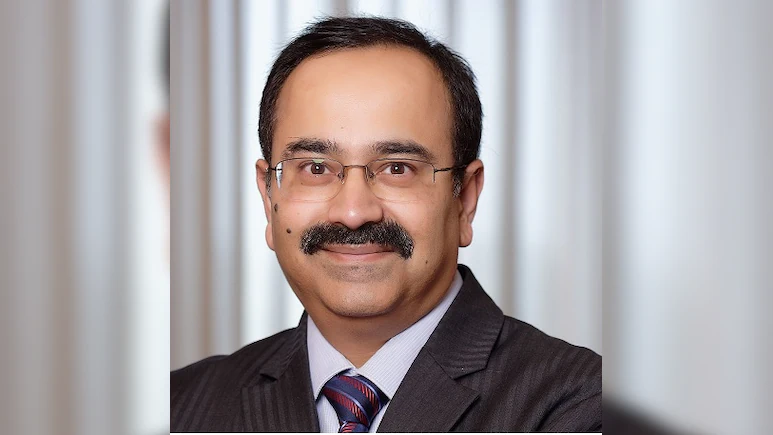
Appointment of Anup Bagchi as the Managing Director and CEO of HDFC Bank has been done and he will be taking charge from October 27, 2026, after the existing CEO Sashidhar Jagdishan retires on October 26.
The appointment of Anup Bagchi as the CEO of the bank by RBI has been done on October 1, and it is for a period of three years. Anup Bagchi, who is 55 years old, works for ICICI group since 1992 and has more than three decades of experience in areas like retail and wholesale banking, digital financial services, capital market, wealth management and insurance.
This is the first time that a person outside the HDFC group has been appointed as the CEO of HDFC Bank.
The share price of HDFC Bank was around ₹701 as of Monday, while the highest price was at ₹1,020.50 on the NSE on October 23, 2025, which shows that the price has fallen around 29 percent since it reached its highest level.
The shares of HDFC Bank were performing badly because of the reverse merger of the company with its parent company HDFC Ltd and the poor rate of loan growth, deposits, and the problem of leadership. The new appointment is expected to alleviate many of these issues.
Appointment of Bagchi is considered as a "positive reset" for HDFC Bank by Nuvama, while Motilal Oswal believes that stability at the helm of affairs will improve the investor sentiment.
Motilal Oswal referred to Bagchi as "all-round banker," considering his expertise in developing retail banking operations, digital platforms, and competitive financial environments. The key issue for the investors is whether Bagchi can leverage this positive sentiment into tangible operational performance for the bank.
Retail deposits of HDFC Bank have faced challenges owing to slower-than-peer growth. Jefferies notes that growth in retail LCR deposits has been at 12% for HDFC Bank while ICICI Bank has seen growth of 15% and State Bank of India 14%.
FCNR-B deposits have become an area of strength for HDFC Bank by being able to mobilise $11-12 billion in a period of two months, which is an approximate 8-9% market share, as per Jefferies' estimate. FCNR-B deposits constitute about 3% of overall deposits and 8% of LCR non-retail deposits.
According to analysts, Bagchi's immediate focus could be increasing retail deposit mobilisation and reducing reliance on high-cost funding sources. Experience in retail liabilities, digital platforms, and third-party distribution is relevant for strengthening HDFC Bank's CASA franchise, which stood at 32.3% as of June 2026, per Motilal Oswal.
A pickup in deposits will create space for accelerating lending. The credit-deposit ratio that reached a peak level of 110% now stands at about 95%. Motilal Oswal estimates that the bank's loan growth will accelerate at a 14% CAGR from FY26 to FY28.
The HDFC Ltd merger increased the exposure of its mortgage portfolio and customers but came at the cost of margins because of the high-cost liabilities.
HDFC Bank's net interest margin was estimated to be about 3.26%, per Motilal Oswal, where it anticipates an increase in margins as the level of borrowings comes down. Margins were expected to grow from 3.3% in FY26 to 3.4% in FY27 and 3.5% in FY28, per Nuvama.
The merger was to offer cross-selling opportunities across mortgages, banking, insurance, and wealth management, but the same have not been realized till now. Jefferies pointed out fee growth over the last two quarters to be just 8% and 11% YoY, restrained by lower credit card fee, third party products income, and liability fees. Bancassurance fees contributed about 8% of pre-tax profit for FY27 on a normalized basis.
Bagchi’s experience precisely coincides with the sectors where HDFC Bank’s synergy potential post-merger has been weak: banking, insurance, capital markets, and wealth management.
And it is such an experience that makes Bagchi well-qualified for deriving more benefit out of the increased client base at HDFC Bank post-merger, though the new management itself brings in certain risks. As per Nuvama, there could be a second wave of exit of managers in various segments of the HDFC Bank organization.
Bagchi would have to merge ICICI Group’s execution-focused culture with HDFC Bank’s risk management, scalability and brand value.
According to Nuvama, Bagchi’s challenge was to merge the disruptive and result-oriented DNA of ICICI Group with the more siloed organizational structure of HDFC Bank. It is believed that his list of priorities would not stop at numbers related to growth.
The brokers are generally bullish on the stock despite wide divergence in their price targets. The price targets are set at ₹880 by Jefferies, ₹925 by Motilal Oswal, ₹950 by Nuvama, and ₹1,225 by Emkay.
The reason behind their optimism lies in a number of reasons: the elimination of the leadership overhang, improved deposit growth, margin improvement, turnaround in the loan growth, and effective merger synergy execution. According to Motilal Oswal, the earnings growth is expected to rebound to 13% in FY28, from the average of 9% in FY24-27. Emkay expects loan growth of 16% in FY27 and 18% in FY28.
Bagchi officially takes office on October 27.
Over the coming months, the numbers are where the focus of analysis will be, with deposit growth figures, interest rate margin, fee revenue, and loan growth being key indicators of how things are developing under his leadership.