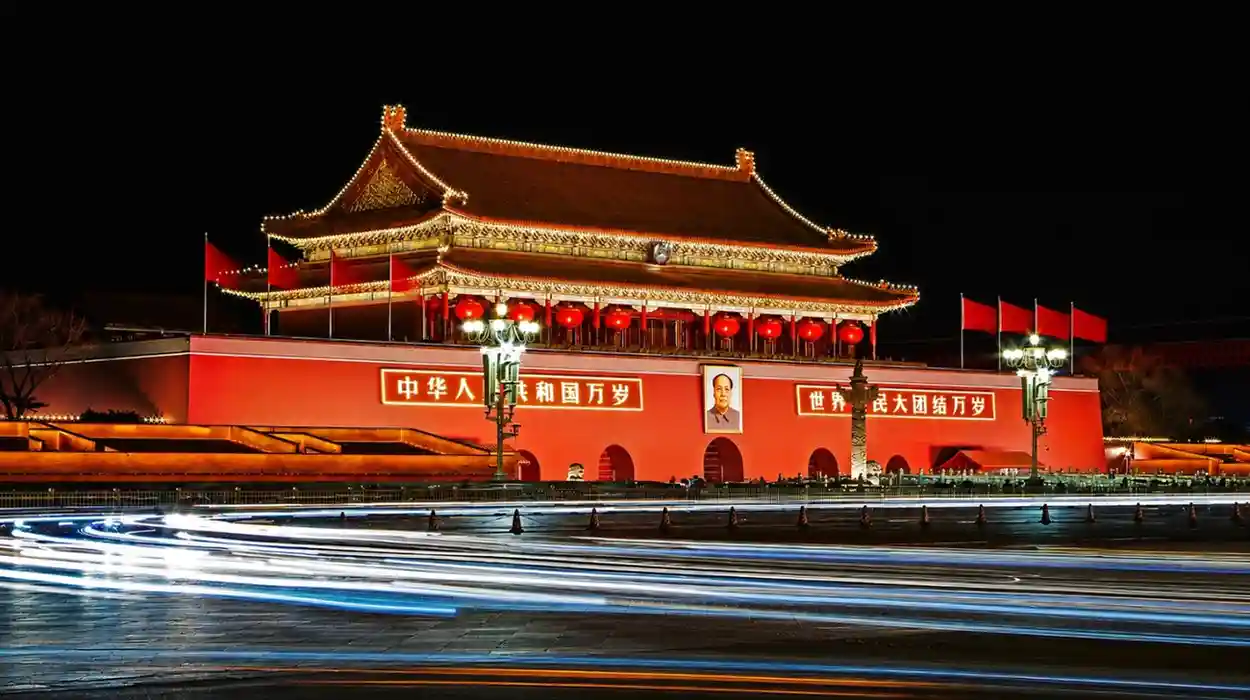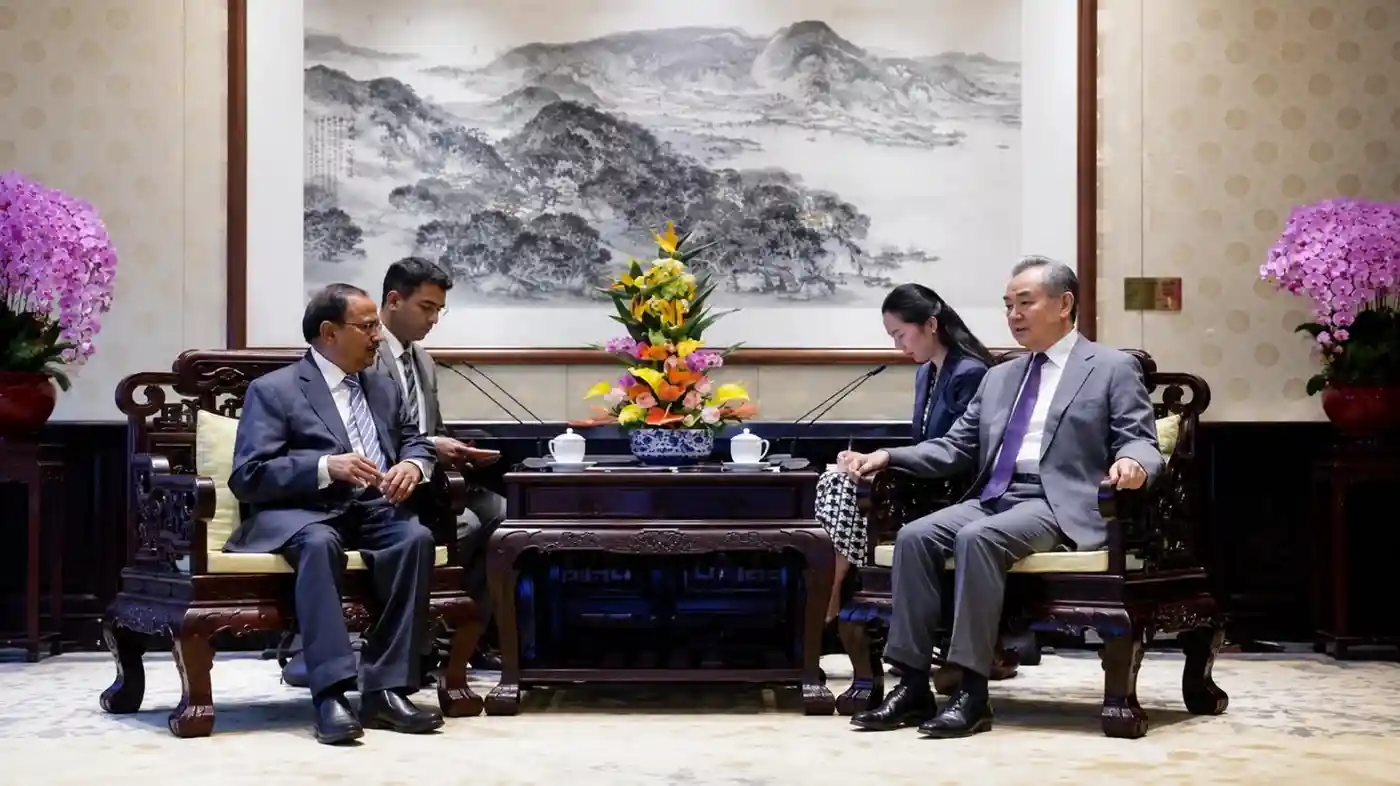
Wang Yi landed in New Delhi on Monday for a BRICS security meeting. Routine multilateral trip, on paper. Except on the sidelines, he sat down with Ajit Doval—India's national security adviser—and both governments immediately described the talks as "constructive and forward-looking." That's diplomat-speak for "Things went fine, nobody stormed out, and we'd like you to write something positive about it."
Which is fine. Things going fine is progress with these two.
The thaw between India and China that started in Kazan in October 2024 — when Modi and Xi finally agreed to end the four-year LAC standoff — did produce real outcomes through 2025. New border management mechanisms. Resumed high-level visits. Eased visas. The return of Indian pilgrims to Kailash Mansarovar. Direct flights between Delhi and Beijing restarted after more than five years of suspension. If you'd said any of this would happen back in 2022, when the relationship was at rock bottom, people would have laughed you out of the room.
But getting those direct flights back took many months of painstaking negotiations. For two countries that share a 3,488-kilometer border and hundreds of billions in trade history. That detail alone tells you everything about what "normalization" actually looks like on the ground.
Wang Yi's core ask on Monday was the real news, if you read it carefully. He called on both sides to "accelerate the resumption of dialogue mechanisms" in trade, finance, law enforcement, and media. Sounds like ambition. It isn't. The foreign minister of China is publicly calling for mechanisms to resume—not expand, not deepen. Just start again. From scratch, basically.
China's ambassador to India, Xu Feihong, had made the situation plain just weeks earlier at The Hindu Huddle in Bengaluru: "China and India have nearly 50 government-to-government dialogue mechanisms; unfortunately, most of them remain stalled."
Fifty frameworks. Most of them dead. Two armies clashed in a remote Himalayan valley in June 2020—killing twenty Indian soldiers and an undisclosed number of Chinese ones—and the fallout didn't just freeze the border. It froze the entire relationship. Everything from high-level ministerial contact to student exchanges to business delegations to pilgrimage routes. All of it, gone.
The 2025 thaw, for all the genuine progress it produced, didn't actually resolve any of the underlying issues. There was no substantive movement on the territorial dispute itself. De-escalation on the border — actual troop and equipment pullback — stalled. In November, an Indian national was detained at a Chinese airport because she was born in Arunachal Pradesh, which China claims as its own territory. A reminder, in case anyone needed one, of how thin the ice actually is.
Here's the part the diplomatic statements don't address.
India's trade deficit with China reached a record $99.2 billion in FY 2024-25, with imports surging to $113.5 billion while exports fell to $14.3 billion. That's not a trade relationship in any conventional sense. That's dependency with paperwork. And Beijing demonstrated last year exactly what it's willing to do with that leverage.
On April 4, 2025, China imposed export licensing requirements on critical rare earth elements like terbium and dysprosium—initially framed as retaliation for US tariffs—and Indian manufacturers, including Bajaj Auto and Maruti Suzuki, immediately warned of production bottlenecks. India had imported 93 percent of its rare earth magnets from China in FY24-25, with industrial stockpiles lasting only two to three weeks after restrictions kicked in.
Two to three weeks. For industries that take years to build.
The curbs were partially lifted only after high-level diplomatic talks, timed to Modi's visit to Tianjin for the SCO summit. Beijing toggled the supply back on when it got what it needed politically. Analysts called it a "calibrated concession"—toggling access rather than granting permanent stability. China treats rare earth access as a diplomatic instrument. The partial lifting of restrictions didn't change that fact. It proved it.
India's response has been to throw money at the problem. A ₹7,280 crore Rare Earth Permanent Magnet scheme was approved in November 2025, targeting 6,000 tonnes per year of domestic magnet capacity. Budget 2026 added rare earth corridors across four states. All of it is real policy, and India does hold the world's third-largest rare earth reserves. But building that capacity takes seven-to-ten years minimum. Until then, the leverage exists. Wang Yi and Doval both know it. Nobody in Monday's room mentioned it.
India's official post-meeting statement was short. Deliberately short. A few lines about "stable, predictable, and constructive" bilateral relations and some language about progress toward "gradual normalization." Nothing committal, nothing that anyone could later hold New Delhi to.
China's readout was longer and more specific. It always is—Beijing uses its foreign ministry statements as a record of what it understood both sides to have agreed to, which matters enormously in diplomacy.
The interesting line was near the end. Doval, according to the Chinese statement, told Wang Yi that India was among the earliest countries to recognize the People's Republic and that "India's position on the Taiwan question has not changed in any way."
That's not a throwaway. Taiwan is Beijing's absolute redline — the one issue on which China will not accept ambiguity from any country it considers a serious partner. Doval raising it, or Beijing choosing to prominently quote it, tells you what reassurance China needed from this meeting. India provided it. Whether that was strategic messaging or diplomatic courtesy is honestly hard to say from the outside, but either way, it landed in the Chinese readout as a headline.
The bigger context here is September.
Xi Jinping may attend the BRICS Leaders' Summit, scheduled for New Delhi on September 12 and 13. China is believed to have informed New Delhi that Xi is likely to come. If he does, it would be his first visit to India since October 2019 — the Mamallapuram informal summit, held just months before Galwan.
More than 50,000 troops remain deployed along the LAC, and de-escalation and de-induction processes have not yet been completed. Xi would be stepping off a plane in New Delhi with that number hanging in the background of every photo. Both governments are aware of this. Monday's meeting, and the Doval trip to Beijing that will follow under the special representatives' mechanism, is about managing that optic—setting the diplomatic table well enough that September doesn't turn into an embarrassment.
Wang Yi said something near the end of Monday's talks about guiding "all sectors of society to form correct perceptions." Translated: nationalist sentiment in both countries keeps making this harder than it needs to be, and both governments are worried about it. He's not wrong. The trust deficit isn't just institutional — it's social. Years of military standoff, of app bans and investment blocks and travel restrictions, left a mark on how both publics see each other that no joint statement is going to fix.
The flights are back. The pilgrimage route is open. People are talking. That matters. It's genuinely better than where things were.
But the $99 billion deficit sits there. The troops sit there. The rare earth chokepoint sits there. And if Xi does come to New Delhi in September and shakes Modi's hand under the chandeliers of Bharat Mandapam, the photo will be everywhere — and the structural problems underneath it will still be exactly where they were.
Partners, not rivals, they keep saying. You get the sense both sides are still convincing themselves.