June 21, 2026, was to be an ordinary working day at a fish export factory in the area of Periyapalayam, near Tiruvallur in the state of Tamil Nadu, but instead witnessed an industrial tragedy. Ammonia leaking on the factory premises in the area of Kannigaipair/Manjungaranai made many workers breathe toxic air.
Nine people lost their lives, and about 80 more people were affected by the leakage. The majority of those affected were female migrant laborers who had come from their native states in order to earn money.
As per the official accounts, the accident happened without any warning while people were carrying out their regular activities in the seafood processing plant. The substance ammonia, which is often used in the refrigeration units for processing and exporting seafood, is a dangerous toxic gas if it is released in concentrated form. Any contact with such a gas can cause breathing problems.
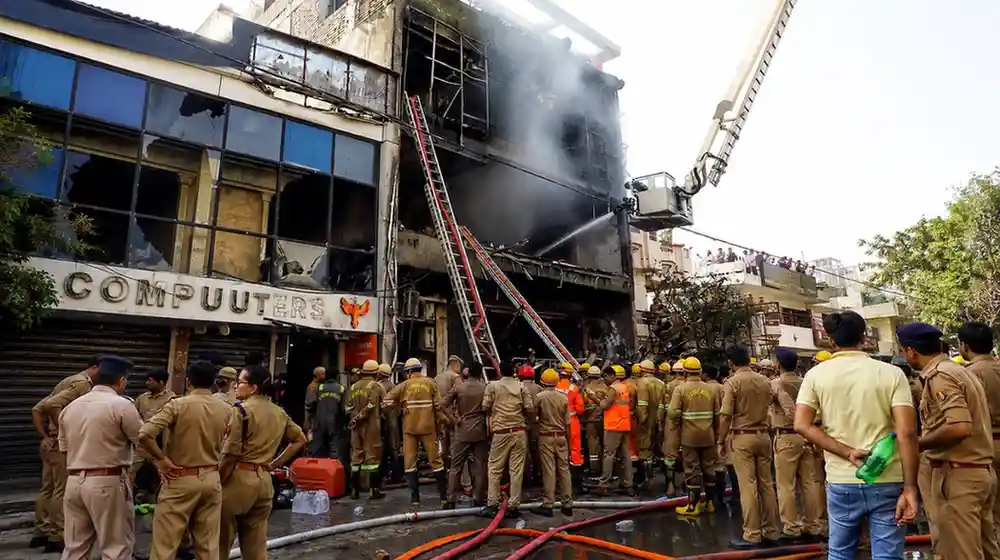
People working in the factory started feeling breathlessness, chest pain, coughing, and burning sensations in their eyes and mouths right away. While panic engulfed the factory, emergency teams, consisting of police personnel, the fire-fighting force, and health authorities, hurriedly arrived at the scene to evacuate and take care of the affected people.
The victims were quickly shifted to several hospitals in the region, namely Vels Hospital, Venkateswara Hospital, Rajiv Gandhi Government General Hospital, and Stanley Medical College Hospital in Chennai.
Although the number of people that suffered from this leakage at the time of the incident was quite small, the number of people that were considered casualties began to grow during the next two days. Although the initial death toll of people due to this leakage was seven, the number of deaths increased to nine on June 23, when the eighth person died at 7 a.m.
- Total number of people that have been affected by this leakage: 80
- Number of people currently being hospitalized – 69
- Number of people that have recovered and left hospital – 2
- Number of deaths – 9
Unfortunately, as it is stated in the official health bulletin, all nine people that have died due to this leakage were women, seven of whom belonged to Odisha, and two of them were from Assam.
The list of the dead includes Shibani, Jumani Juanga, Geetha Juanga, Purnima Juanga, Champabati Juanga, Parvathi Juanga, Sita Hasda, and Anjila Soren. One extra victim, who is reportedly from Odisha, has not yet been identified.
Names like Jumani Juanga and others indicate that the victims could have been from the tribal communities of Odisha, which usually send their members to work in factories and seafood processing plants in other states because the wages are better there compared to the wages in their own regions.
Apart from victims belonging to Odisha and Assam, officials also said that there were victims from Jharkhand, Kerala, West Bengal, and Tamil Nadu.
Immediate responses were observed from the politicians regarding the matter. An instant reaction was found among the politicians on this issue. On behalf of the Chief Minister of Odisha, Mohan Charan Majhi offered his condolences to the families of the laborers who had lost their lives in this accident and belonged to the Odia community.
The Government of Odisha has made an announcement regarding the ex gratia payment of Rs. 4 lakh each to the families of the laborers who lost their lives due to this accident. This amount will be paid from the CMRF.
Similarly, in the case of Tamil Nadu, a proper investigation has been initiated for finding out the reasons behind this leakage. The health department of Tamil Nadu is monitoring the condition of the affected people, while safety officers are conducting tests in the factory area to detect any contamination.
This particular incident has once again raised the same old debate in India regarding the protection provided to workers of migrants and the informal sector in dangerous industries.
Ammonia is an extensively studied industrial hazard where factories which either manufacture or keep ammonia in large amounts must have:
- Working gas detectors and alarms
- Personal protective equipment (PPE) for their workers
- Maintenance and checking of refrigeration system
- Emergency escape procedures and emergency team
- Failure in any of these things can prove extremely dangerous, as evidenced in the particular incident.
The reaction of the public to this news has been one of sorrow and rage, as many people have highlighted the fact that the workers who have suffered the most in this particular case were migrant women belonging to economically weaker sections. People have called for strict enforcement of the Factories Act and surprise checks in factories dealing with toxic chemicals.
This is just one example out of many industrial incidents that have plagued the migrant workers of India's manufacturing and exporting centers through toxic gas leaks, fires, and unsafe workplaces. It is often the workers who make these industries flourish and who usually remain hidden from the public eye that end up paying the heaviest price due to the lack of safety protocols.
For the villagers of Odisha and Assam, whose families live thousands of kilometers away, the announcement of death in the factories is an indication of the dangers that accompany economic migration. It is quite possible that these ladies had migrated to earn more money for their families but ended up losing their lives in the process.
With further investigation, there is bound to be a focus on:
- Identifying the technical reason behind the leak
- Determining whether the plant had enough safety facilities in place
- Compliance with safety regulations in industries
- Support for those families affected by the incident beyond the ex-gratia announcement