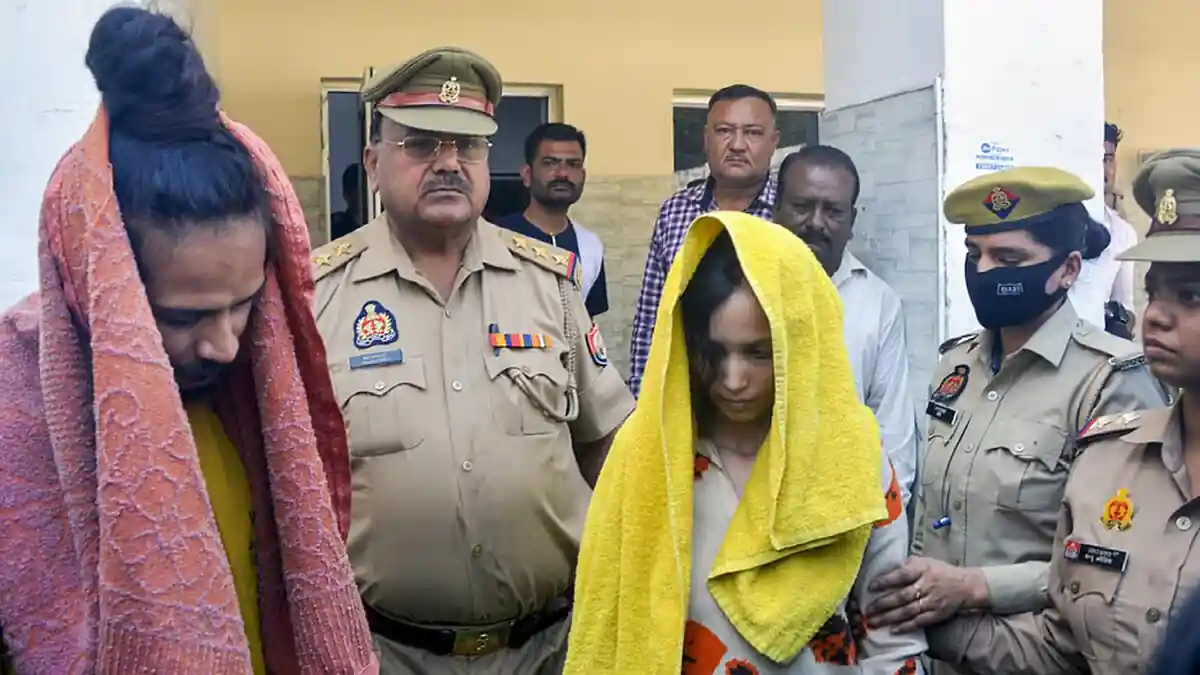
It started with paperwork. Not a raid, not a tip about smuggling or terror links a family walked into a Tahsildar's office in Bagepalli asking for a ration card and a spot on the electoral roll. That's it.
That's what triggered a case now running through the Foreigners Act, the Representation of the People Act, and multiple sections of the Bharatiya Nyaya Sanhita.
The accused are Farah Naz, 52, and her son Mohammed Fardeen, 21.
They'd been living in Dasegaripalli village, roughly 75 kilometres from Bengaluru, alongside Mohammed Ayub Khan Farah Naz's husband, and an Indian citizen from Bagepalli originally. Ayub Khan left for the Gulf in 1993, and depending on which police account you read, he married Farah Naz there either in the UAE or in Qatar a decade later, in 2003.
She was a Pakistani national. Fardeen, their eldest child, was born in Pakistan. Two more children came later, born in the Gulf, and both of those younger siblings hold Indian citizenship through their father.
Only the mother and the eldest son remained Pakistani on paper for 22 years, according to Chikkaballapura police.
Bagepalli Tahsildar Manisha N. Patri says the administration had already picked up chatter that some residents in the area might be living there without valid Indian citizenship.
When the family's ration card and voter ID applications landed on her desk, that earlier tip gave officials reason to dig deeper instead of processing the paperwork routinely. Revenue Department verification found the discrepancy fast—birth records, residency history, none of it matched the citizenship the family had claimed. A field inquiry followed, confirming both mother and son were holding Pakistani passports.
Once that was established, the local ration card was cancelled for having been obtained, as the deputy commissioner's office put it, by concealing facts about nationality. The voter ID went the same way.
Superintendent of Police Kushal Chouksey said the department had received credible information that Farah Naz and her son had secured both documents despite not being Indian citizens and that the arrest followed from there.
The FIR, filed on the Tahsildar's complaint, invokes cheating by personation, cheating, forgery, forgery for cheating, and using a forged document as genuine—a fairly standard stack of BNS sections for identity fraud, layered on top of Foreigners Act and Representation of the People Act violations for the voter ID angle specifically. Police haven't said much yet about intent, whether this was about accessing welfare benefits, avoiding deportation scrutiny, or something else.
What they have said is that the investigation isn't done. Officers are now trying to establish whether anyone inside the local administration helped push these documents through or whether this was one family working the system on its own.
There's also a visa-overstay thread running parallel to the citizenship-fraud angle, and different police statements have blurred the two together somewhat. One version has the family's visas simply expiring and never being renewed after Operation Sindoor tightened cross-border movement scrutiny earlier this year.
Another frames it purely as a decades-old settlement that only surfaced now because of the ration card application. Both could be true at once: a family that settled in quietly years ago, whose immigration status only became a live issue once India's posture on Pakistani nationals hardened.
For now, Farah Naz and Mohammed Fardeen are in custody, and the case sits with Bagepalli police. Whatever comes out of the broader network question will likely shape how this gets covered next a lone family's long-running paperwork fiction is one story; a facilitation racket helping foreign nationals acquire Indian identity documents is a very different, much bigger one.
Chikkaballapura police aren't saying which this is yet. They're still digging.
Cases like this rarely stay isolated once they surface. Chikkaballapura's administration said as much the initial suspicion wasn't about this specific family, but a general sense that foreign nationals without valid citizenship had settled into pockets of the district over the years.
Bagepalli, close enough to Bengaluru to offer work but far enough to stay off the radar, fits the profile of a small-town setting where a family can build a life for two decades without hard questions about a passport.
That's what makes this case notable beyond its own specifics. It isn't a border-town smuggling bust or an airport interception. It's a household that had, by most visible measures, integrated completely an Indian husband, Indian-citizen children, a home where nobody apparently thought twice about who lived where.
The fiction held up right until routine paperwork forced verification, which is often exactly how these cases break. Nobody goes looking for a citizenship discrepancy until someone applies for a document that requires proving one.
Whether Karnataka authorities now widen the search to other households in Bagepalli, or treat this strictly as a standalone case, will say a lot about how seriously the "larger network" question is being taken.