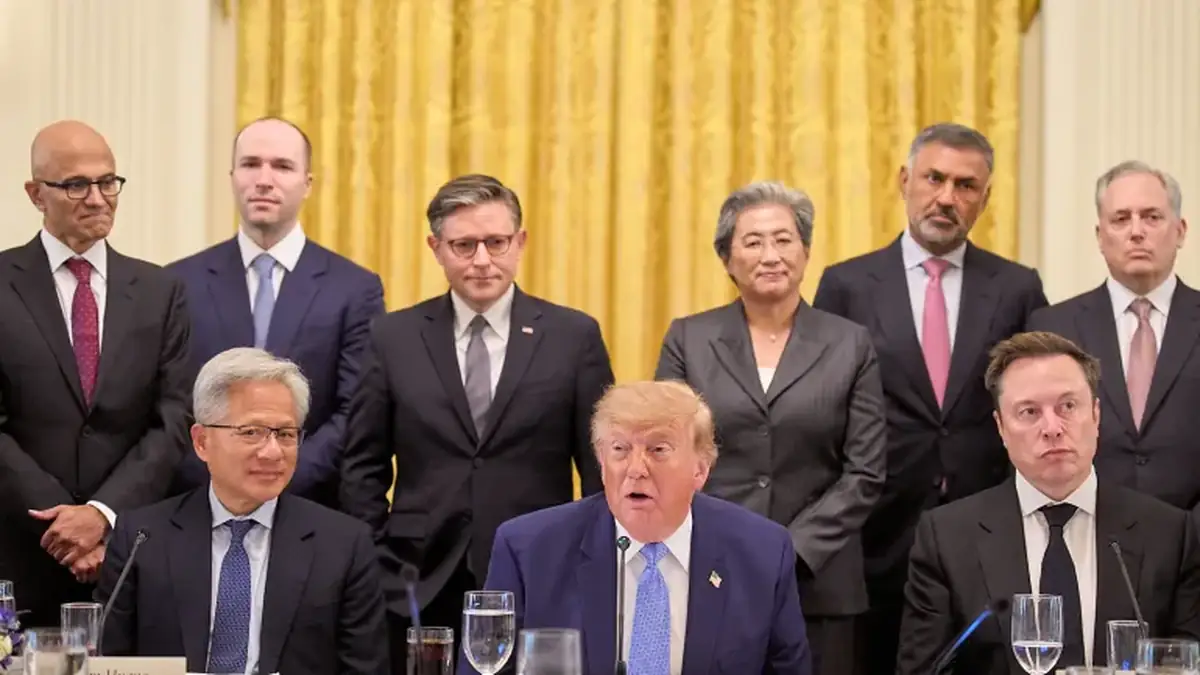
- Treasury began issuing $500 ACA refund checks on Sept. 30. The White House says more than 950,000 people will get one.
- You only qualify if you live in one of the 30 federal-exchange states and paid your full premium with no subsidy.
- There's no application. The check shows up in the mail with a letter signed by President Donald Trump.
- The White House says surplus insurer fees, roughly $500 million, cover the cost. Several experts dispute the "overcharge" label.
- That's under 5% of the 19.2 million people still enrolled, and premiums keep rising. The midterms are five weeks out.
Check the mailbox this week. If you bought an Obamacare plan on HealthCare.gov and covered every dollar of the premium yourself, there may be a $500 check waiting, along with a note from the president.
Treasury started issuing the payments Sept. 30. The White House says mailings continue through October. They're paper checks, so arrival times will wobble. Two neighbors could be a few days apart.
Nobody has to apply or call a hotline. If you're on the list, it comes to you.
The rules are tight, and that's what trips people up.
Anyone who received premium tax credits is out. Since most marketplace customers are subsidized, that alone removes most of the market. The White House describes the recipients as largely middle-income households that get no federal help with premiums. They paid sticker price, so they're the ones getting money back.
Then there's geography. Thirty states rely on the federal exchange, including Texas, Florida, Ohio and Georgia. The other twenty run their own marketplaces. Washington never collected user fees there, which means nothing to refund. Live in one of those states and hold an ACA plan? Still no check.
One quirk worth knowing: a household where several people each paid into the system could receive several $500 checks.
Insurers that sell plans on the federal exchange pay user fees to the government. Those fees help run HealthCare.gov. According to the White House, they piled up into a surplus that never made its way back to consumers, and these checks are that surplus going out the door. Officials put the total around $500 million and say it doesn't require new appropriations.
Gaps remain, and the Associated Press flagged two of them. It isn't clear that $500 matches what any single enrollee actually overpaid. And it isn't clear whether Congress has to approve the disbursement at all.
That's the White House's word. In a recorded address on Sept. 10, Trump accused the Biden administration of gross mismanagement of ACA funds. AP reported he gave no evidence for it.
CNN talked to analysts who see it differently. The surplus, they say, grew mostly because the first Trump administration sharply cut spending on enrollment help, marketing, the website and the federal call center. The Biden administration later spent a lot more on those same things. A pile of fees accumulates when spending drops. That's the experts' read, anyway, and it cuts against the "overcharged" story.
Roughly 19.2 million people remain enrolled in ACA plans. A year ago the number was nearly 3 million higher, and before the enhanced premium tax credits ran out at the end of 2025 it topped 24 million. So the refund touches fewer than one in twenty current enrollees.
Meanwhile the price of the product keeps moving. Several big insurers have pulled back from the exchanges. Those staying asked for a median 15% rate increase for 2027, according to a Peterson-KFF analysis. Health policy experts quoted by CNBC said flatly that a one-time $500 doesn't come close to covering the premium jumps that followed the subsidy expiration.
Think about a family paying a few hundred dollars more every month. Five hundred bucks once is gone by spring.
Hard to ignore. The checks land five weeks before the November midterms, in a year when affordability sits near the top of voters' worries. Democrats say it's an attempt to buy votes. Critics use the word "gimmick." The White House frames it as returning money people never should have paid.
The announcement came the day after Trump promised a separate $5,000 payment to every American adult, but only if Republicans keep control of the House and Senate. Different program, different conditions. The $500 is already in the mail and the $5,000 is a pledge.
Don't mix this up with the medical loss ratio rebate. That's an older rule that forces insurers to refund policyholders when they spend too little of premiums on actual care. The threshold is 80% for individual and small-group plans and 85% for large groups. Some people may still get one of those from their own insurer this year. It has nothing to do with the federal check.
And watch out for scams. A real refund doesn't need your bank login, a "processing fee" or your Social Security number. A text or call asking for any of that is fake. Hang up, or delete it.
Several states are already finalizing 2027 rates, so the next round of premium notices isn't far off.