Iran and the United States appear to be moving far apart once again on a key issue in their ongoing conflict, just like before.
Since the Iran–US conflict began, the Strait of Hormuz has become a key focal point because more than 20% of the world’s crude oil passes through this route.
Before the conflict escalated in February, Iran had not made strong claims over the Strait of Hormuz. However, after tensions with the US increased, Iran has started asserting control over the route and has effectively created restrictions, raising concerns about potential blockages in this crucial oil passage.
After the United States and Israel reportedly launched attacks on Iran, Iran warned ships not to use the Strait of Hormuz and said it would take action against those who ignored the warning, prompting many vessels to turn back.
Because all ships knew that Iranian patrol boats in the Strait of Hormuz could be targeted by drone attacks, which could lead to losses worth billions of dollars.
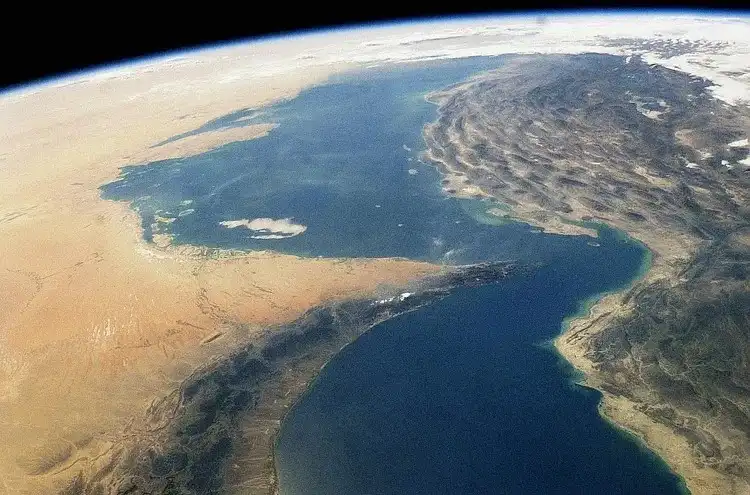
Photo: @Stocktrek/Photodisc/Getty Images
In March, Iran’s new Supreme Leader, Mojtaba Khamenei, issued a statement saying that the right to use the option of closing the Strait of Hormuz should definitely continue.
After that, Iranian officials have talked about a new arrangement for the Strait of Hormuz under which it would essentially remain under Tehran’s control. This would violate international law, as it would interfere with the “right of transit passage” for international navigation.
Due to this, US President Donald Trump threatened large-scale retaliatory action against Iran and ordered the US Navy to block ships using Iranian ports.
The US Army reported that in 20 days, 48 ships were stopped and forced to turn back.
However, in this situation, several Iranian ships also managed to escape the US Navy. The monitoring group “TankerTrackers” said on Sunday that one Iranian ship carrying crude oil successfully avoided the US Navy and reached the Far East. The ship was carrying more than 1.9 million barrels of crude oil, worth approximately $220 million.
There are also reports that the US Navy is not able to track all ships, as earlier it was reported that a Chinese ship carrying crude oil from Iran successfully used this route to reach China.
Press TV reported that under the proposed 12-point plan, Israeli and US ships are not allowed to pass through this route, and if they wish to cross the waterway, they must first obtain permission and also pay war compensation.
Press TV reported that all other ships will need to obtain permission from Iran to pass through this route.