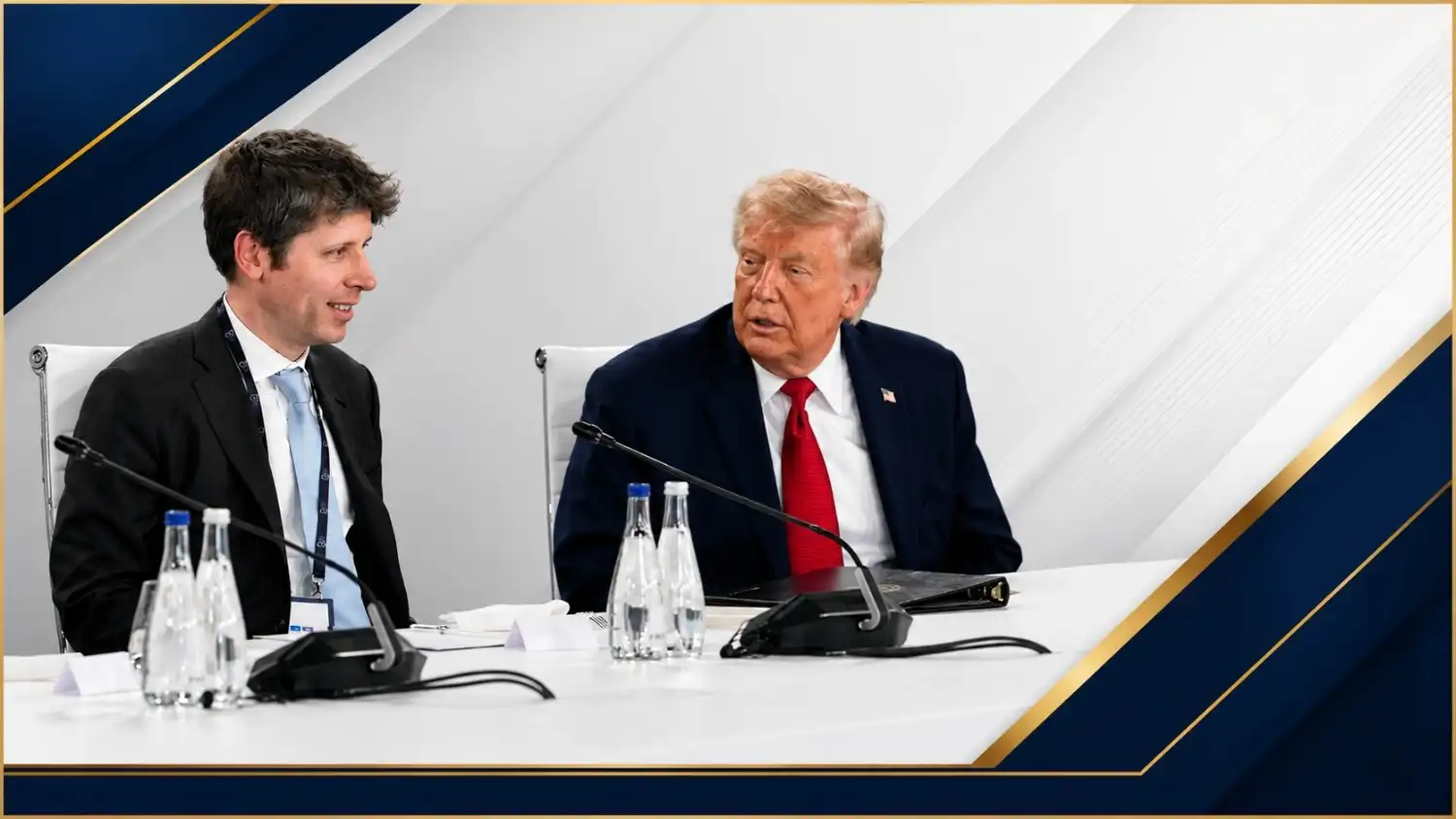
In a surprising development, it is being said that the firm behind ChatGPT, OpenAI, has begun preliminary talks regarding giving the US government a 5% ownership in the firm. This has been reported in the Financial Times newspaper after getting inputs from two sources close to the negotiations and then followed by big media houses such as Bloomberg, CNBC, and Reuters.
As per reports, Sam Altman, CEO of OpenAI, and other members of OpenAI’s management team are not only suggesting this for their company, but they expect this from all leading American AI firms, where 5% shares will be allotted to the US government in all these companies.
In March, OpenAI raised a huge amount of funds for its company at a post-money valuation of $852 billion. With such a valuation, 5% of shares would be valued around $42.6 billion!
The model being considered is not merely "giving away shares for free to the government," but rather that Altman has reportedly suggested creating something akin to the Alaska Permanent Fund, which is a state-owned investment fund based on decades of revenues from oil in Alaska. Every year, the fund provides a cash dividend to Alaskan citizens via investment revenues from oil income.
This model works in roughly the same way, where top AI firms will invest in an equity pool, and the results will ultimately be used to help out Americans—perhaps even in the form of dividends just like oil revenues do today in Alaska.
This isn't an entirely new concept that OpenAI is bringing forward. In April, the firm offered up a "public wealth fund" model as a policy suggestion, and Altman has reportedly been pushing this kind of concept in the White House since at least early 2025.
According to the report in the FT, Altman has spoken to the following about the proposal:
- Donald Trump, President of the United States
- Howard Lutnick, Commerce Secretary
- Scott Bessent, Treasury Secretary
Moreover, according to the report, Altman had reportedly also recently spoken with Senator Bernie Sanders of Vermont, an independent senator. This is significant because Bernie Sanders also has his own, far more ambitious version of this proposal well underway.
Back in June, Bernie Sanders proposed the American AI Sovereign Wealth Fund Act, which would exceed OpenAI's proposal by far. Sanders' proposal would ensure the government holding 50% of the voting stock in America's top AI firms via a fund estimated by Sanders' office to have a value of about $7 trillion. With these figures, Sanders' proposal is expected to be large enough to provide each American citizen with an annual $1,000 dividend.
This makes Altman's 5% proposal quite small compared to Sanders' one. Some have commented that this is the lowest percentage of public ownership for any top AI firm.
This proposal does not emerge out of thin air but instead amid growing concern within Washington about the power held by a small number of AI firms due to several factors:
1. Security issues: There have been fears raised over the potential security implications of advanced AI models and their proliferation.
2. Competing Chinese technology: With Chinese open-source AI models quickly catching up on capability and costing far less than America’s best models, this issue has taken on new urgency and consideration of how to maintain US dominance and whether the public should see some profit off those firms’ success.
3. Precedent for equity investments in private companies: The Trump administration has already made equity investments in private companies. For example:
In August of last year, the government took a minority ownership of around 10% in Intel through an $8.9 billion investment in the firm's ordinary shares.
Trump went ahead in May and stated that he would have liked to negotiate a higher percentage ownership of Intel. Nvidia and AMD also offered to pay the government 15% of their China chip sales in return for licenses to export.
Even Trump himself has favored such an approach, as he commented on it in June, stating that government ownership stakes in AI firms will be "beautiful" and that the American people will become partners in this revolution. According to Vice President JD Vance, Trump prefers to see equity stakes rather than cash to be paid to citizens.
This is the key outstanding question. In order for Altman's vision to come true as he envisions it, not only will OpenAI need to sacrifice some of its equity but also Google, Meta, and Anthropic will need to do the same and cede 5% each. Up until now, none of these firms have signaled their intent to do so.
On its own, Anthropic has proposed the concept of the "digital dividend," which involves payments to Americans made possible by taxation of the AI industry—an entirely separate yet connected notion from giving up equity.
Of course, such an agreement will require Congress's approval to become a reality, so we still need to take everything here conceptually.
There is yet another complication for the timing of things. OpenAI submitted draft documents regarding its IPO to the US Securities and Exchange Commission in June, but now the firm says it hasn’t made a commitment on when exactly it will be listed.
Some reports even indicate that advisers are looking into delaying an IPO until 2027.
In the event that the government ends up negotiating an equity share in OpenAI, then negotiating this deal prior to the IPO will enable Washington to secure itself well before the change in ownership during the IPO process.