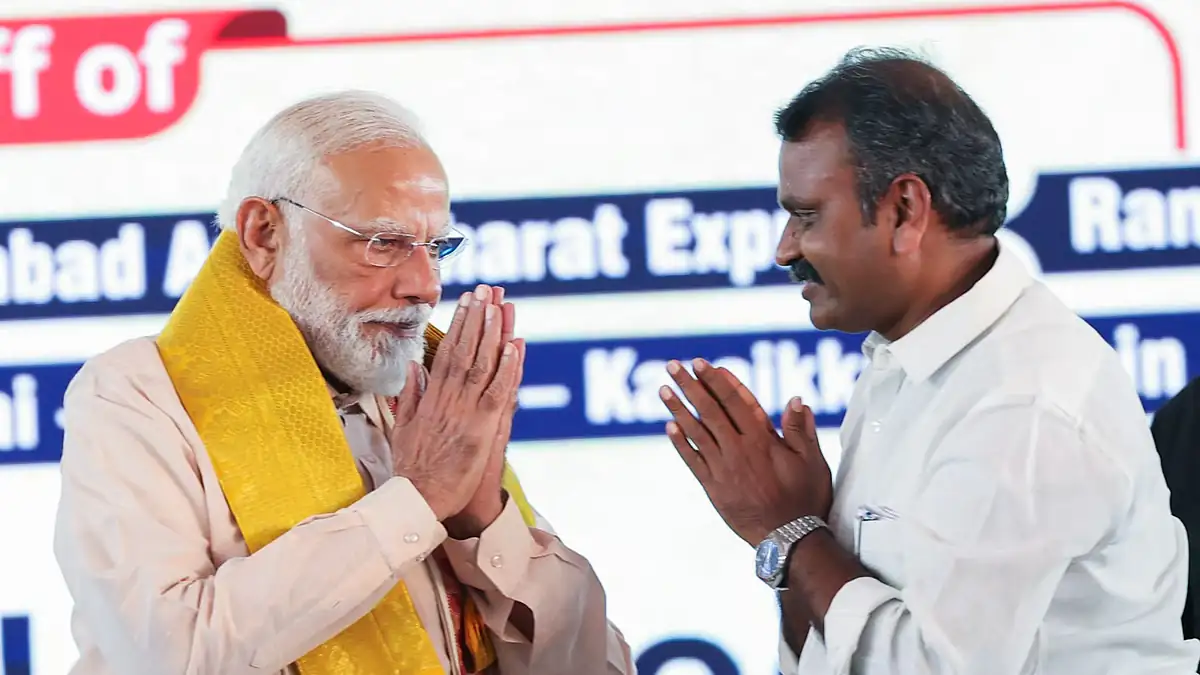
The historic visit to New Zealand saw Prime Minister Narendra Modi disclose the plan for India and New Zealand to integrate India’s Unified Payments Interface (UPI) with New Zealand’s fast-payment system. This was disclosed during Prime Minister Narendra Modi’s historic two-day state visit to New Zealand from July 10 to July 11, the first time an Indian prime minister has visited New Zealand after four decades.
This is seen as another major move in India’s continuous effort of taking its digital public infrastructure on the world platform.
At a grand luncheon organized by the Prime Minister of New Zealand, Christopher Luxon, in Auckland, India, Modi clarified that their newly formed strategic partnership was now being converted into practical cooperation in a number of fields.
"My friends, for making our strategic partnership meaningful, we are converting the strengths of both countries into practical cooperation. In the field of fintech, we are taking forward the initiative of interoperability of India’s UPI and New Zealand's payment system," Modi added.
This simply means that the two countries are now working on making it easy for payments to flow between the UPI network of India and the fast-payment system of New Zealand. Once this integration is complete, then payments from one country to another will become much easier.
UPI or Unified Payments Interface refers to the real-time payment service developed in India that enables individuals to make instant transfers of money from one bank account to another using only their mobile devices. At present, UPI is considered to be one of the leading and most widely used digital payment services globally, providing billions of transactions monthly inside the country.
In recent years, there have been multiple efforts made to ensure that UPI becomes an international payment system enabling Indian citizens and businesses to make payments outside of India as well as linking foreign payment networks with the UPI network. The integration of the New Zealand payment network with UPI can be viewed as one such step towards making UPI a truly international payment system.
From the consumer point of view, this can eventually lead to easier and quicker payments between the countries.
This particular agreement on fintech is only one of the many comprehensive agreements reached on Modi’s trip. Some of the other areas of cooperation that were deliberated upon by the two leaders include agriculture, education, healthcare, defense, and maritime security.
Speaking of agriculture, Modi stressed that India and New Zealand have already worked out a comprehensive approach for their cooperation in agriculture, dairy, and food processing sectors, which will definitely bring a number of benefits to farmers and livestock owners in both countries.
Another announcement of the prime minister related to reaching an agreement on cooperation in traditional medicine in line with their healthcare cooperation.
In relation to education, Modi stated that New Zealand’s leading universities should open their campuses in India under a new liberalized policy. New Zealand traditionally serves as a study destination for many Indian students.
The Cultural Cooperation MOU was also signed with a view to promoting cultural exchange between the two nations.
Modi attached great importance to the contribution of the Indian diaspora in New Zealand, emphasizing that people-to-people linkages constitute the "strongest strength" of the bilateral partnership between the two countries.
The leader congratulated the local Indian community on the exceptional position they occupy in the country thanks to their hard work and talent.
Such a view was reflected in the official Joint Statement of India-New Zealand, issued on the occasion of the visit, that officially recognized the Indian community as "an integral and valued part of New Zealand's diverse society" and referred to them as "a living bridge" linking the economies, cultures, and societies of the two countries.
Apart from fintech and cultural collaborations, economic cooperation became one of the major themes of the visit as well. As per Modi, new agreements will form the bedrock for doubling bilateral trade, supported by the investment of 20 billion US dollars by New Zealand in India.
Trade relations between the two countries have already been expanding steadily. According to the statistics by Rubix Data Sciences, the merchandise trade between India and New Zealand expanded at a compound annual growth rate of 8 percent between the 2022 and 2026 financial years, amounting to a total of 1.155 billion US dollars.
All these initiatives, including the UPI integration, are part of the overall framework known as the "Roadmap to 2030," which was signed during the visit.
The roadmap highlights the shared vision and goals that India and New Zealand are expected to work towards in the coming years through closer cooperation in the above areas of mutual interest.
Defense and security cooperation was another issue addressed by both the leaders, where they mentioned how there was an increasing level of strategic trust building between the two democracies. Although defense issues were not the major topic discussed regarding the fintech collaboration initiative, from the general context of the visit, it appears that India and New Zealand have plans for more cooperation in the future, not only in economic terms but also in the field of defense and strategy.
As an additional cultural and historical highlight of the visit, there is a new initiative between India's National Maritime Heritage Complex in Lothal and the New Zealand Maritime Museum.
Notably, the two countries took advantage of the meeting to initiate a joint cooperation project in the field of sports. The leaders praised what they termed “100 Years of Unity Through Sport in 2026” and outlined a Joint India-New Zealand Action Plan on Sports.
This is meant to be a practical platform for exchanging knowledge and experience in high-performance sport, coaching, and sports science.