In the resignation statement on June 22, 2026, Keir Starmer resigned as prime minister and leader of the Labour Party, a position he had held for only two years in which he led the party to win some of their most significant victories in decades. Addressing the press outside 10 Downing Street, accompanied by his wife Victoria, an emotional-looking Starmer informed journalists that the Labour Party did not believe anymore that he was the one to take them forward in the coming elections.
"The question that my party is asking is whether I am the right person to take them into the next election. I know the answer… and I accept the answer graciously," he said. "Each and every decision I have made is because of the need to put my country ahead of everything else. This is why I shall resign."
This resignation adds to the trend of short stints by British prime ministers seen in recent years, making Starmer Britain’s seventh PM in the past ten years.
The political career of Mr. Starmer did not come to an end all of a sudden. On the contrary, it is the consequence of several months of increased pressure and some important events, namely:
1. Landslide becomes disastrous. Labour won the general election of 2024 in the UK, gaining a huge majority and promising its voters stable leadership and economic revival after 14 years of Conservative leadership. However, in the next two years, the popularity of Starmer became lower than ever before because many people were disappointed with the inability of their leader to change something.
2. Disaster at the local level. The end of April 2026 was marked by a really tough victory for Labour at the local elections in England, Wales, and Scotland. The party lost more than 1,000 local council seats and gave up its control over the Welsh legislature after 27 years. The main winner of that day was Reform UK, a populist anti-immigration party led by Nigel Farage and gaining almost 1,300 council seats.
3. The Burnham Factor. As the Labour MPs worry about the future of the party, attention was paid to Andy Burnham – a popular and amiable ex-mayor of Greater Manchester known for his positive image. Thanks to their combined efforts, one MP agreed to step down in favor of Burnham and allow him to compete in the by-election in Makerfield, which is a constituency neighboring Manchester. To become an MP, Burnham has to take part in the by-election because, following the traditions of British politics, only MPs may serve as the leaders of their parties and hence Prime Ministers.
4. Victory in the by-election. Burnham succeeded easily in winning the Makerfield by-election on June 18, receiving 55 percent of votes, beating the Reform UK candidate by 9,200+ votes. It is quite an achievement in the constituency where a far-right party recently won all the council seats.
5. The final move. It did not take long for it to become apparent that Starmer would not be able to keep his position as the leader of the party after he declared that he would protect his position in any possible way.
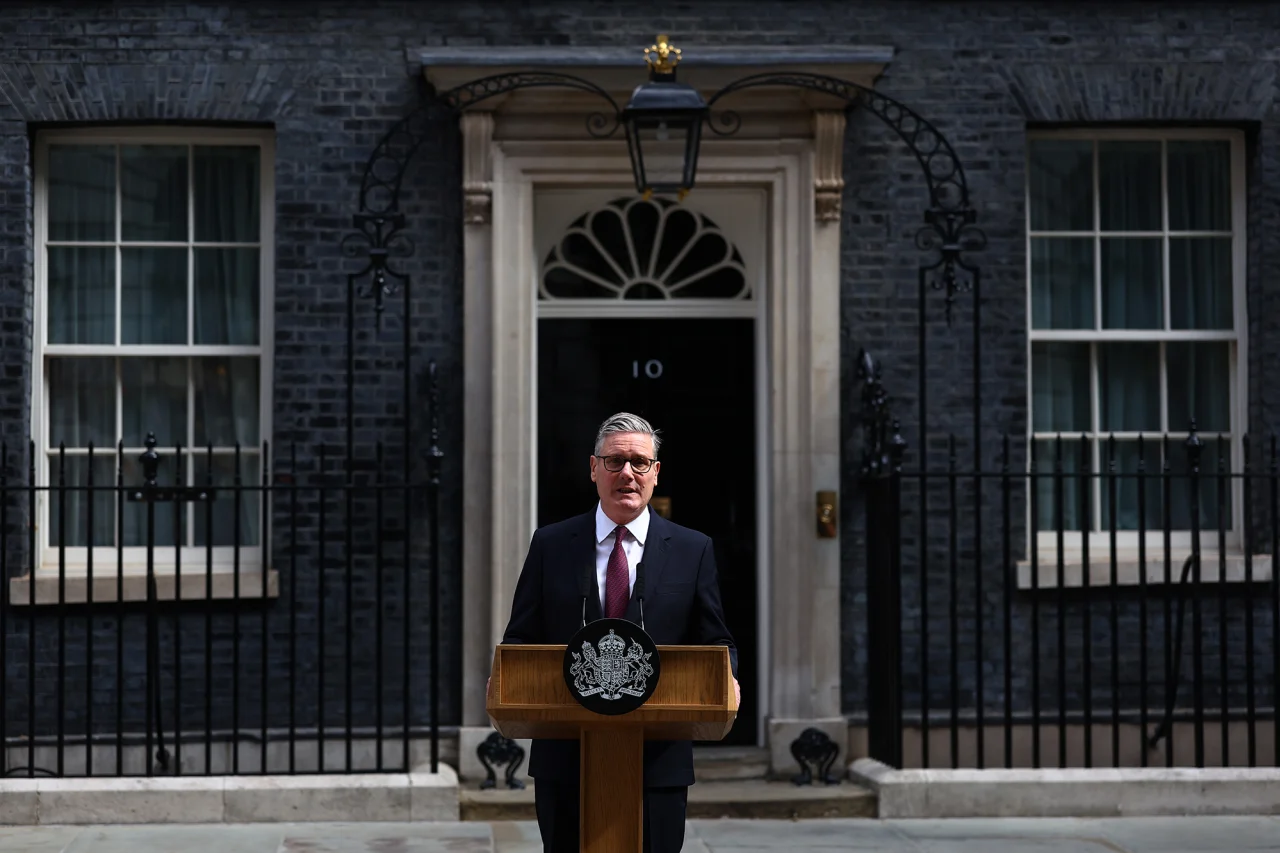
Photo: @Peter Nicholls/Getty Images
Within the country itself, Starmer came under attack because he could not convert the political victory he won into tangible achievements. The electorate was still feeling the pressure of living costs and the state services. His appointment of Peter Mandelson, a close confidant of convicted sex offender Jeffrey Epstein, as ambassador of Great Britain to the United States became one of the sources of criticism.
In international politics, Starmer was more appreciated for his actions. The politician actively participated in mobilizing European nations in support of Ukraine, which was invaded by Russia, and sought to coordinate diplomacy following the recent war between the United Kingdom and Iran, adding to his difficult relations with the President of the USA, Donald Trump, who did not approve of the military operation of the UK against Iran.
Trump himself commented on Starmer’s resignation, writing that the politician had “failed badly” when it came to immigration and energy issues.
Starmer has already signaled that he plans to make sure there is an "orderly transfer of power." This is how it looks moving forward:
1. Starmer will continue as caretaker prime minister until a new Labour leader emerges.
2. The nominations process for the next labor leader will begin on July 9 and end on July 16, when Parliament adjourns for its summer recess.
3. Should there not be any serious challenge against Andy Burnham, especially after his chief rival Wes Streeting, who was formerly the health secretary, came out to declare him as his preferred candidate, this race might end without a contest, with Burnham assuming office soon after mid-July.
4. In the event of more than one candidate challenging for the leadership, voting will be done through the preferential ballot system, and the result will be announced by September 1, before Parliament reconvenes.
5. Following the selection of a new labor leader, Starmer will step down as the Prime Minister and hand over to King Charles III, who will then ask the elected labor leader to form a government.
First of all, it is important to remember that Britain does not have to conduct a general election until 2029, and therefore Burnham will lead for some time with the mandate that Labour received in 2024.
However, this is not only about a new face at 10 Downing Street but also about the turbulence within the politics of Great Britain. Since 2016, with the vote to leave the EU, the country experienced one prime minister after another due to various factors, including financial pressure, frustration among citizens, and a growing influence of populism as embodied by the movement Reform UK. The political analysts argue that the cause of the discontent, which changed the political climate in the UK, can be traced back to the stagnation of salaries and consequences of Brexit in the economy of the country.
Andy Burnham, the new Prime Minister, will have a difficult task ahead of him—he should restore trust in his party, fight off Reform UK, and prove that this new leader will bring stability to the country.