Six months into this war, you'd think both sides would be running out of things to hit. They're not.
Tuesday alone gave us five sunk or disabled Iranian tankers, twenty missiles fired at a Jordanian air base, and oil prices creeping close enough to $100 a barrel that traders started reaching for their Goldman Sachs notes again. It was, by most counts, the busiest 24 hours of the conflict in weeks. And it all traces back to something that didn't even work.
Twice in two days, Iran's Islamic Revolutionary Guard Corps tried lobbing ballistic missiles at an American warship. Twice, according to U.S. Central Command, they missed. The ship (CENTCOM won't say which one) kept right on patrolling. Nobody on board got so much as a scratch.
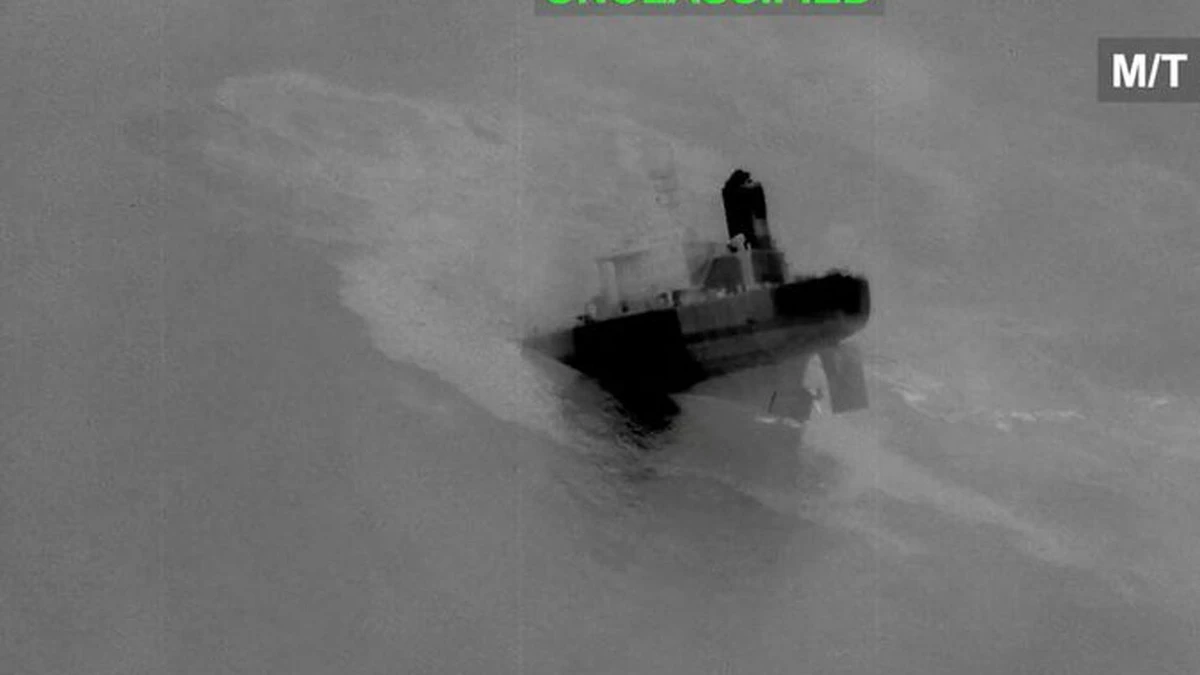
Washington's answer came Tuesday afternoon, and there was nothing subtle about it. Five vessels CENTCOM ties to the IRGC's shadow fleet, the network Iran uses to move sanctioned crude and quietly bankroll its military, were struck within hours of each other. Four went down in the Gulf of Oman: the Kivik, the Charminar, the Horizon 1, and the Riesco. A fifth, the Derya, was hit near Kharg Island, which handles the bulk of whatever crude Iran still manages to export.
Crews were told to abandon ship first, CENTCOM says. Video released afterward shows the Riesco going under. "No American personnel were harmed" is the line CENTCOM used, and at this point it's basically boilerplate; they've said it after nearly every strike this month. This was also the second round of tanker hits in four days. Three more went down Saturday after yet another failed missile attempt.
Iran didn't sit on this one. Within hours, state media was reporting missiles inbound toward American positions in Jordan. Jordan's own military put the number at twenty ballistic missiles. Eighteen got shot down. The other two landed somewhere nobody lives. No injuries, according to Amman.
The IRGC says it hit al-Azraq air base, home to American assets, plus a second American target it didn't specify. Jordan keeps ending up in the middle of this fight, mostly because U.S. forces sit on its territory and mostly against Jordan's own wishes. That hasn't changed since February, and nothing about Tuesday suggests it's about to.
Then there's the part aimed at everyone else. The IRGC Navy put out a statement, carried through Fars, telling ship crews near the ports of Kuwait and Bahrain to get out now, because those vessels are targets going forward. Not a threat buried in diplomatic language. Just: leave, or else.
Markets did what markets do when this war flares up: they panicked, briefly and predictably. Brent touched $99 a barrel Tuesday, a seven-week high. WTI cleared $94. Gasoline futures jumped almost 2% in a single session. Ship traffic through the Strait of Hormuz, which used to carry something like a fifth of the planet's oil, has slowed to a crawl, some days seeing barely a handful of vessels pass through at all.
Nobody's ruling out worse. Goldman Sachs has floated $120 a barrel if the shipping attacks keep piling up, and Tehran's Supreme National Security Council is reportedly close to declaring a restricted zone outside the strait, which would spook the market even further. The UAE, meanwhile, says it's already quietly rerouting its own exports so it doesn't get caught holding the bag.
Here's the awkward part. Washington announced back in August that it wanted to step back from direct military exchanges and lean harder on economic pressure instead. That plan is not exactly panning out. The Treasury slapped fresh sanctions on Iran's aviation sector this week, 27 airlines and nine related firms, and it did so in the same stretch of days that American warships kept exchanging fire with Iranian forces in the Gulf. Secretary of State Marco Rubio summed up the actual policy pretty plainly: Iran keeps losing tankers every time it targets a U.S. warship.
India buys most of its crude from abroad, so none of this is background noise there. Every added dollar on a barrel of Brent eventually shows up at the pump, then in freight bills, then, with a lag, in the price of groceries. Indian fuel marketers already raised petrol and diesel prices once this year, the first hike since 2022, and they said as much when they did it. Economists keep warning that a war dragging into a seventh, eighth, ninth month could widen the trade deficit and squeeze margins in everything from farming to logistics.
Six months in, neither side looks close to stopping. If anything, Tuesday looked like the war finding a new gear.
- U.S. forces destroyed five Iranian oil tankers Tuesday after two failed IRGC missile attempts on an American warship
- Iran hit back with 20 missiles at Jordan; 18 were intercepted, two fell in empty areas, no casualties
- The IRGC has warned ship crews near Kuwait and Bahrain to evacuate, calling their vessels future targets
- Brent crude hit a seven-week high near $99 a barrel, with some analysts warning of $120 if shipping attacks continue
- Washington sanctioned 27 Iranian airlines and nine related firms this week, even as strikes carried on
- India, a major crude importer, faces renewed pressure on fuel prices and its trade deficit the longer this runs