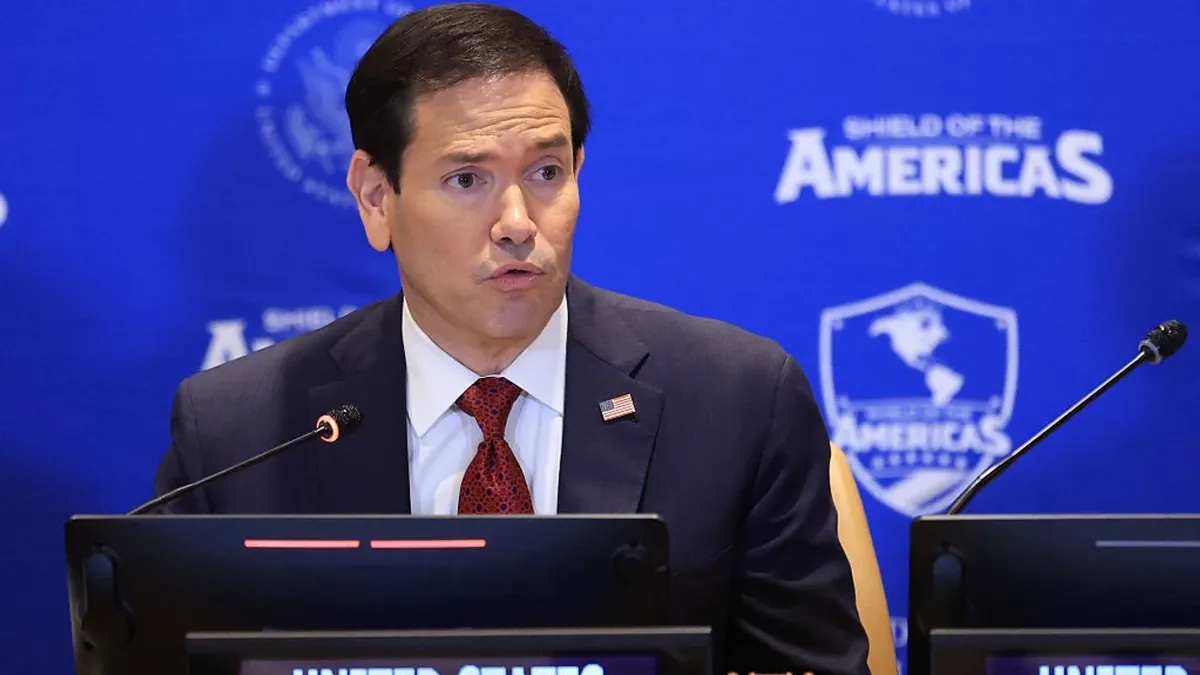
U.S. Secretary of State Marco Rubio introduced the U.S. visa restrictions policy on Wednesday, September 23, 2026, against individuals who knowingly practice or participate in the facilitation of "birth tourism" business in the United States.
This policy has been introduced under the Immigration and Nationality Act in Section 212(a)(3)(C). It does not alter the criteria for acquiring citizenship, but it prevents the issuance of visas to those individuals who conduct the business behind the birth tourism industry.
"I am pleased to announce a new visa restriction policy based on 212(a)(3)(C) of the Immigration and Nationality Act," Rubio stated.
"The new visa restriction policy applies to individuals who knowingly participate in, have participated in, or facilitate birth tourism into the United States," a State Department spokesperson told ABC News. It will affect those who operate commercial birth-tourism businesses and US visa "fixers" who encourage applicants to defraud the system, as well as overseas health care providers who knowingly assist in arranging trips.
According to the department, the new restrictions may also apply to those who "fraudulently abuse the US Medicaid program," as well as "certain family members may also be covered," though it did not state which."
Rubio stated that foreign commercial entities had made use of America’s immigration process in order to sell citizenship.
“Such organizations promote and train foreign nationals in making false declarations on United States visas, earning tens of thousands of dollars in fees to have babies on American soil simply to secure US citizenship,” he further said.
“The Trump Administration is employing every tool available to us to preserve the sanctity of US citizenship, to protect US taxpayers and US public programs from being taken advantage of, and to protect our national security,” he further added. “We are setting a strong message by limiting visa issuances to those who commit and profit from such fraud.”
In addition to the visa policy, the department introduced an online reporting tool, which enables any member of the general public to report any visa fraud and misuse.
The portal is designed to cover a wide array of alleged schemes, such as fake documentation, fake travel plans, fake marriages arranged by brokers, dummy companies, and fake job offers, among others.
There are several things that need to be made clear regarding this new policy. For one, birth tourism, which is the act of foreigners coming to give birth in the US, is already considered an improper reason for obtaining a visitor visa in itself under the policy of the State Department. What Wednesday’s announcement brings to the table is the idea of putting visa restrictions on those facilitating birth tourism.
The importance of this lies in the fact that on June 30, 2026, the Supreme Court issued a decision in Trump v. Barbara stating that the 2025 executive order, which denied automatic citizenship to children born in the US to parents who were present in the country either unlawfully or temporarily, was in violation of the Citizenship Clause of the 14th Amendment of the US Constitution.
The Court reiterated the fact that birth in the US territory gives citizenship according to the jus soli doctrine since the 1898 case of United States v. Wong Kim Ark.
Just five weeks later, on August 6, 2026, Trump signed two executive orders, this time addressing more narrow issues: "Ending Birth Tourism" and "Continuing to Protect the Meaning and Value of American Citizenship."
While the second order specifies particular groups that, according to the administration, lie beyond the reach of the 14th Amendment's coverage, these include children of "alien enemies" and children related to particular foreign diplomatic positions, the order focused on immigration enforcement, urging visa screening for pregnant women. The birth tourism order does not seek to define the concept of citizenship but rather seeks to enforce stricter immigration rules.
In this connection, experts have stated that the key issue here is whether the new narrow groups of people could be included in those exceptions to the 14th Amendment's rule that had been established by the Supreme Court before. Civil rights organizations have announced their intention to challenge the orders in court, and previously, such attempts prevented implementation of Trump's first order back in 2025.
The Department of State did not give the names of any individuals, organizations, or countries that would be directly affected by the new rules.
Congressional investigations into the industry have been ongoing before this announcement as well. The House Oversight Committee has investigated some of the birth tourism centers before and even demanded papers from a company known as “Have My Baby in Miami” in May. This is because most of the women visiting for such purposes are from China and Russia, posing “national security and election integrity threats.”
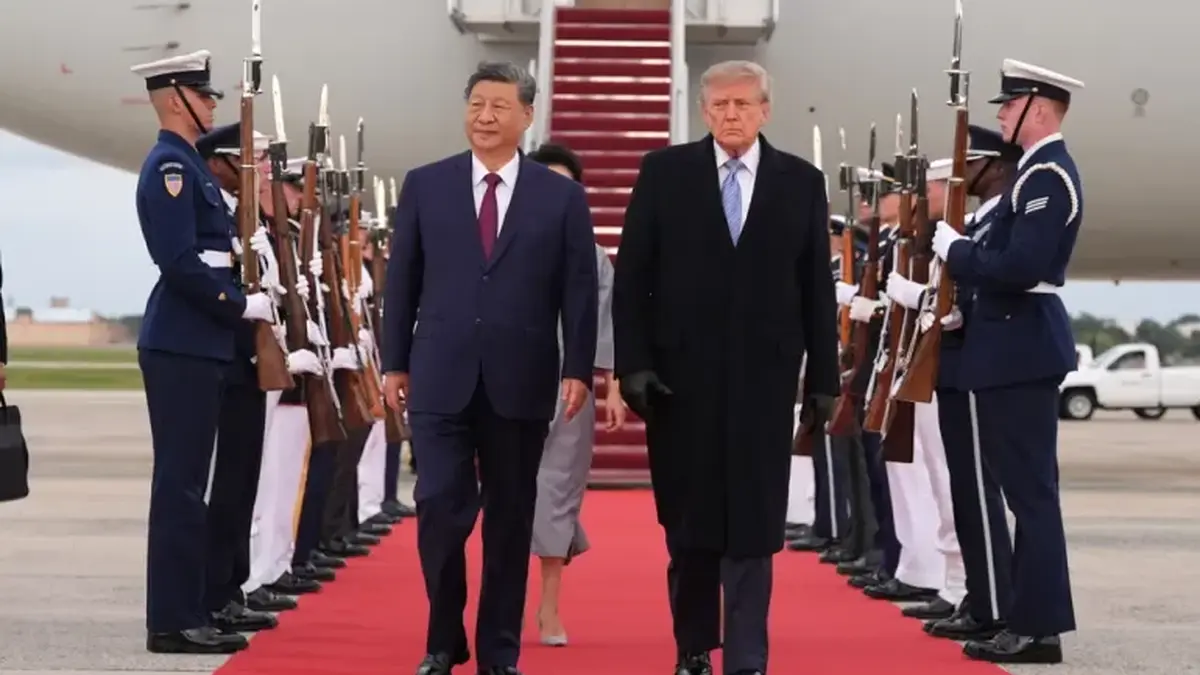
This announcement has been made while the arrangements are being made for the state visit to Washington by the President of China, Xi Jinping, who is expected to meet with President Trump on his first trip to Washington in more than a decade, when there are strains between both the countries on issues of trade and technology.
There was no reference to China or any other nation in the announcement issued by Rubio.
As the new policy does not require the enactment of any new law and rather depends on an existing law, therefore, there will be no need for Congress to do anything before it can take effect, but its application will depend on the way consular officers apply it while examining each case.
The larger legal battle about the executive orders of August 6 will continue in the Federal court where the advocacy groups will probably claim that the new “historical exceptions” found by the administration exceed those permitted in Trump v. Barbara.