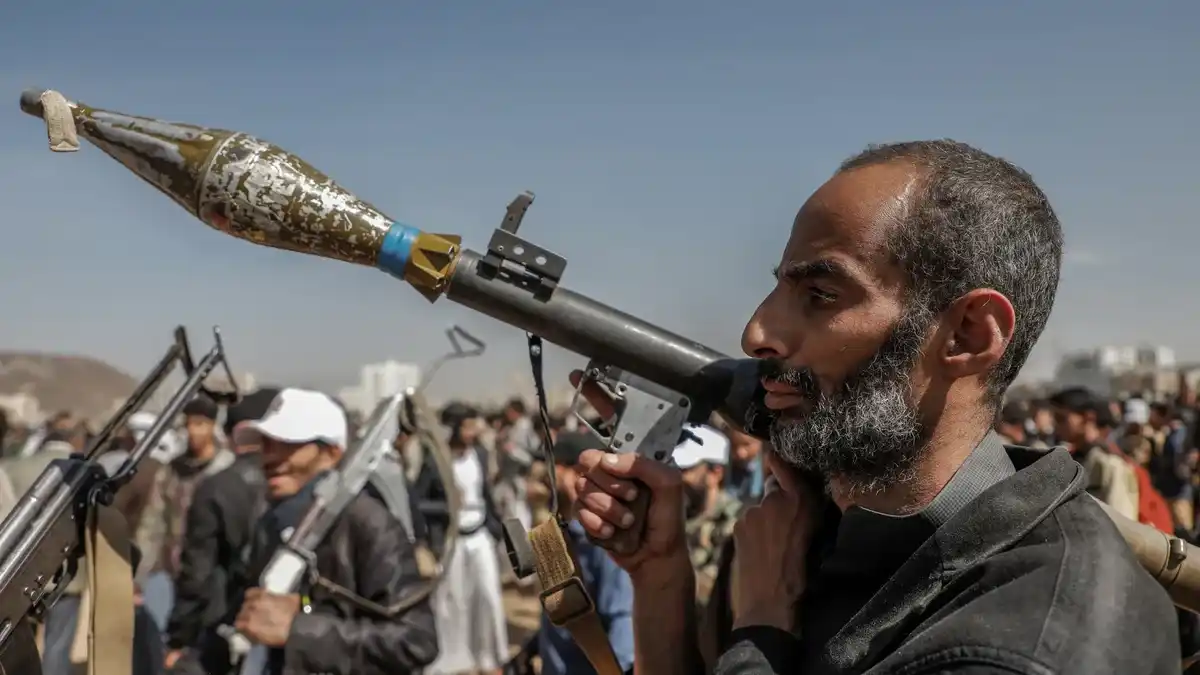
Saudi Arabia and its coalition spent the better part of a decade trying to keep this exact thing from happening. It took the Houthis six or seven days.
By Friday, fighters loyal to the Iran-backed group held every stretch of Yemen's Red Sea coastline, right down to Mayyun, a small volcanic island sitting almost exactly in the middle of the Bab al-Mandeb strait. Government troops had pulled off it a day earlier.
Boats came across, fighters landed, and that was that. A local official, speaking to reporters on condition of anonymity because he wasn't authorized to talk, said gunmen were already driving around the shoreline in military vehicles like they owned the place. Which, at this point, they more or less do.
Mokha fell on Thursday. Then Zuqar Island. Then the town of Dhubab, then a coastal village called Murad. All of that, coast to coast, happened in about 18 hours.
By the time Mayyun went, government soldiers on the Hanish islands, somewhere north of 2,000 of them, were cut off and reportedly begging for food, water, and air cover that never came.
Nobody has a clean death toll yet. Hundreds, probably, going by the pace of the fighting. What's not in dispute is the map: every strategic island in the strait is now in Houthi hands.
Is this random? Not according to the people who track this stuff for a living. Researchers at the Institute for the Study of War think the Houthis are angling to become something like the gatekeepers of Bab al-Mandeb, the same role Iran has tried to play at Hormuz for years, all while telling the world they'll keep shipping lanes open. Maybe they will. Public statements from an armed group holding a chokepoint are worth exactly what you'd expect them to be worth.
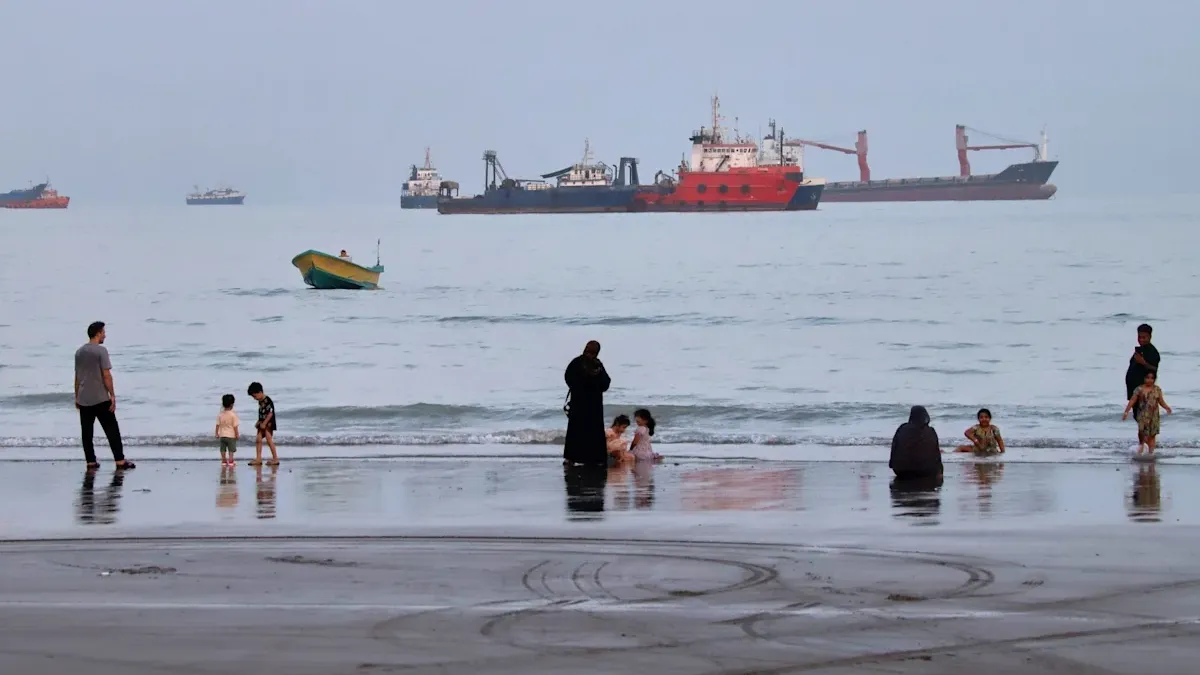
Bab al-Mandeb is about 30 kilometers across at its narrowest. Something like 12 percent of everything that moves by sea globally passes through it on the way to or from the Suez Canal, and millions of barrels of oil go through daily on top of that.
It mattered less a year ago. It matters enormously now, because the Strait of Hormuz has been more or less shut since February, when the US and Israel opened a war on Iran that limped through a June ceasefire before restarting in July.
Saudi Arabia's workaround has been an old pipeline, the East-West line, hauling crude 1,200 kilometers across the kingdom to the Red Sea port of Yanbu specifically so tankers can skip Hormuz. Exports through Yanbu had more than doubled since the war started.
Except that the pipeline isn't safe either. On September 10, Saudi officials said drones fired from inside Iraq hit the line and a couple of pumping stations south of Medina.
Aramco shut part of it down as a precaution. So within the space of a week, Saudi Arabia's two main ways of getting oil out of the country both took a hit, more or less simultaneously. That's not a great week for anyone whose job is keeping crude flowing.
Brent crossed $100 a barrel again on Friday, the first time since mid-May. Diesel in the US pushed past $6 a gallon.
This is the part of the story that plays out almost on autopilot now: tanker owners start rerouting, war-risk insurance ticks up, and somewhere down the line a driver in Ohio or a farmer in Punjab ends up paying a bit more for fuel they had nothing to do with.
Behind the scenes, Mohammed bin Salman is reportedly pushing Trump to greenlight strikes on the Houthis. Trump, as of this week, hasn't. If anything, the US appears to be pulling back a little, reportedly thinning out air defense cover for tankers going through Hormuz, which is an odd signal to send while a second chokepoint is unraveling.
It's a bit of a whiplash, honestly. Back in July, Trump gave MBS his blessing for a Saudi strike on Sanaa airport, which promptly triggered Houthi missile retaliation and nearly broke a truce that had held since 2022.
A month later, MBS was reportedly telling Trump the opposite: don't hit Iran's energy infrastructure; that'll just invite Iran to hit Saudi facilities back. Two very different asks, one month apart, same crown prince.
The oil story gets the headlines, understandably, but there's a human one underneath it that's easy to skip past.
The International Organization for Migration counted roughly 18,500 people displaced in just 72 hours as the fighting escalated.
Broader tallies for the whole September offensive run from around 50,000 up to 80,000, depending on who's counting and when.
Families told reporters they left wearing whatever clothes they had on. Nothing packed, nothing planned.
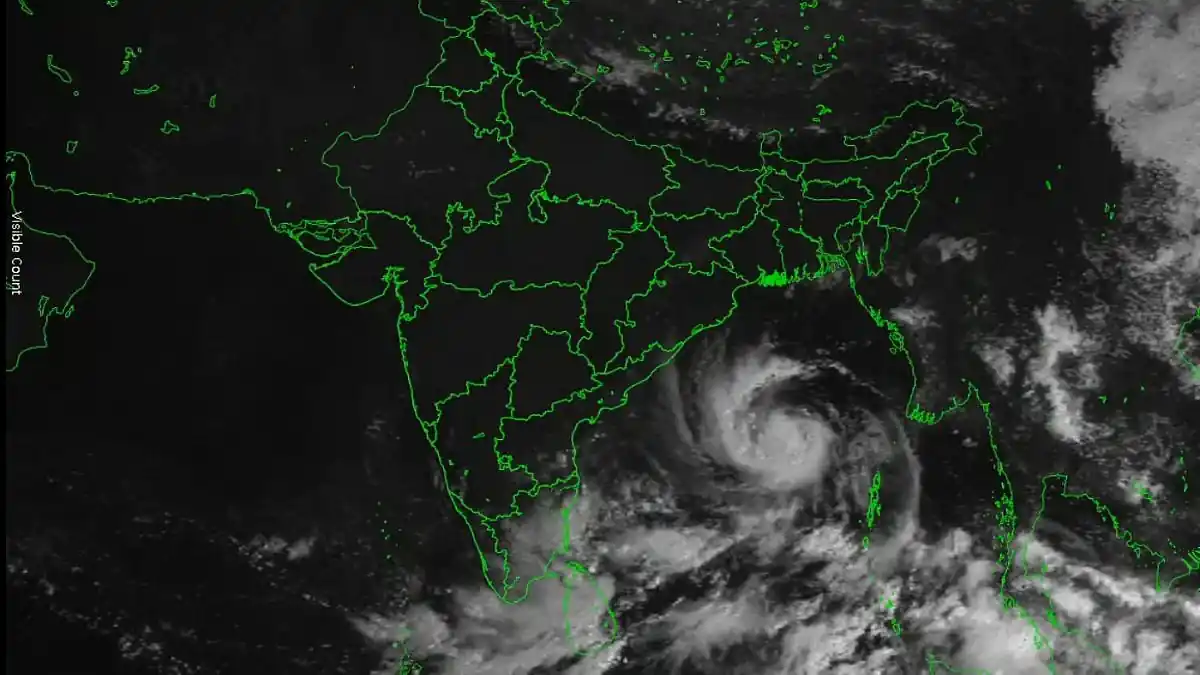
None of this stays contained to the Middle East, obviously. India buys more than 85 percent of the crude it uses, and for years the country's entire anxiety about oil supply has centered on Hormuz.
Bab al-Mandeb deserves the same worry now, not less, partly because a good chunk of the Russian crude headed for Indian refiners also sails through that strait, right alongside Saudi barrels loaded at Yanbu.
There's a case for not panicking. Indian refiners have more supplier diversity and bigger reserves than they did five years back, and that buys some breathing room. But geography doesn't negotiate.
Ships forced around the Cape of Good Hope instead of through the Red Sea tack on close to two extra weeks at sea, plus fuel, crew, and insurance costs that don't just vanish. Eventually that shows up in what people pay at the pump or for a cooking gas cylinder, whether the fire that started it was near Yemen or near Iran.
- Houthi forces now hold Yemen's entire Red Sea coast and every strategic island in the Bab al-Mandeb strait, including Mayyun, after roughly a week of fighting.
- Mokha, Zuqar island, Dhubab, and the Hanish islands all changed hands in an 18-hour stretch; over 2,000 government troops were left besieged.
- Saudi Arabia's East-West pipeline, the backup route it's relied on since Hormuz got choked off, was hit by drones from Iraq on September 10.
- Brent crude is back above $100 a barrel; US diesel has crossed $6 a gallon.
- MBS wants Trump to authorise strikes on the Houthis; Trump hasn't, even as US air cover for Hormuz tankers has reportedly been scaled back.
- Estimates put displaced Yemeni civilians somewhere between 18,500 (in 72 hours alone) and 80,000 for the wider offensive.
- India, reliant on imports for over 85 percent of its crude and exposed through Russian cargoes transiting Bab al-Mandeb, now has two vulnerable chokepoints to watch instead of one.