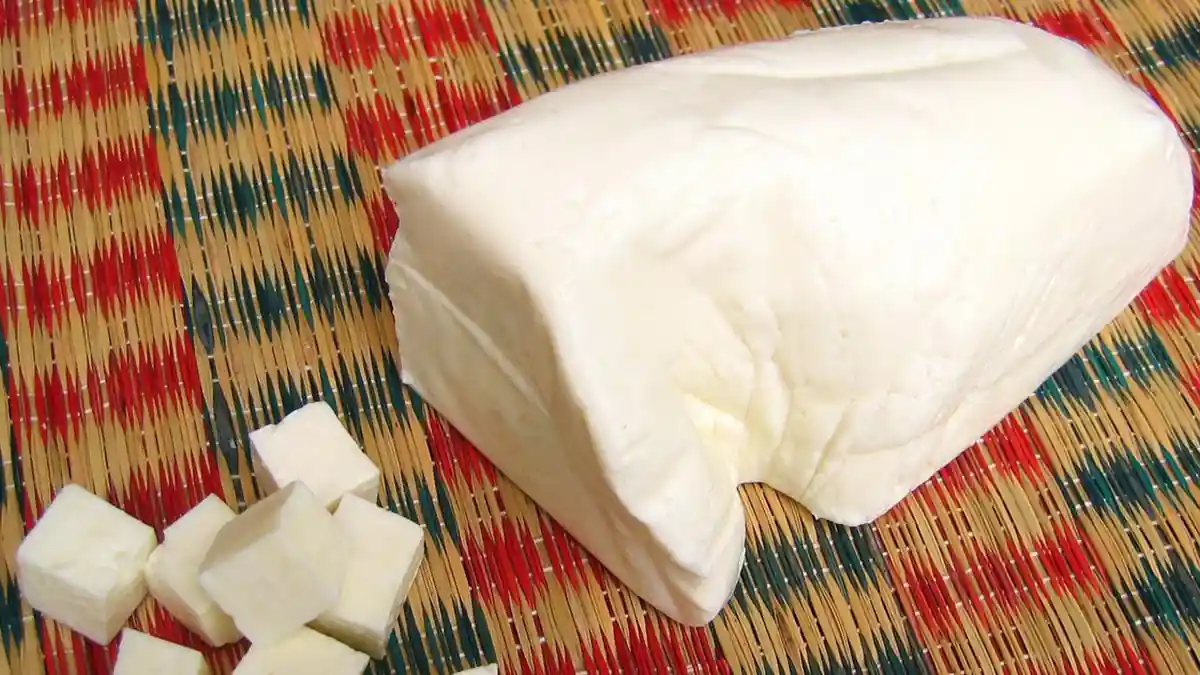
Paneer can be found in every kitchen of India; in dishes, in appetizers, in sweetmeats which are weighed at every festivity.
This very fact is the reason why the food safety authorities have zeroed in on it as their main priority this year.
The Noida Food Safety Department has recently seized and destroyed 550 kg of adulterated paneer in a big operation, emphasizing that adulteration of food items poses a great threat to people’s health.
In another raid conducted just days ago, 400 kg of adulterated paneer was seized and destroyed by food department authorities in the Lakhanavali region of Greater Noida.
It is not as though Noida was alone because Rajasthan is running a campaign of its own in tandem.
Food safety officials have destroyed 700 kg of adulterated paneer in Jaipur city as part of their campaign against food adulteration.
The raid was conducted as part of the ongoing “Shuddh Aahar, Milawat Par Vaar” campaign by the Food Safety Commissioner of the state, T Shubhamangala. This can be translated into “pure food, strike against adulteration.”
The raid involved the uncovering of an entire chain, according to the authorities, which went much beyond the city limits.
A squad of the food safety officers conducted a surprise check at the godown of 'Barsana Paneer Bhandar' located in the Bhatta Basti locality of Shastri Nagar where the adulterated paneer was confiscated and destroyed.
It is revealed that, according to the information from the owner of the shop, named Mustaq, this paneer was imported from the Alwar district and supplied to all the local retailers in the city.
This is not an arbitrary target. Paneer is the most adulterated food item in India, according to national data.
Paneer has been reported unsafe by the Food Safety and Standards Authority of India, where 83% of the paneer samples tested fail to pass safety tests, making it the most adulterated food item in the country.
The fact is that the health consequences associated with this issue are serious. Surprisingly, 40% of the paneer samples which were found to be defective were considered health hazards because of their adulteration with hazardous substances like palm oil, detergents, urea, and many other chemicals. These could cause renal failure and even cancer.
These are only the most recent additions to the trend that has been sweeping the nation since 2026.
Uttar Pradesh carried out a special drive in Ghaziabad, Mathura, and Saharanpur that resulted in 24 special enforcement teams raiding 25 food premises and seizing adulterated food material weighing 7,686 kgs, valued at ₹10 lakh, filing five FIRs against paneer producing firms.
Ghaziabad alone witnessed the destruction of 868 kgs of paneer and 170 kgs of khoya in one raid, while in a two-day drive in Gujarat, the food authority destroyed more than 1,700 kgs of imitation paneer and cheese products after banning the manufacturing and selling of analogue dairy products throughout the state.
Maharashtra is no exception to such huge raids as well. In the city of Pune, the Food and Drug Administration conducted a raid in which adulterated milk and paneer worth ₹37.61 lakh were seized.
Raids such as that at Noida of 550 kg or 700 kg in Jaipur are, in reality, only a miniscule part of a much bigger campaign of enforcement activities being conducted all over the country.
Even in the state of Rajasthan, in just the last year, there have been cases of 1.36 million kg/litres of food items being destroyed and 0.88 million kg/litres of food items being seized through enforcement campaigns, which includes foods like milk, ghee, oil, sweets, spices, but not paneer alone.
The test results from the state give a similar picture, with around 5,000 out of 43,000 food items failing the test.
Across several states, investigators have found that there is a uniform way in which adulteration in paneer takes place.
Adulterants found in paneer include unsweetened milk powder, light palm oil, and various chemicals used in industries to bulk up and masquerade poor quality product as genuine "malai paneer," with some instances containing detergents and urea instead of milk products.
From an economic point of view, the process is simple and straightforward, where palm oil and other chemicals are cheap as compared to milk fat, allowing dishonest manufacturers to offer a lower price than honest dairy farms for their sub-standard product, which provides no nutritional benefits of paneer.
Traditionally, instances of food adulteration busting operations have taken place around Diwali or other major festivals, when there is a spike in demand for paneer, khoya and sweets.
However, the important thing about this particular drive in 2026 is its consistency throughout the year – Noida, Jaipur, Gujarat and Uttar Pradesh have all seen significant seizures during different months of the year, implying that authorities have decided to make this a round-the-year effort rather than just a seasonal one.
Seizure and destruction of the product might not be the only actions taken after the operation – already, some states have started coupling the two with stricter penalties.
In the latest drive in Uttar Pradesh, five FIRs were filed against paneer manufacturing units, and it was informed that any product found to fail the lab test would be prosecuted under current food laws.
On the other hand, Gujarat has taken a regulatory step by issuing a ban on manufacturing, sale, transportation and storage of analogues of paneer and cheese.
In light of the pervasiveness of adulteration, food authorities have frequently emphasized the importance of consumer vigilance.
The practice of purchasing paneer from branded dairy establishments instead of buying it from unnamed bulk producers, verifying its fresh smell and correct consistency, and avoiding purchases made at unreasonably low prices are the kind of simple measures that the authorities advise consumers to take — despite the fact that a whopping 83 percent national adulteration rate suggests consumers can do very little about it.