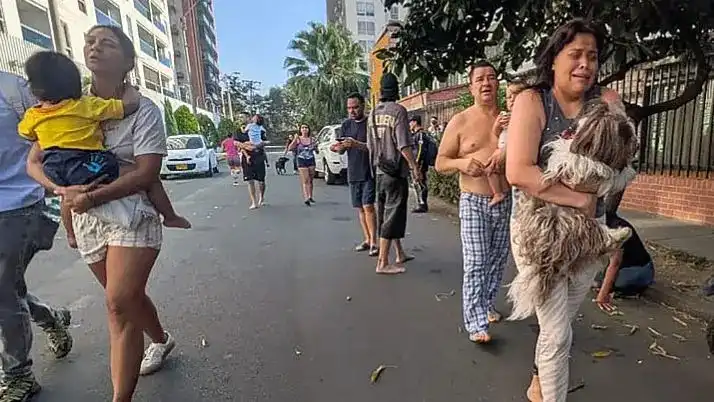
It happened fast, the way these things do. 7:34 a.m. Monday, and the ground under western Colombia just gave. People ran into the street in whatever they'd slept in. Church bells that weren't supposed to be ringing started ringing.
By Monday evening, Colombia's presidential office was saying at least 50 people had died. That number is not going to hold. It's already moved five separate times since morning, first 18, then 20, then 22, then 29, then 47, and officials aren't pretending it's finished climbing. Search teams still haven't reached some of the smaller towns near the epicenter, and nobody knows yet what they'll find there.
San José del Palmar took the direct hit. It's a town of about 4,800 people, tucked into the mountains of Chocó department, roughly 250 miles west of Bogotá. The USGS clocked the quake at 7.4 magnitude, depth of about 66 miles. Colombia's own geological service actually lowballed it at first, 6.6, before walking that number up.
But Pereira is where the deaths piled up fastest. Mayor Mauricio Salazar said 18 people died there, most of them in older buildings downtown that just weren't built for something this size. A couple more deaths came out of Manizales, where one tower on the city's neo-Gothic cathedral broke off and hit the street below. Nobody was under it when it fell, which is the only lucky part of that story.
Cali is a different situation entirely. More than 20 buildings came down across the city, and as of Monday night rescue crews were still working one site where about 15 people were believed trapped. Mayor Alejandro Eder had already called in disaster teams from Bogotá and Medellín by early afternoon. Three children were among the dead in the surrounding Valle del Cauca department, according to the presidential office, though officials haven't said much more than that yet.
Then there's Chocó itself. Quibdó, the provincial capital and the city closest to where this thing actually started, reported injuries and serious damage to buildings. Governor Nubia Carolina Córdoba-Curi told residents to brace for aftershocks, and she wasn't wrong to. A magnitude 5.0 aftershock hit less than an hour after the main quake.
People felt it everywhere, honestly. Bogotá. Medellín. Bucaramanga. Cúcuta. Across the border into Ecuador and Venezuela, though damage over there seems to have been minor so far. Airports in Pereira, Manizales, Quibdó, Armenia, Cartago and Buenaventura all suspended flights while inspectors checked for cracks in the runways.
Abelardo de la Espriella took office as Colombia's president last Friday. Four days later, he's dealing with this. He flew out to San José del Palmar himself instead of running things from Bogotá.
"You are not alone. The state is present and taking action", he told people near the epicenter.
Bogotá's mayor, Carlos Fernando Galán, said the capital came through without serious structural damage and offered up 100 of the city's own rescuers to send wherever the national government needed them. Help started arriving from further away too. U.S. officials said they were ready to assist. Israel's foreign minister posted that his government was watching closely and prepared to send support if asked.
This part is what makes Monday so hard for a lot of Colombians. Less than two months ago, Venezuela got hit by two earthquakes back to back, 7.2 and then 7.5, and more than 5,000 people died. That's still fresh. Some of the same disaster crews responding in Chocó right now were involved in that response too.
And there's the older memory, 1999, a magnitude 6.2 quake near Armenia that killed over 1,200 people in Colombia's coffee region. Building codes got rewritten after that one. Whether any of it held up under something twenty times more powerful is a question nobody in Bogotá can answer yet.
Crews in Cali, Pereira and Quibdó are working through the dark now, against unstable buildings, against the risk of more aftershocks, against terrain that swallows roads whole when it slides. Colombia's disaster agency said it still hadn't made contact with a handful of remote communities near the epicenter as of Monday evening. Landslides may have cut some of them off completely.
The death toll sits at 50 as of this writing. Ask anyone in Bogotá what it'll be by morning, and you'll get a shrug. Nobody's guessing anymore.
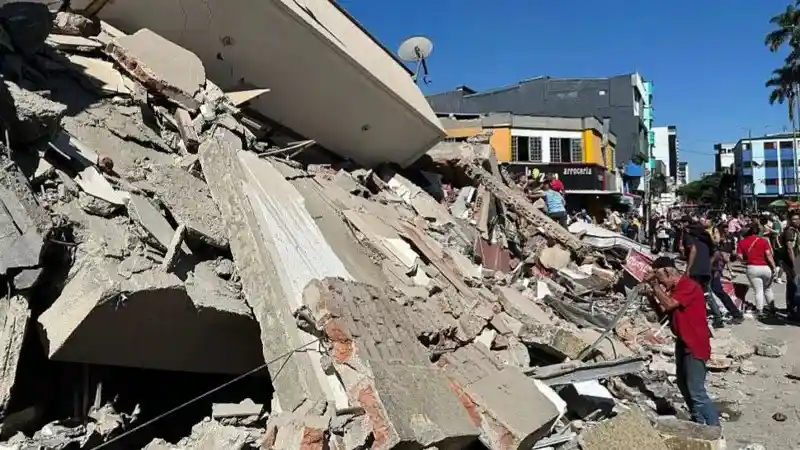
Photo: @Alexis Munera/Anadolu via Getty Images
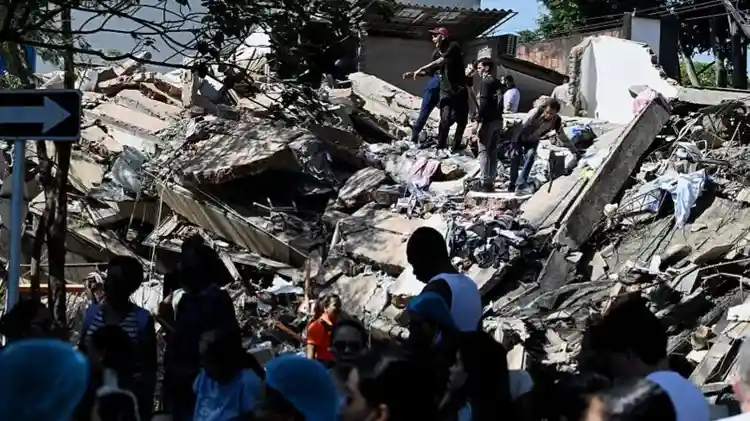
Photo: @Joaquin SARMIENTO / AFP via Getty Images
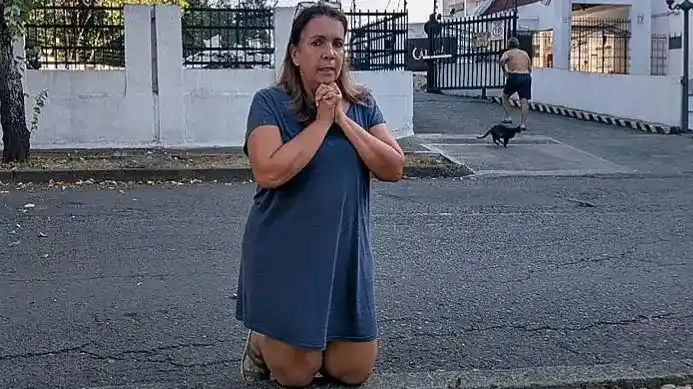
Photo: @Joaquín SARMIENTO / AFP via Getty Images
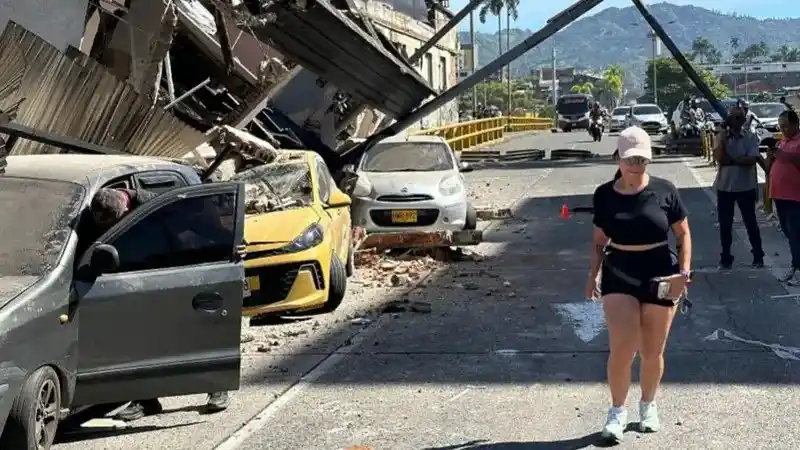
Photo: @Alexis Munera/Anadolu via Getty Images
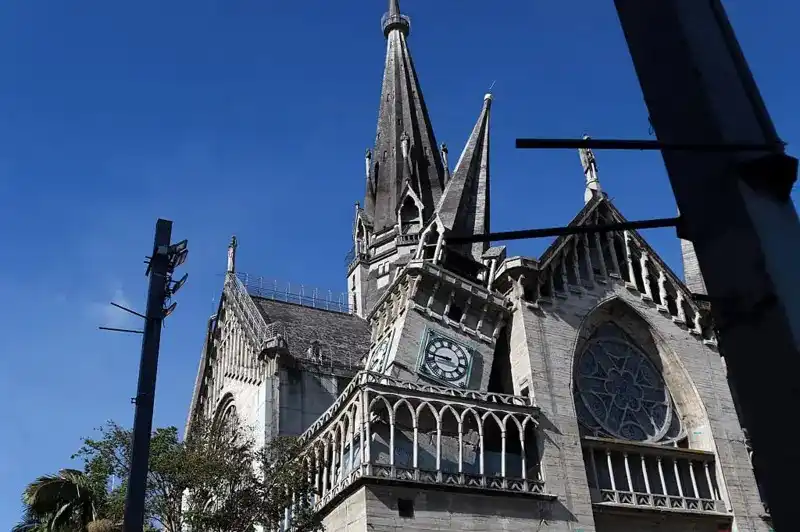
Photo: @Andres Valencia / AFP via Getty Images