Sometimes the biggest tech leaks don't come from a disgruntled engineer or a loose-lipped supplier. They come from a ransomware gang dumping a stolen hard drive on the dark web and letting journalists pick through the wreckage.
That's essentially what happened with the iPhone 18 Pro Max's camera system, and this time the evidence isn't a sketch or a case mold it's a diagnostics log, the kind of dry engineering file nobody outside a calibration lab was ever supposed to read.
Back in June, a ransomware outfit calling itself World Leaks broke into Tata Electronics, one of Apple's key assembly partners in India, and published more than 200,000 internal files totaling over 630 gigabytes. Tata confirmed the "cybersecurity incident" but insisted production wasn't disrupted. Apple, characteristically, said nothing at all.
Buried in that trove alongside Tesla schematics, employee passport scans, and years of internal event logs were files tied to iPhone 18 manufacturing. Notebookcheck had already used pieces of the cache on July 2 to report a camera sensor swap and dual-modem strategy for the Pro line.
This latest find digs deeper into one specific document: an ISP diagnostics log that essentially fingerprints every camera module on the device.
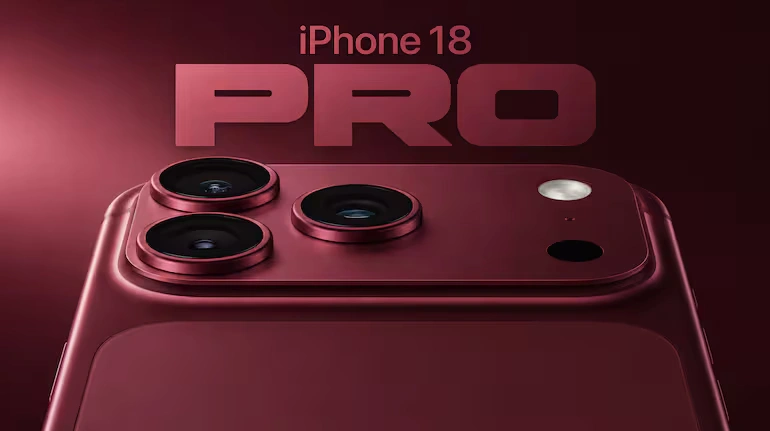
The headline detail is a new main sensor, the Sony IMX905, replacing whatever shipped in last year's iPhone 17 Pro Max.
Pixel size stays put at 1.22μm — so don't expect a leap in raw light-gathering ability. That's a telling detail on its own. When a manufacturer keeps pixel size flat but still swaps the sensor entirely, it's usually chasing something other than brute-force image quality.
In this case, that something is variable aperture. The log includes a calibration block that pulls actuator data straight from the sensor's non-volatile memory data tied specifically to an aperture mechanism.
That's about as close to a smoking gun as leak-hunting gets. Variable aperture lets a camera physically widen or narrow its opening depending on the shot: wide for low light and shallow depth of field, narrow for bright scenes where you want more in focus. It's a mechanical trick, not a computational one, and iPhones have never had it.
Other phone makers have. Variable aperture has shown up on flagship Android devices for years now, cycling in and out of favor depending on the generation.
So this wouldn't be some industry first for Apple more like Cupertino finally showing up to a party that's been going for a while.
Here's where the story gets less dramatic, and honestly, more believable. The rest of the array telephoto, ultrawide, LiDAR, even the selfie camera carries over untouched, according to the log.
The telephoto sensor keeps its Sony IMX973 identity, still binning tiny 0.7μm native pixels up to an effective 1.4μm, still stabilized by that 3-axis spherical actuator that gives it gimbal-style movement.
The ultrawide stays on the IMX972. LiDAR sticks with the IMX591. Selfies remain on the IMX914.
That's not a shrug-worthy detail, either. It suggests Apple's engineering budget for this generation went almost entirely into one component rather than a broad refresh across the board a pattern that tends to repeat when a company knows exactly which feature reviewers and rivals will fixate on.
None of this comes free. Apple is reportedly looking at roughly $300 in additional production costs per Pro Max unit, driven by a mix of camera and memory upgrades, and that bill has a way of finding its way to the customer.
Earlier reporting pointed to an average $200 price hike across the Pro Max lineup this cycle. Add a heavier chassis and a thicker body both already rumored and the iPhone 18 Pro Max is shaping up to be a device that costs more, weighs more, and finally does one specific thing its predecessors couldn't.
Apple hasn't acknowledged any of this, and won't until September, when the iPhone 18 lineup is expected to launch. Until then, the strangest part of this whole saga isn't the aperture mechanism or the price bump it's the source.
A stack of stolen factory logs, meant for nobody's eyes but Apple's own quality-control team, has become one of the more reliable pipelines for iPhone leaks this year. Not exactly the launch strategy Apple would have chosen for itself.