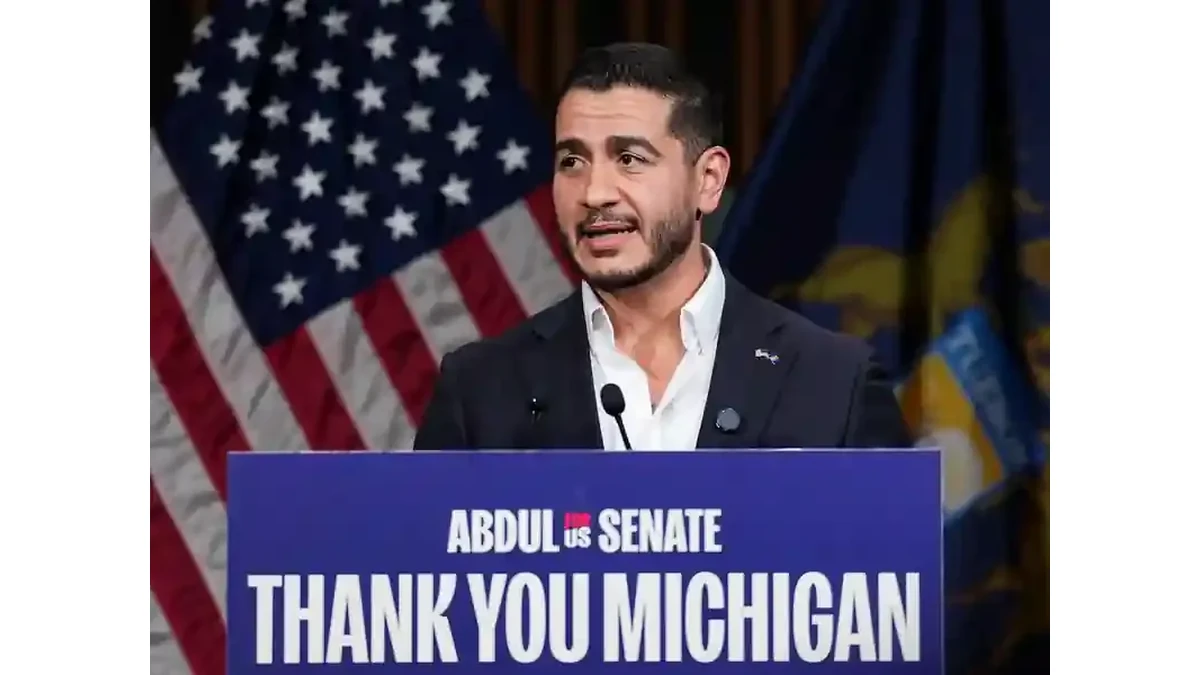
For months, this was supposed to be a race Democrats might lose. After the primary, polls showed a tight contest, even though Democrats have held the seat since 1979. Then a late-October poll from CBS News showed El-Sayed with a seven-point lead, and the last stretch tipped his way.
El-Sayed, a former public health official, ran to the left. He called for universal health care, action on medical debt and higher taxes on billionaire wealth. He cast Rogers as a Washington insider aligned with President Donald Trump, and in two debates he accused him of being a puppet for the president.
Rogers, a former congressman and FBI agent who narrowly lost a Senate bid in 2024, campaigned on a different set of priorities. He emphasised tax cuts, more domestic manufacturing and more transparent health care prices, and argued that El-Sayed was too extreme for Michigan. He also questioned whether El-Sayed could be trusted.
The most heated moments weren’t about policy. Rogers tried to tie El-Sayed to the Muslim Brotherhood, which many Democrats and local religious leaders criticised as anti-Muslim rhetoric. El-Sayed said Trump and other Republicans had targeted him with Islamophobic rhetoric. Rogers’s campaign framed its questions as being about trust, not religion. I haven’t seen a detailed response from Rogers since the result.
The race wasn’t easy for Democrats either. Stevens reversed course in the closing days and endorsed Rogers, after initially saying she’d back the Democratic ticket, a move that stunned state party leaders. Establishment figures had warned El-Sayed was a risky bet in November.
His win lands in an ongoing argument. Bridge Michigan called it a watershed moment for the party’s left wing, which saw the race as a proving ground for progressives in swing states. Supporters of a more centrist approach will point to the infighting and the national mood. Progressives will point to the result. Both claims can be argued from the same numbers.
El-Sayed’s victory is only part of a bigger night. NBC News projects Democrats will control both the House and the Senate in January, after flipping seven Senate seats: Iowa, Kansas, Ohio, Maine, North Carolina, South Carolina and Texas. In Maine, Democrat Troy Jackson defeated Republican Sen. Susan Collins, who conceded.
Counts were still moving on Wednesday morning. Yahoo’s live blog put the Senate at 54 Democratic seats to 44 Republican, with Alaska and Mississippi not yet called. Republicans began election day with a 53-47 Senate advantage and a narrow House majority.
Republican reaction has been muted so far. After several hours of silence, Trump posted that he wasn’t on the ballot and that he’d have won in a landslide if he had been. House Speaker Mike Johnson said he was disappointed, according to CBC.
El-Sayed’s win doesn’t answer what he can do with it. Axios noted he will arrive in Washington with an ambitious progressive agenda, but turning campaign promises into legislation will be a different challenge. Whether a Democratic Congress will move on universal health care or wealth taxes, with a Republican president who can veto them, is an open question.
It’s also too early to say what the night means for 2028. Analysts on both sides will spend weeks arguing about whether Michigan and the other flips reflect a rejection of Trump, a strong Democratic ground game, or something about this year’s candidates.