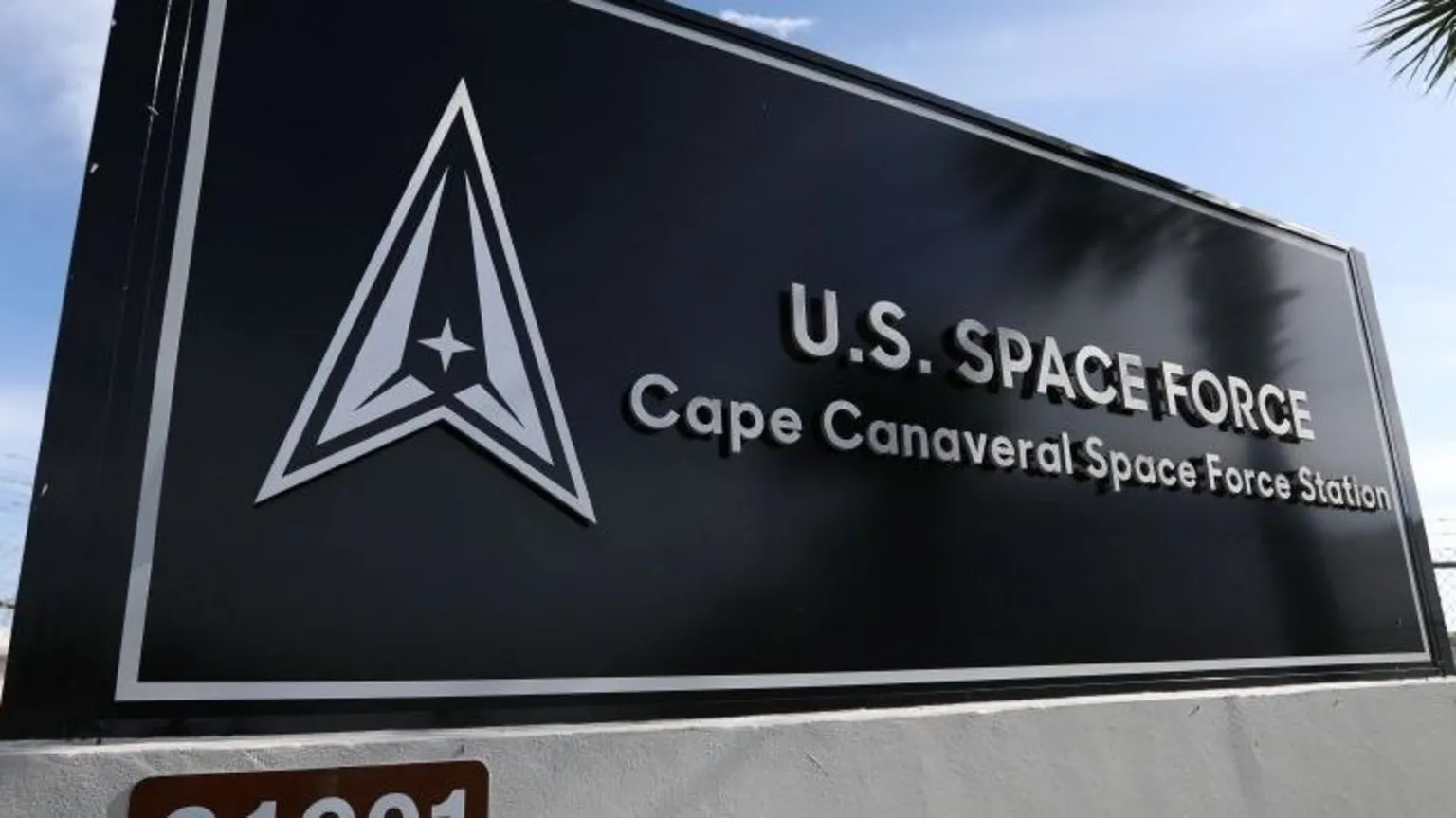
Some announcements come with fireworks. This one came with a single, oddly precise sentence, delivered in a conference hall in Maryland, and it still managed to rattle three continents within a day.
On Monday, at the Air, Space and Cyber Conference in National Harbor, U.S. Air Force Secretary Troy Meink told a room full of defense officials and reporters that the United States now has "on-orbit space control weapons capable of defending the joint force against hostile adversary action." That was it. No press release with diagrams.
No specifics. Just an admission, out loud, on the record, that weapons the Pentagon had spent years neither confirming nor denying are actually up there right now.
It is worth sitting with how unusual that is. Washington has talked around this subject since the Cold War. Officials have hinted, allies have speculated, and adversaries have accused. But nobody in the U.S. government had ever simply said yes, we have them, until Meink did.
Reporters tried to pin him down after the speech. They wanted to know if the weapons were kinetic, meaning something that physically slams into a target, or non-kinetic, meaning something that jams, blinds, or scrambles an enemy satellite from a distance. Meink wouldn't say.
He wouldn't say how many weapons exist either, or when they were launched, or who built them. When a reporter pushed on why he chose this particular moment to break years of official silence, he gave an answer that sounded almost rehearsed: "That phrase was very well thought out."
A Space Force spokesperson later filled in a little more texture, describing space control as a mission area that uses both kinetic and non-kinetic tools to affect what rivals can do in orbit. That covers a lot of ground, everything from a satellite that quietly jams enemy signals to something with far sharper teeth. Victoria Samson, a space security expert at the Secure World Foundation, told reporters the statement itself was destabilizing, regardless of what the hardware turns out to be.
Here is the more interesting part. This wasn't really a surprise to people who track this world closely. The Space Force has been talking more openly about counterspace warfare since 2025. What changed on Monday was the tense. It went from "we might" to "we have."
Context matters here, and the context is years of finger pointing. American officials have long accused Russia of practicing what they call attack and defend maneuvers with satellites shadowing other satellites. They have flagged China's development of a nuclear capable, partial orbit hypersonic missile system as a direct threat to U.S. space assets. The Space Force's own public materials now describe China as pursuing counterspace capability as part of a broader military modernization drive, and cast Russia as a country that sees dominance in orbit as potentially decisive in a future war.
Seen against that backdrop, Meink's announcement looks less like a slip and more like a calculated move. Years of warning rivals about their space activity while staying silent about America's own had started to look one sided. Monday's speech closed that gap, deliberately, in front of cameras.
China did not wait long to react. Foreign ministry spokesperson Guo Jiakun told reporters at a briefing that the U.S. needed to stop preparing for war in outer space and stop pushing the world toward an arms race above the atmosphere. He accused Washington of turning a shared domain into a battlefield.
Beijing has always insisted its own satellite programs are peaceful. That claim has worn thin in Washington, especially given China's 2007 anti-satellite missile test, which blew up one of its own defunct satellites and scattered thousands of pieces of debris still orbiting the planet today. Still, China's objection follows a familiar script it has used for years, and this time it had fresh ammunition to point at.
Russia lodged a similar complaint, echoing language it has used for nearly two decades about the need to fully demilitarize space. Moscow's position has never really changed regardless of who occupies the Kremlin or the White House: it opposes weapons in orbit in principle while itself facing repeated American accusations of testing exactly that.
Underneath all of this sits the Outer Space Treaty of 1967, signed by the U.S., the old Soviet Union, and dozens of other countries at the height of the Cold War. It bans weapons of mass destruction in orbit. That's more or less all it bans.
It says nothing meaningful about jamming systems, robotic satellites with grappling arms, or directed energy weapons, the exact kind of technology every major space power has spent the last decade quietly building.
India sits in an interesting spot in this story too, even though it wasn't named by Meink.
New Delhi ratified the Outer Space Treaty back in 1982 and has consistently said it opposes weaponizing space. That hasn't stopped India from building its own anti-satellite capability, demonstrated in 2019 when it shot down one of its own satellites and became only the fourth country in the world to do so, after the U.S., Russia, and China.
The gap between stated policy and actual capability isn't unique to Washington.