Soekarno-Hatta went quiet this weekend. Not the good kind of quiet, either. Southeast Asia's second-busiest airport just stopped, and the reason was a small volcanic island 150 kilometers away that decided, again, to remind everyone it's still very much active.
Anak Krakatau entered a continuous eruption at 11:07 p.m. Friday. It kept going for roughly 25 hours straight. Then early Sunday, at 3:53 a.m. local time, Indonesia's Geological Agency logged a sharper burst, just 30 seconds long, strong enough to push ash over the capital within hours. Cameras near the crater caught lava flares lighting up against the dark. Nobody got evacuated. The nearest town sits more than ten miles off, though officials still told residents and tourists to keep at least two miles clear of the crater, roughly three kilometers if you're doing the metric math.
Small radius. Big mess at the airport.
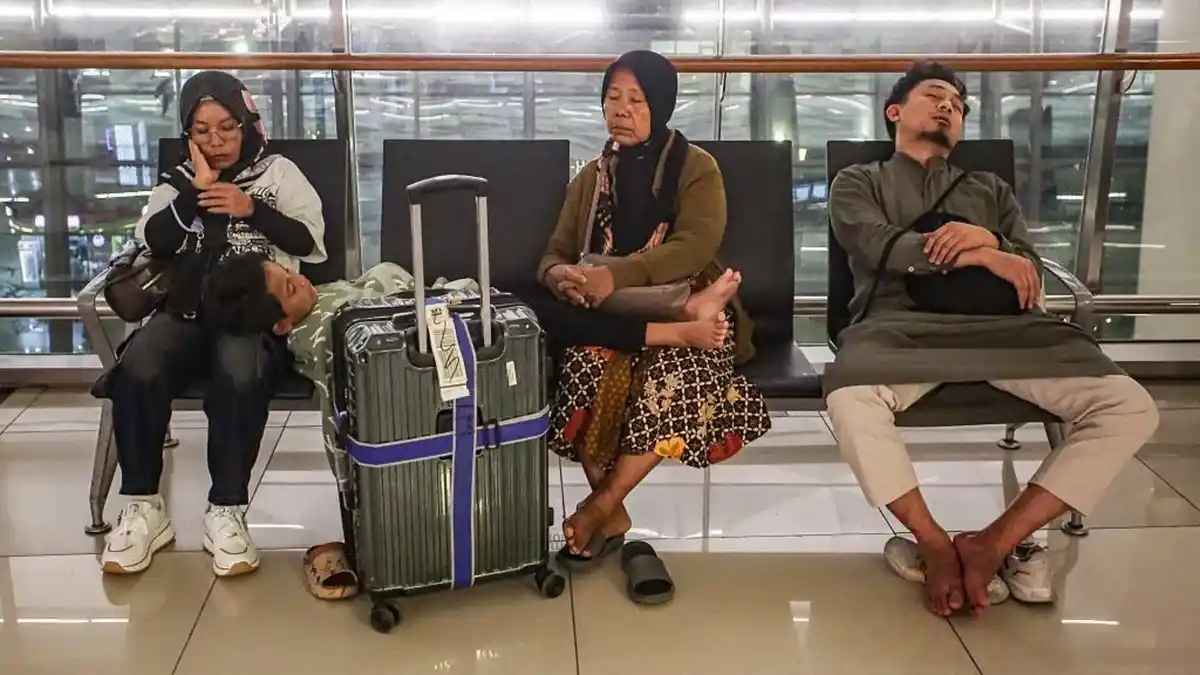
1,558 flights. That's the number the transportation ministry landed on by Sunday evening, delayed and cancelled combined. Soekarno-Hatta swallowed more than 900 of those on its own. Seven more airports closed alongside it: Halim Perdanakusuma in Jakarta, Husein Sastranegara over in Bandung, Radin Inten II near Bandar Lampung, plus four smaller regional strips most travelers have never heard of. Even Bali's Ngurah Rai and the airport in Medan felt ripple effects, and neither one sits anywhere near the actual ash cloud. About 170,000 people got stuck somewhere in all this. Mid-layover. Mid-vacation. Mid-whatever.
Two ash plumes turned up on satellite images from Indonesia's volcanology office and Australia's Darwin advisory center. The smaller one climbed to around 20,000 feet, drifting northeast into Jakarta, Banten and West Java. The bigger one reached roughly 50,000 feet and pushed southwest, over Lampung, Bengkulu, the southern strait, and out toward open water in the Indian Ocean. Both sit right where jets normally cruise. So airlines just didn't.
Emirates cancelled and delayed several Dubai-Jakarta flights. Malaysia Airlines dropped a dozen Jakarta routes outright. Singapore Airlines and Scoot cut Changi-Jakarta service, one of the busiest short hops in the region. At Terminal 1C in Tangerang, Citilink passengers stood in refund lines that stretched well past the counters. Same scene repeated gate after gate.
"Safety remains our top priority in every operational decision," said Lukman F. Laisa, the transport ministry's director general of civil aviation. Fair enough. He also admitted, a little less reassuringly, that sorting out aircraft positions and crew rotations after reopening could take days on its own. So the delays don't end the moment the ash does.
Schools in the affected districts shut too. A free meal program some families depend on got paused along with them. Fishing crews were told to stay off the water near the strait. President Prabowo Subianto reportedly ordered a nationwide high alert and closer monitoring of the volcano. Not exactly the move you make if you think this blows over by Tuesday.
Anak Krakatau has erupted dozens of times in 2026 already. So why does this one matter more? Lana Saria, who runs Indonesia's Geological Agency, says activity has been building since July, and Sunday's eruption was the strongest point in that stretch yet. Magma and gas keep feeding it from below, she said, and nobody, her office included, can say for certain whether a bigger one is coming. BNPB, the disaster agency, is trying cloud seeding in the meantime, hoping rain clears the ash out faster than just waiting around would.
The name Anak Krakatau means Child of Krakatau, and it's earned every bit of that name. It rose out of the sea about a century ago, inside the same caldera left behind by the 1883 Krakatoa eruption, one of the worst volcanic disasters ever recorded, with tens of thousands killed. The kid hasn't been much gentler. Back in December 2018, part of its slope collapsed into the sea and triggered a tsunami with almost no warning at all, killing more than 400 people along the coast. Indonesia sits on the Pacific Ring of Fire, so eruptions here aren't exactly rare. This weekend's shutdown, though, is a bigger deal than most.
Right now Anak Krakatau sits at Level III, Siaga. The exclusion zone hasn't moved. Airport closures got extended again Monday, pending new ash readings, and there's still no real timeline for things returning to normal. Ask anyone stuck at a gate in Jakarta right now, and they'll tell you the same thing officials are: wait and see.
Anak Krakatau, the volcanic island sitting in Indonesia's Sunda Strait, erupted continuously for about 25 hours starting late Friday night, pushing ash high enough to shut eight airports, Jakarta's main international hub included. Around 170,000 passengers got caught up in it, with more than 1,500 flights delayed or cancelled. No deaths reported. Schools and fishing near the volcano were paused too, and a 3-kilometer exclusion zone is still in force while officials watch for signs of something bigger.