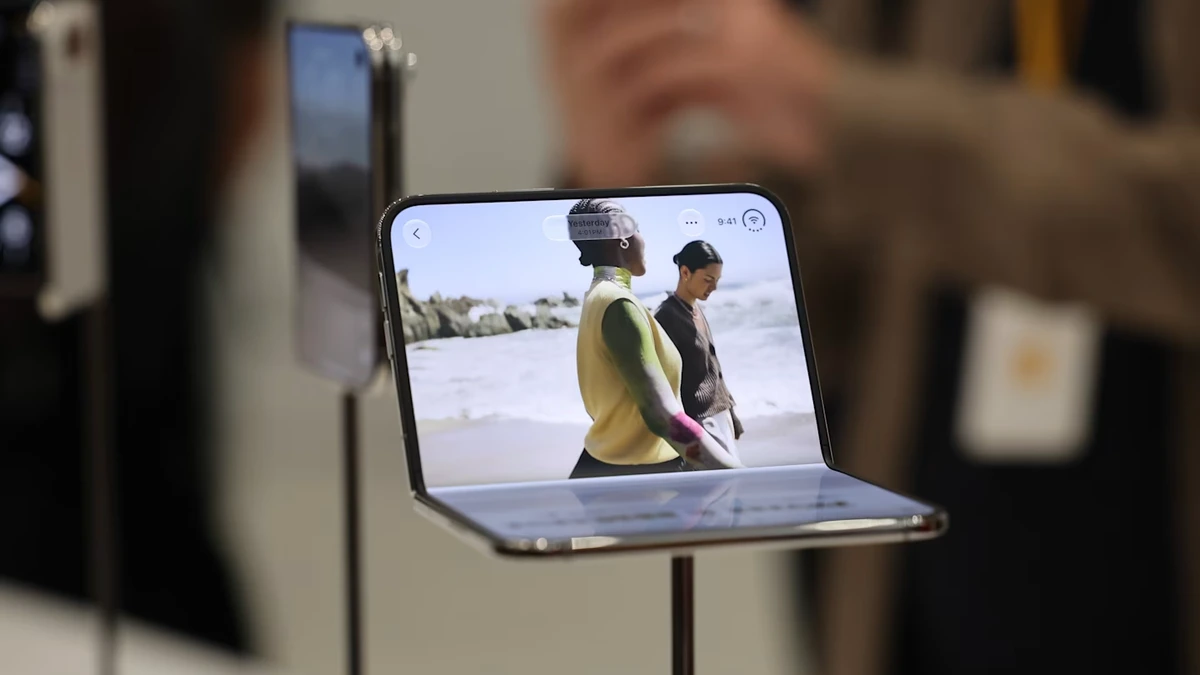
Apple took its time with this one. Nearly eight years, if you're counting from when Samsung shipped the first Galaxy Fold. On September 9, at Apple Park's "Surprise and Shine" event, the wait ended.
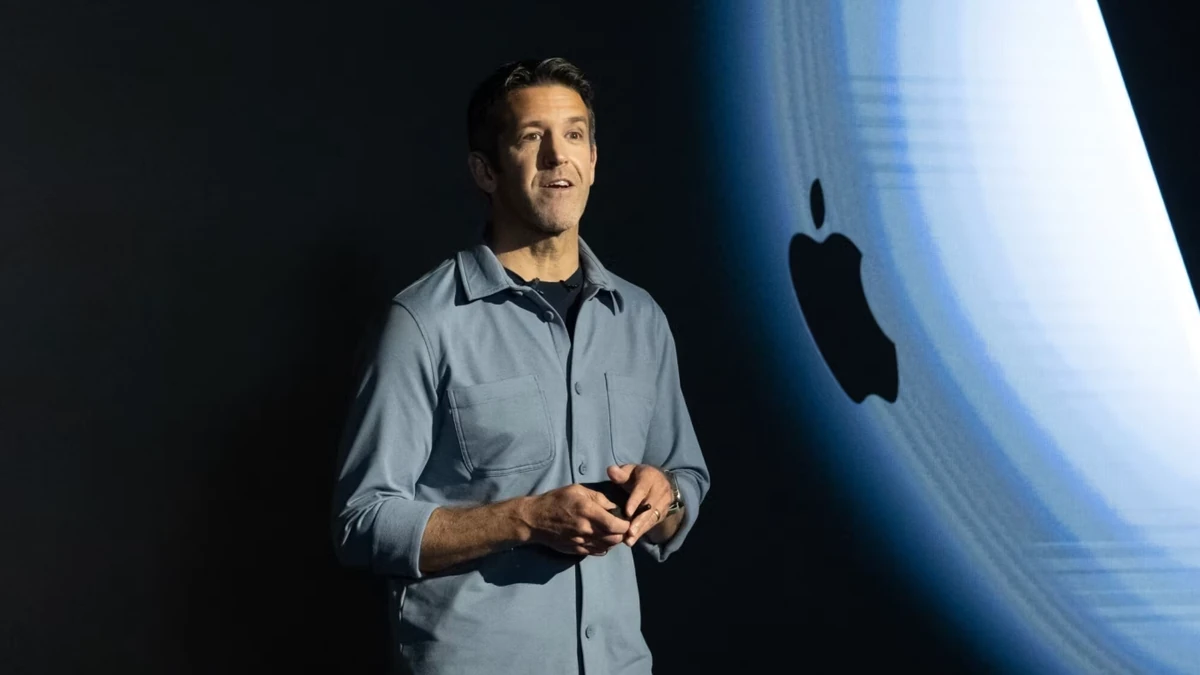
There was another first buried in that same hour. This was John Ternus's debut keynote as Apple's CEO. Tim Cook stepped back into the executive chairman role on September 1, handed off the mic, and let Ternus introduce the company's most unfamiliar product in a decade on his very first outing. That's a lot to load onto one presentation.
The phone itself got a name Apple has been sitting on quietly while blogs guessed "Fold" and "Ultra" for months. It's called the iPhone Duo. Simple. A little on the nose, maybe, but it tells you exactly what you're buying: two screens, one hinge, one phone.
Unfold it and you get a 7.6-inch Super Retina XDR OLED panel that runs up to 120Hz. It's big. Tablet-adjacent, honestly, which is sort of the whole point of a book-style foldable. Fold it shut and there's a second 5.4-inch OLED display on the cover, also 120Hz, for the stuff you don't need the big screen for. Texting, checking the time, glancing at notifications while it's still in your pocket.
Apple is calling this the thinnest iPhone it has ever built when it's open. A lot of that comes down to the hinge, which uses titanium and what Apple describes as a torque-engineered mechanism. It's not just there to fold and unfold, either. It holds the phone at odd angles too, tent mode, half-open for a video call, propped up on a table without a stand. Foldable owners on the Android side have been asking for exactly this kind of refinement for years.
Then there's the crease. Every single foldable phone has struggled with this, going back to that first clunky Galaxy Fold. Apple's fix layers ten ultra-thin sheets over the inner display, and finishes it with a nano-texture coating that scatters light instead of letting it pool along the fold line. Does it actually work better than what Samsung's managed after six generations of Z Folds? We won't really know until reviewers get their hands on units and start bending them in bad lighting.
Power comes from the A20 Pro, the same chip going into the iPhone 18 Pro and Pro Max, built on a 2-nanometer process. Battery claims are split by screen, which makes sense once you think about it: up to 32 hours of video on the inner display alone, 44 hours if you're only using the cover screen, and around 24 hours with both in normal rotation. Charging is quick too. Twenty minutes gets you to 50 percent, and Apple says even a rushed five-minute plug-in buys five hours of playback.
The camera setup is a 48MP Dual Fusion system on the back. Up front, there's a 12MP camera hidden underneath the inner display itself, so there's no notch or hole-punch interrupting the big screen. Apple built a handful of features around the fact that this phone has two sides pointed at two different people during a photo. Smart Take waits until everyone in the shot actually looks ready. Duo Preview lets whoever's being photographed see themselves on the outer screen in real time. Kid Cue puts small animations on the display to hold a toddler's attention for half a second longer. There's also Duo FaceTime, running the front and rear cameras at once on calls.
One change here is going to surprise longtime iPhone users. Face ID isn't on this phone. Apple brought Touch ID back instead, built straight into the side power button, something it hasn't done on a flagship since before the iPhone X existed. The Action button didn't make the cut either. And there's no physical SIM slot anywhere on the device. It's eSIM only, worldwide, including in India, where Airtel, Jio, and Vi already support it.
Apple isn't shy about the price. In the US, the iPhone Duo starts at $1,999 for 256GB. In India it opens at Rs 2,99,900, and climbs all the way to Rs 4,49,900 for the 2TB model, which quietly makes it the most expensive iPhone the country has ever seen. Two colors at launch: Star White, and a deep near-black shade Apple's naming Night Sky.
Pre-orders start October 16. It reaches stores October 23. That's a slower rollout than the iPhone 18 Pro and Pro Max, announced at the same event and priced at $1,199 and $1,299, which hit shelves September 18 in more than 65 countries.
Samsung has had this category basically to itself since 2019, quietly working through hinge failures and crease complaints while everyone waited to see if Apple would even bother. Now it has. Whether the iPhone Duo actually beats what Samsung's built after six years of trial and error is a different question, one that probably won't get answered until October, when people can actually fold the thing themselves.
Apple launched its first foldable phone, the iPhone Duo, on September 9 at its "Surprise and Shine" event, also the first keynote led by new CEO John Ternus. The phone opens to a 7.6-inch 120Hz OLED display and closes to a 5.4-inch cover screen, held by a titanium hinge Apple built specifically to reduce crease visibility. It runs on the A20 Pro chip, claims up to 24 hours of mixed battery life, and carries a 48MP rear camera along with an under-display selfie camera and a set of features made for shooting with two screens at once. Notably, Face ID is gone in favor of Touch ID on the side button, there's no physical SIM tray, and no Action button. It starts at $1,999 in the US and Rs 2,99,900 in India, going on sale October 23, about five weeks after the iPhone 18 Pro and Pro Max that launched alongside it.