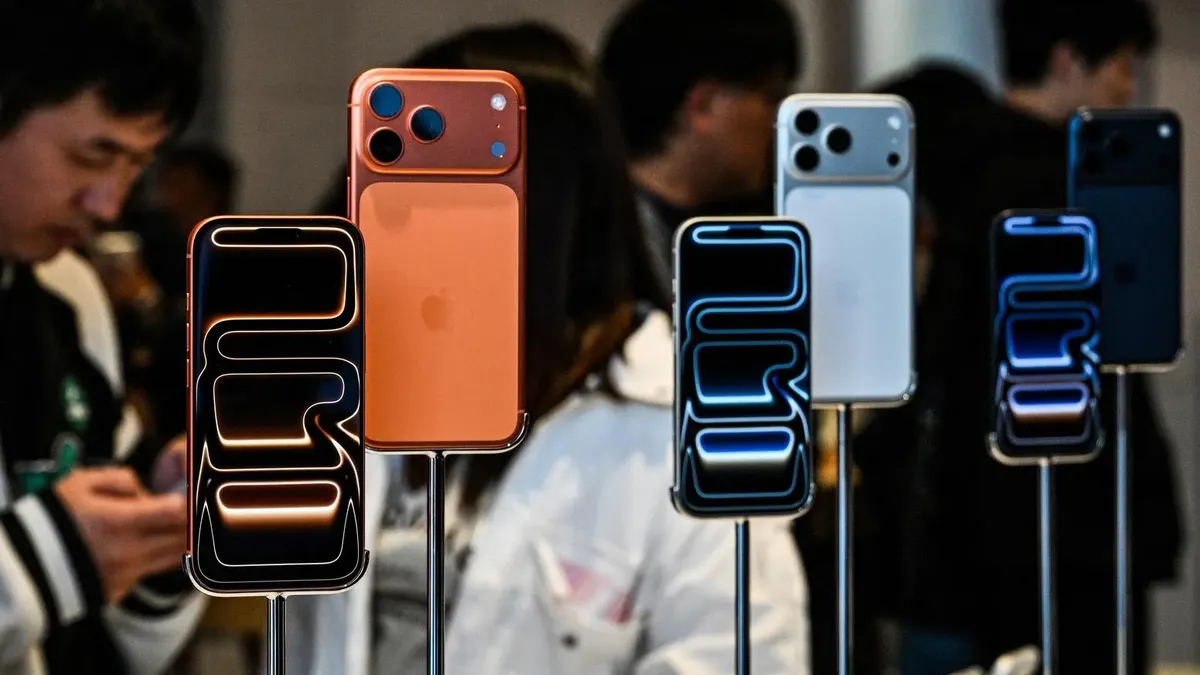
The new iPhone from Apple is expected to be a foldable one, together with the new iPhone 18 Pro range and Apple Watch range that will be unveiled at Apple's September hardware event.
Apple has an ongoing event lined up for the month of September where it plans to introduce the new range of products like the new iPhone 18 Pro, iPhone 18 Pro Max, and a completely new product—the new foldable iPhone.
However, the new foldable iPhone is to be named the iPhone Ultra, but on the other hand, there are some websites that continue referring to the new iPhone as the iPhone Fold. From the most recent stats, the launch date of the new iPhone is set for either Tuesday, 8th September, or Wednesday, 9th September, 2026.
The invitation for the new iPhone will be sent out on either 25th or 26th August 2026, with the dates for pre-order and launch being 11th and 18th September 2026, respectively.
One of the features that make the new event special is the fact that the new event will concern not only hardware but also the leadership transition at the company.
The September event is expected to act as an unveiling of Apple's next CEO to the general public.
This will be John Ternus's first keynote for a product as CEO of Apple, since Tim Cook announced his last earnings call as CEO on July 30, 2026. A CEO's first keynote can make a lot of assumptions regarding the tone, the company's priorities, and the way it positions itself. Moreover, Ternus will have to introduce a completely new form factor from Apple at the event.
The fact that it will happen right after a change of Apple's CEO makes this reveal even more important since it is probably going to be Apple's biggest product launch in more than a decade.
For a company which built its reputation on incremental changes, a completely new device category unveiled by an inexperienced keynote presenter is much more than just specs comparison.
The main headline feature of the phone is a book style folding display technology that, according to reports, Apple has been developing for many years now, almost perfecting it into being seamless.
The new iPhone Ultra phone will come with the book style folding technology, with its outer screen having dimensions of 5.3 to 5.5 inches while its inner display will be of 7.6 to 7.8 inches, thus resembling the size and dimensions of the iPad mini and unlike most of the other current foldable devices, its inner display will not show any crease when unfolded.
When opened, the phone is said to be as thin as 4.5 mm thick, thus becoming one of the slimmest of the foldable phones on the market right now. The phone is also built of titanium to be durable and at the same time, light.
This particular folding phone from Apple can become one of the thinnest with the crease of approximately 0.15 mm and the hinge of this phone is supposed to be of higher quality than those used by rival companies' folding smartphones.
The hinge of this phone is based on unusual material composition.
Under the bonnet, the Ultra will reportedly utilize the same processor as the other models in the series and not have its own dedicated chip. The Ultra comes with the A20 Pro chip manufactured using a 2-nanometer process and 12GB of LPDDR5 RAM.
In addition, Apple's C2 cellular modem comes instead of the Qualcomm 5G modem in the current generation of the iPhones. With respect to the camera, it seems like Apple decided to sacrifice zoom ability for a sleek design.
There are two cameras in the back of the Ultra phone, including 48-megapixel main and ultra-wide camera without telephoto lens, and the people who want optical zoom will be forced to consider the standard Pro line.
As far as biometric identification, there is something unusual with respect to the recent phones by Apple.
The identification is done by Touch ID embedded in the power button, and not Face ID, as apparently Apple could not fit two Face ID modules in such a thin device.
It will likely debut at a price point considerably above any of today’s iPhones, thus making it Apple’s most expensive smartphone to date. According to pricing, it seems to be extremely high, ranging from $1,999 to $2,399—which makes perfect sense given the strategy of Apple to enter the market only when the technology matured enough and the company did not rush to compete.
The analysts have suggested other prices, for instance, the one given by analyst Ming-Chi Kuo, who has estimated the price of the foldable iPhone to be anywhere between $2,000 and $2,500.
It all takes place against the background of growing component prices in the whole industry, according to analyst Mark Gurman, who expects iPhone prices to rise $100 to $200 as a result of the increased cost of components.
Thus, a foldable iPhone worth $2,000 would fit into this picture, rather than go against it.
Among the stranger subplots for the month of September is how Apple might actually choose to save its least expensive new iPhone release from its other launches during the month.
According to several accounts, Apple is looking at dividing up its launch of the iPhone this time around, with the Pro models and the foldable device arriving in September and the standard model, which is less expensive, possibly delayed until the spring of 2027, which has not been seen by Apple before in such a manner.
The standard 18, along with the 18e and Air 2 models, would be pushed back to the spring of 2027. This way, Apple could focus the September launch on the premium devices.
Apple has been reported to design iOS exclusively for leveraging the larger inner screen of the folding phone rather than scaling the existing software.
From the software point of view, iOS 27 will be offering multitasking functionalities specifically designed for Ultra, which include running two apps side by side and the use of an iPad-like layout in spite of the phone not being equipped with iPadOS when unfolded.
In other words, the Ultra is seen as a hybrid product of the phone and the tablet rather than a gadget with just a novel form factor.
The Ultra is reported to offer multitasking capabilities and an iPad-like layout allowing two apps to be run simultaneously when the screen is completely unfolded.