Somewhere on the flight from Brussels, a chocolate replica of India Gate stopped looking like a monument. By the time it reached Delhi it was closer to a puddle with structural ambitions. BJP's social media team, never one to waste a moment, posted about it anyway, arguing the sentiment behind the gift mattered more than whether it kept its shape.
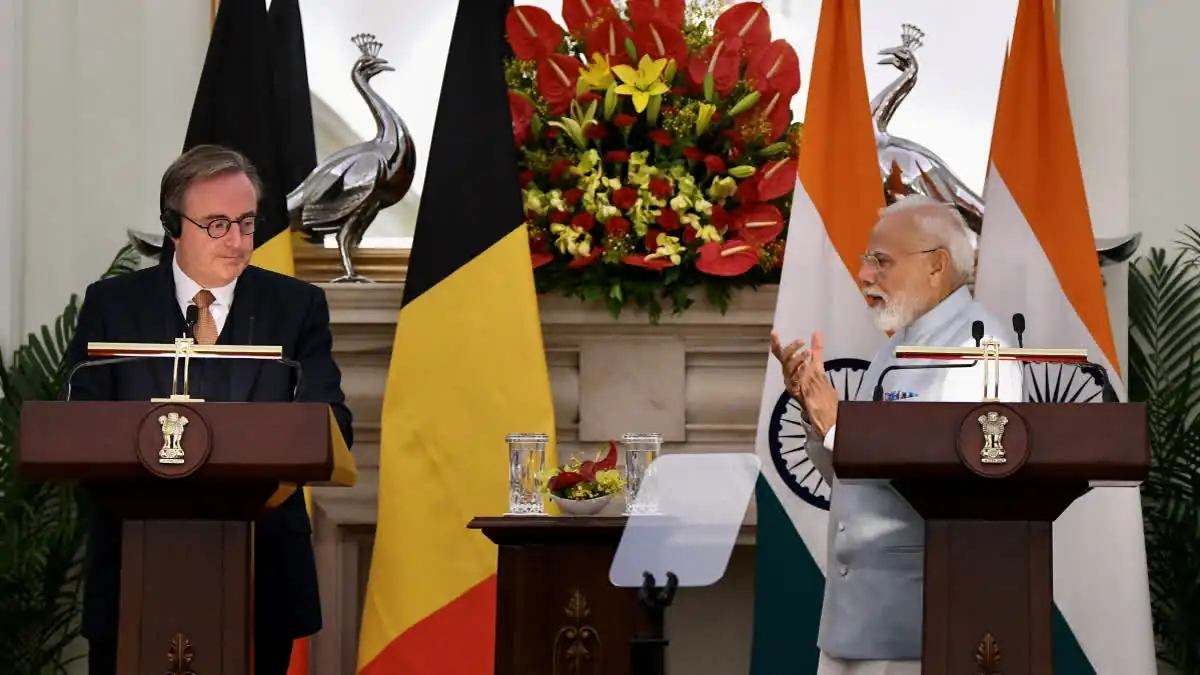
Bart De Wever's three days in India, his first since becoming Belgian prime minister in February last year, were the kind of visit that generates a handful of viral photos and a much longer list of things that officials on both sides will still be working through in 2030.
He flew in with Defence Minister Theo Francken, which tells you something before either man says a word. The two prime ministers sat down in Delhi to cover, per India's foreign ministry, "the entire spectrum of bilateral relations": trade, defence, clean energy, semiconductors, connectivity, plus quick mentions of Ukraine and the crisis in West Asia. That phrase does a lot of quiet work in diplomatic statements. It usually means the two sides talked about everything and settled almost nothing on the spot. Rajnath Singh met Francken on the side and came away with multiple MoUs and contracts covering rockets, drones, tank turrets and mine warfare systems, building on a partnership that Belgian firms John Cockerill and Thales already have with Indian counterparts on the Zorawar light tank programme. India said it will now post its own defence attaché to Brussels.
The Hindu reported that Belgium assured India it won't extend defence cooperation to Pakistan, and that Rajnath Singh separately raised concerns about the terms of technology transfer. Nobody on either side has said much about how, or whether, that gets ironed out. It's the sort of line that shows up in one paragraph of one report and then vanishes from the conversation entirely, until it doesn't.
Mumbai is where things got more interesting to watch. De Wever became the first sitting Belgian PM to walk through the Bharat Diamond Bourse, a complex that handles most of India's diamond exports and sits at the centre of a trade relationship that's older than almost everything else on the agenda. About seventy percent of India-Belgium trade still runs through gems and jewellery. He used the visit to push for lower diamond tariffs and to make the case for the Port of Antwerp-Bruges as India's route into Europe.
Then came the line everyone quoted. Addressing an audience in Mumbai, De Wever took aim at American tariff policy, something about deciding on a Monday and reversing course by Wednesday, without once saying Donald Trump's name. He didn't have to. The room applauded anyway.
He was more direct about India. "Your prime minister warned us about this a long time ago," he said, referring to Modi's repeated warnings that countries shouldn't let trade dependencies turn into political weapons. "We are listening now." China wasn't named either, but everyone understood the reference. Beijing's export curbs on rare earth magnets have been squeezing European automakers and clean energy manufacturers for well over a year now. De Wever was, in effect, admitting Brussels was slow on the uptake.
Both sides agreed to try to double bilateral trade within five years, a target that's easy to announce at a podium and considerably harder to hit once the cameras leave. Cooperation on semiconductors and critical minerals got a mention too, as India works to reduce its own reliance on China for the same materials it's now trying to source from Belgium and elsewhere. A Belgian port delegation is scheduled to return in February 2027, which gives both governments a checkpoint to be measured against, if anyone remembers to hold the meeting.
Belgium is India's fifth-largest trading partner inside the EU, and diamonds still make up the bulk of that relationship even as both sides talk up semiconductors and green hydrogen as the future. Whether the newer sectors actually catch up to the old one, or just get name-checked in every joint statement for the next decade, is a fair question nobody at this week's meetings tried to answer.
The chocolate India Gate is gone. The rest of what got signed this week will still be sitting on desks in both capitals long after anyone remembers the gift.
Belgian Prime Minister Bart De Wever, travelling with Defence Minister Theo Francken, made his first visit to India since taking office in February 2025. Over three days in New Delhi and Mumbai, the two countries signed defence deals on rockets, drones and tank turrets, set a five-year target to double trade, and pitched the Port of Antwerp-Bruges as India's gateway into Europe. De Wever also praised Modi for warning Europe early about weaponised trade dependencies and took an unnamed swipe at American tariff policy while in Mumbai. A chocolate replica of India Gate, meant as a goodwill gift, melted before it arrived.