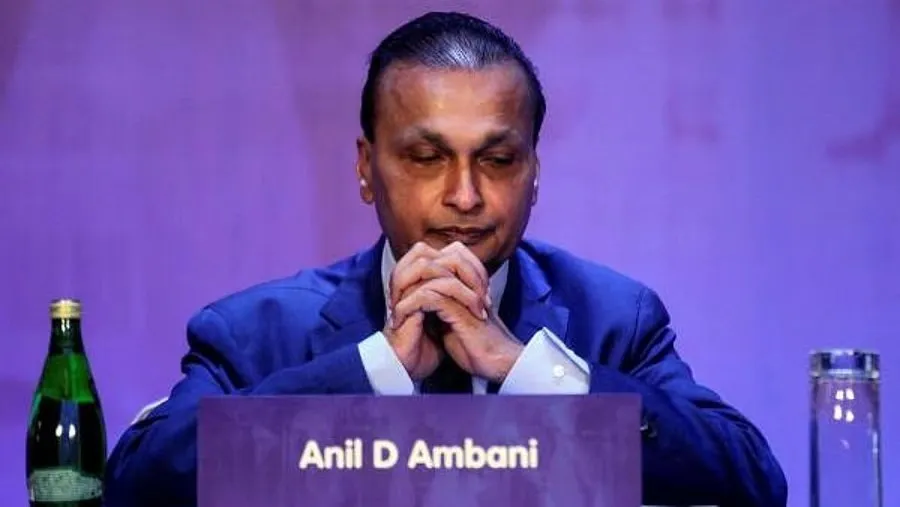
A FIR has been lodged against Reliance Capital Ltd. and Anil D. Ambani who is the former chairman of the company for causing a loss of Rs 1,816.22 crore to the Employees' Provident Fund Organisation.
This FIR was filed on 31st July and has been registered against Reliance capital Ltd. and Anil Ambani on the basis of a complaint in writing made by the organisation to the CBi. EPFO operates under the ambit of the ministry of labour and employment government of India.
This particular incident is just one among the other many FIRs that have been lodged with the bureau over the period of time against other companies that are part of the earlier Reliance group.
The timing of this incident is significant since there is a great deal of scrutiny of large corporate defaults by regulators and its impact on public financial institutions, which are entrusted with the task of safeguarding the retirement money of workers from the organised as well as semi-organised sector.
The legal experts say that FIRs that are related to any retirement fund organisations tend to get much more attention from the public than any other FIR.
History of the dispute dates back more than a decade, starting from 2013 and 2014, when Reliance Capital Limited issued Non-Convertible Debentures for its fundraising campaign at that point.
EPFO invested a total of Rs 2,500 crore in the NCDs, through four different portfolio managers, including Reliance Capital Asset Management Limited, which is a corporate group belonging to the same group of companies as the accused company.
The maturity date of the debentures was scheduled for 2023 and 2024, meaning that EPFO would get the money after around 10 years.
However, allegations made state that fraudulent activities inside the company led to the default in the repayment of the loan, making the investment impossible to recover for EPFO, as there were clearly problems with the oversight systems, which were supposed to prevent such incidents in the first place.
In addition, there might be a question about whether the crosschecks between other portfolio managers used by the company and EPFO risk management system existed back in 2013 and 2014 when debentures were initially acquired.
According to the CBI, the sum of the wrongful loss suffered by the EPFO due to this act amounts to Rs 1,007.55 crore, while the sum of the interest liability is Rs 808.67 crore, hence resulting in the total sum of the wrongful loss to be Rs 1,816.22 crore, which is quite a significant share of the initial investment sum of Rs 2,500 crore. Coming to the offences, the accused have been charged with criminal conspiracy, cheating, criminal breach of trust and criminal misconduct.
CBI has claimed that their probe will be carried out in such a way that it will establish the part played by everyone associated with this case, including the public servants who facilitated these irregularities, and where the investments actually went during the course of the whole process.
Considering the huge amounts of money involved, the case will attract the expertise of the financial crime experts and forensic auditors who will help establish the inter-company transactions between the companies.
The complaint that triggered the FIR, however, was not a standalone event but rather came in the wake of a parallel investigation conducted by another agency.
Having been informed about the discovery of documents indicating the presence of financial discrepancies in the business activities of the company, the Ministry of Labour and Employment referred their complaint to the CBI.
The document audit was conducted by an independent auditing agency BDO India LLP that concluded that, prima facie, several fraud cases were committed by Reliance Capital Limited and those managing the company especially in the time period ranging from December 2019 till December 2021, although some fraud cases were found to occur in earlier periods, thus proving that it was not a one-off fraud committed in a specific period of time but rather a pattern of financial misbehavior.
The involvement of two different investigating agencies such as the ED and the CBI proves the seriousness of the situation and the fact that the findings of the ED financial investigation will definitely be used during the process of the criminal investigation of the CBI.
Notably, while the FIR names Reliance Capital Limited as well as Anil Ambani in relation to the case, officials quoted in media reports point out that the FIR does not list Anil Ambani as one of the persons named as an accused; instead, some of his associates and employees are named as individuals in the document.
It is reported by the spokesperson of Mr. Ambani that he had been serving as the Non-Executive Director and Chairman of the Board of Reliance Capital Limited from 2005 until November 2021 when the Reserve Bank of India had taken control of the affairs of the company, appointing an Administrator for running the affairs of the company in lieu of the board of directors.
The point needs to be mentioned because a non-executive director differs from an executive director as far as responsibilities are concerned; therefore, it would form a key aspect of how Ambani's legal team is going to deal with any investigation of this case.
Legal experts opine that Indian courts have distinguished between the liability of executive directors and non-executive board members in some of the earlier corporate fraud cases.
In light of the above, Anil Ambani released an official press statement from a spokesperson representing his interests which made it unequivocally clear that he denies any form of impropriety in the matter and will exercise his right to defend himself through appropriate legal procedures.
The statement sought to make it very clear that the FIR filed in this case was strictly against Reliance Capital Limited as a corporate entity in order to differentiate clearly between the alleged actions of the company in the period in question and his personal status as a non-executive director and his lack of involvement in the daily business dealings of the company.
This statement seems to have been prepared by a lawyer in order to pre-empt any potential misinterpretations about whether or not there were charges against Ambani himself as chairman of the company, and it follows a pattern established in other similar corporate investigations in India whereby high-profile corporate executives issue official statements immediately upon the filing of a case against their companies.
These are far from the first instances where CBI investigators have focused on companies owned by Anil Ambani and the entire Reliance ADA Group. So far, the agency has recorded seven FIRs against companies including Reliance Communications Limited, Reliance Home Finance Limited, Reliance Commercial Finance Limited, and Reliance Telecom Limited, on the basis of complaints made by various public sector banks and Life Insurance Corporation of India over a number of years.
Out of the above-mentioned instances, CBI has already filed four charge sheets and has arrested seven people accused in the matter of Reliance ADA Group.
Additionally, in February 2026, the agency filed yet another FIR against Anil Ambani and Reliance Communications on the basis of a loss of Rs 2,220 crores caused to Bank of Baroda, following which searches were conducted at his residence as well as the company's office premises.
All these cases reflect a consistent and sustained effort of investigation against the Reliance ADA Group for a number of years against many lending institutions, ranging from public sector banks to insurance corporations and now the public pension corporation.
Since the FIR has now been filed formally, it is believed that the investigations of the CBI in the current matter will now focus on trying to uncover the entire history of transactions from 2013 to 2021 and in what manner the investments of the EPFO have been managed in these entities.
In addition to investigating the extent of the fraud, the CBI investigators will also try to find out whether there has been any negligence or involvement of public servants in carrying out the fraud. Since Reliance Group entities have faced extensive regulatory scrutiny in recent years, this particular case would attract interest from financial regulators, bodies that look after the welfare of pensioners, trade unions representing the EPFO members, and even retail investors who have seen the unraveling of the finances of the Reliance ADA Group since 2019. Like other FIRs filed against group companies, this case might take a lot of time to reach its conclusion, starting from searches, interrogations of officials, and filing of chargesheets.