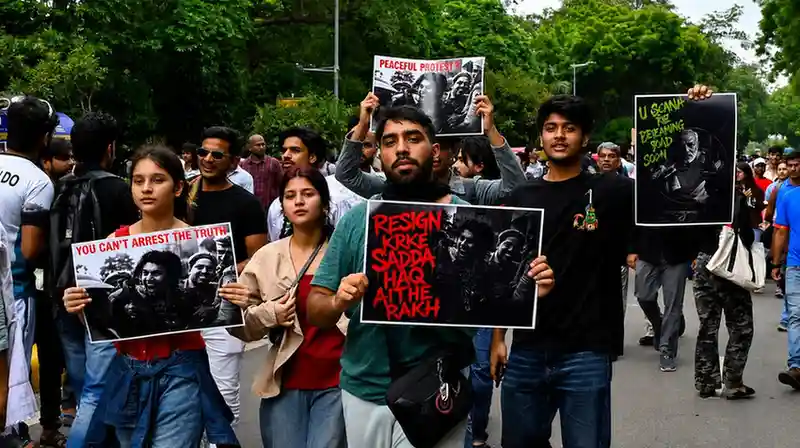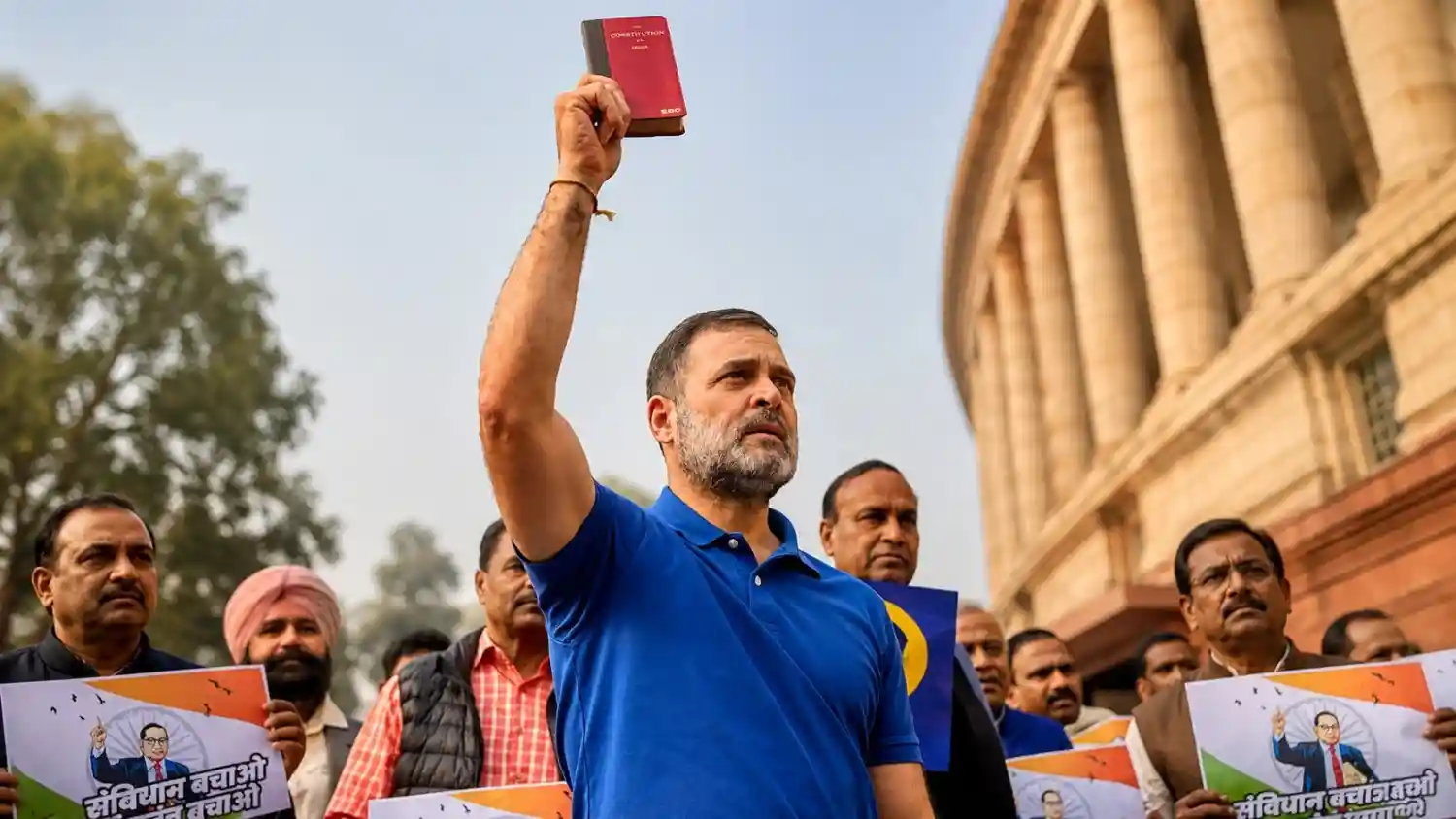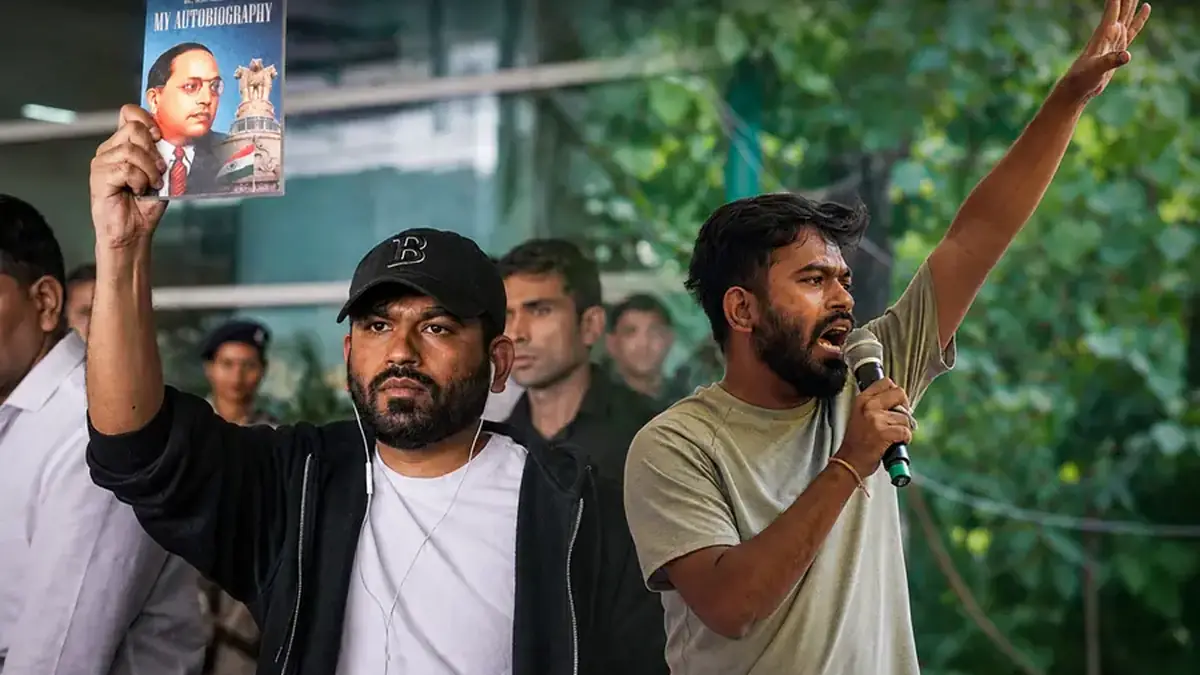
The Cockroach Janta Party(CJP), who had announced its victory and formally ended its demonstration at Jantar Mantar, has warned the government not to file any criminal cases and withdraw all of them or witness return of its agitation on the roads, in apprehension over the status of some released student who, as per rumours within the ranks are yet to have arrived, and the active state of FIRs to this effect despite promises from the highest officials of government not to press the issue any further.
This warning comes days after the CJP seemingly had a decisive victory: a high-level meeting between the government and a delegation of the CJP. Following this meeting, Union minister JP Nadda told the press that the Centre had agreed to the terms of the CJP's protest, including the demand that Education Minister Dharmendra Pradhan offer his resignation and the compensation of families whose children had died due to issues arising from the NEET paper leak scandal.
Ashutosh Ranka, the national spokesperson for CJP, said at the joint press conference with Nadda that students involved should go back home, marking the end of the month-long agitation.
As per the agreement, reports claim that all FIR slodged by the Central government and by governments in NDA-ruled states in reference to the protests will be revoked, and no action will be taken against those who took part in the protest.
Since then the CJP, while adhering to this accord has reportedly received information regarding continued detention of some activists, more so in Assam, West Bengal and Bihar, the states that are not directly part of the Centre’s assurance, which had excluded NDA-dominated states.
A statement by the CJP reads: “If this remains unresolved and those in custody are not released nor the criminal charges are not withdrawn, this will amount to breach of faith with the public…We would then proceed to take all other necessary actions if the government further chooses to renege its commitments.”
This, essentially, puts the government on an official stand and the CJP’s point is that its decision to withdraw the protests was predicated upon the full withdrawal of all charges and release of all imprisoned protesters.
It is not part of their understanding that cases only be partially dropped or prisoners released based on the selective roll-back the government seems to be attempting even as it labels its overall actions as those of a fair and reasonable government in dialogue.
The current standoff regarding FIRs stems from the July 20 clash, when a group of protesters marching toward Parliament from Jantar Mantar hit police barricades, and in the ensuing police action with baton charges and tear gas, clashes occurred and some protesters were injured as well as some policemen.
Delhi Police has put the total number of injured at 180, a majority of whom were security personnel, though CJP leaders said that around 150 protestors needed hospitalization on that day alone and around 70 had been arrested.
"We'll register FIR against only those protestors found resorting to acts of stone-throwing and violence," the Delhi Police said thereafter, hence setting the legal controversy that has prompted CJP's latest warning. The riot also produced an image that caused controversy of its own: a senior Delhi Police officer was seen slapping a woman protester while driving a female contingent back from Jantar Mantar to make them vacate it.
Opposition politicians called for an FIR against the police officer as well, and for many CJP activists, the incident represents exactly the type of indiscriminate police use of force the movement claims it was opposing in the first place, while some members of the movement have been caught in legal cases concerning alleged violence on that day.
The CJP had itself been founded only months earlier, in May 2026, as a satirical online response, after Chief Justice of India Surya Kant was reported to have described some unemployed youth as cockroaches at a Supreme Court hearing.
Founder Abhijeet Dipke seized on the comment as an identity to rally around, and within days, the group became hundreds of thousands of members strong on online forms, millions on social media.
Internet sarcasm had begun to morph into weeks of physical protest driven by exam mismanagement and then morphed into calls for jobs and against governance, all because of that remark.
That growth from meme campaign to a force that could wring a resignation from a minister is why the warning against FIRs is now resonating.
As a movement that had already shown its capacity for rapid mobilization of youth and sustained pressure, the CJP's vow to rekindle protests is not being discounted even though the Jantar Mantar ground has officially been cleared and the CJP's online presence of millions remains intact.
For the time being, the government has not given a formal public response to the CJP's latest words, although the announcement that FIRs will be removed and no harsh steps would be taken was made directly by senior ministers during the press conference that signaled the end of the protest.
Much of it could depend on what the governments in the NDA would do now—in state governments that were not ruled by the NDA to remove cases and prisoners. The Centre's influence to achieve what was, if not directly part of, would still be seen.
The coming days will tell if CJP and the administration's agreement on how lasting it is. If prisoners and FIRs come under quickly resolving, then maybe this phase will not enter as big; otherwise, it will keep the public seeing that he can stir the government up to mobilize just because it can happen again to push again after all this one.