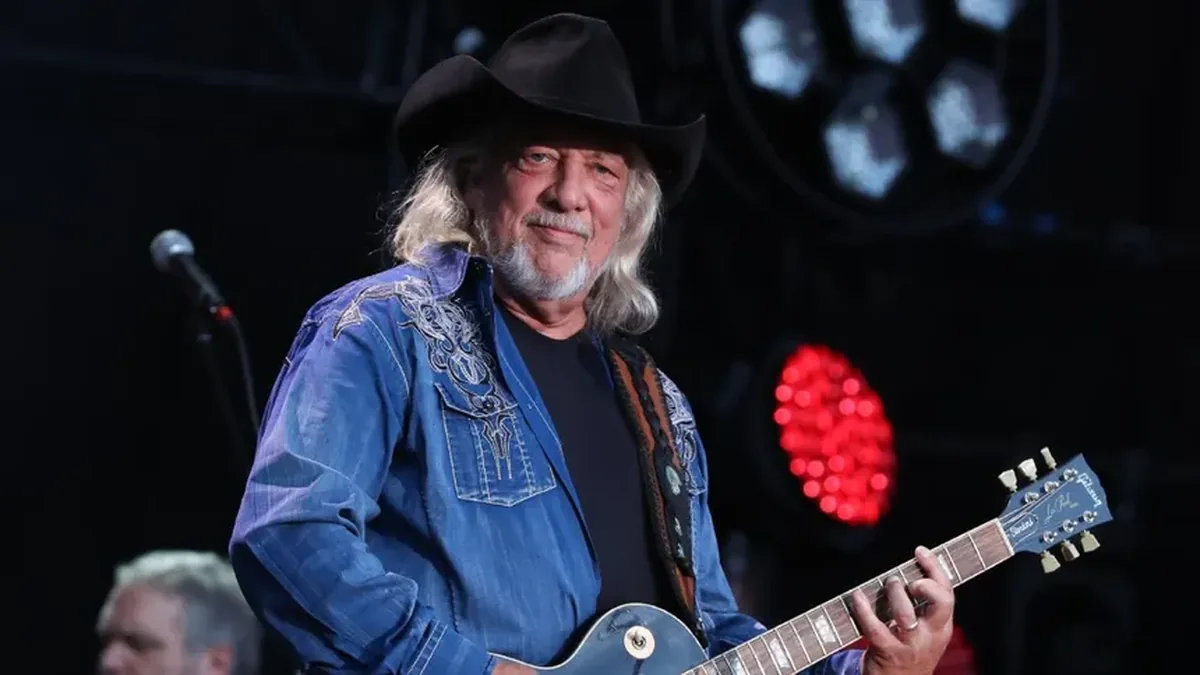
Country music lost one of its most distinctive voices this week. John Anderson, inducted into the Country Music Hall of Fame just two years ago, died Wednesday at 71. His family announced the news in an Instagram post that evening.
“It is with the heaviest of hearts that we share the passing of our beloved husband, father, grandfather, and best friend,” the family wrote. “To the world, he was a gifted country music singer whose voice and songs touched countless lives.” According to the statement, Anderson died in his sleep. No cause of death has been shared publicly.
Anderson was born and raised in Apopka, Florida, and made the move to Nashville not long after finishing high school, chasing a music career the way a lot of young singers from outside Tennessee did in that era. He started performing around Music City almost immediately, and by 1976, he’d landed a record deal that kicked off what would become a decades-long career.
That career produced some of the genre’s most recognizable songs. “Swingin’,” “Straight Tequila Night,” and “Seminole Wind” all became staples of his catalog, songs that helped define a particular strand of traditional country sound even as the genre shifted around him over the years. Anderson often credited Merle Haggard and George Jones as the artists who first pointed him toward country music, an influence that’s easy to hear in his own honky-tonk-leaning style.
Anderson’s induction into the Country Music Hall of Fame came in 2024, alongside Toby Keith and James Burton, a relatively recent honor for an artist who’d already been performing for roughly five decades by that point. Kyle Young, CEO of the Country Music Hall of Fame and Museum, spoke to what made Anderson’s style stand out: “John Anderson was a one-of-a-kind song stylist who proved that fresh innovations were best born from time-honored traditions.”
That description tracks with how Anderson approached his music throughout his career, rooted in traditional country instrumentation and storytelling, but never quite sounding like anyone else doing the same thing.
The reaction from fellow musicians came quickly. Reba McEntire commented directly on Anderson’s own Instagram post, calling him one of her “favorite people in the business” and writing, “I sure will miss you, John.” Younger artist Parker McCollum shared that he’d actually met Anderson just days earlier, on Sunday night, a detail that underscores how active Anderson remained in the Nashville community right up until his death.
Those kinds of tributes, from an older generation star like McEntire and a newer one like McCollum, speak to how Anderson’s influence spanned multiple eras of country music rather than staying confined to his own commercial peak in the 1980s.
What stands out about Anderson’s run in country music is simply its length. He broke through in the late 1970s, hit his commercial peak through the ’80s, and kept performing and recording well beyond that, long after many of his contemporaries had faded from the charts. That kind of longevity in a genre known for chewing through trends is itself part of what earned him Hall of Fame recognition, even if it arrived later than some fans might have expected.
No public memorial details had been announced as of Wednesday night, and the family’s statement didn’t include information on services. Given his standing in the genre and the immediate outpouring from artists like McEntire and McCollum, a broader tribute from the country music community, possibly at an awards show or industry event, seems likely in the weeks ahead, though nothing has been confirmed yet.