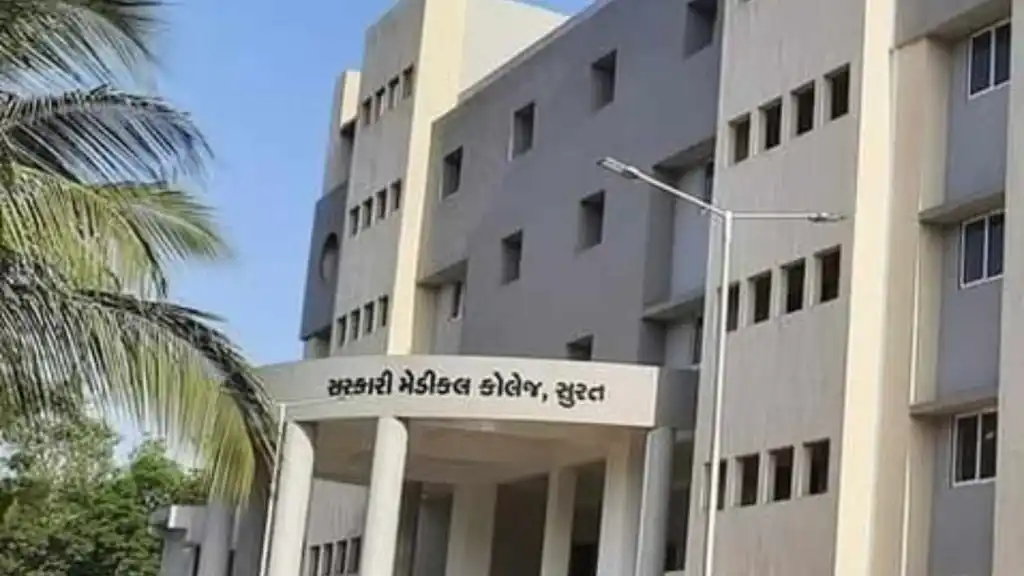
Dr. Harsh Pandya was found dead, hanged to a ceiling fan in his hostel room on August 9 at Surat's Government Medical College (GMC) just hours before he was supposed to go out for emergency duty at the adjoining New Civil Hospital.
It wasn't long before an inquiry committee set up at the college revealed that he was ragged, ridiculed, and mentally tortured by his seniors in the last couple of days.
Four resident doctors have been suspended, four faculty members have been issued a show cause notice, and a state ordered probe has already been initiated. However, for the Indian medical community, it feels like just a ritual process done as per the routine procedure of a system that has already claimed many innocent lives.
In the MD Microbiology course of GMC Surat, Pandya had joined just two months back. Pandya was staying on the tenth floor of the Boys' PG Hostel of the same institute to undergo a rigorous residency program. Pandya's own father, a trained surgeon himself, said that he was quite normal and that his son had not displayed any symptoms of stress except that there were some problems in the form of conflicts that he was having with seniors in the department. Six months ago, he got engaged.
However, the scenario drastically changed once the anti-ragging committee launched an inquiry into the issue. On Pandya's disappearance and failure to report to work, along with his unavailability on the phone, one of his roommates went to see him. The room was bolted, and despite knocking again and again, Pandya did not respond. However, hostel security personnel had to break the room as they discovered the body of Pandya.
A probe was immediately launched at the college level under a great deal of pressure from the state's Health Minister, Praful Pansheriya. Pandya was made to hear verbal abuse for many hours by four second-year senior residents who included Dr. Nirali Vasave, Dr. Anuj Maheshwari, Dr. Dikshit Ghevariya, and Hina Bhutne.
They were all immediately suspended for six months for their conduct in addition to showing them a show cause notice for failing to prevent ragging. The head of the microbiology department, along with some faculty members, was issued show cause notices for failing to take any steps.
What makes the tragic event even more of an institution-wide issue is a statistic hidden away in the same investigation: GMC Surat has documented at least five cases of suicide and suspicious deaths of junior doctors in the past three to four years.
Simply put, that alone undermines the explanation of Pandya's case being an exception brought about by some personal issues.
It points to the existence of a hostel/departmental system that operates by humiliating everyone within the ranks while also adding to the burden of the junior residents whose day is consumed by the 24-hour responsibilities and exams and the quest to prove their mettle.
The Gujarat health minister promises a comprehensive investigation by the police and other officials in a panel consisting of forensic specialists and members of the medical community. "Justice will be served," assures Gujarat's health minister in the aftermath of Pandya's tragic demise.
However, these swift suspensions done in the name of responsibility have become a usual trend following most ragging-related deaths in medical colleges throughout India, from Kurnool to Warangal to Patna.
Ragging involving medical postgraduate residents is usually psychological in nature, not the same type of violence that occurs at undergraduate hostels. It is based upon constant correcting, publicly shaming of a resident during rounds, assigning of duties arbitrarily, and the senior resident's treating of juniors as their subordinates, which need to be 'broken in.' Being not accompanied by visible traces, this type of harassment becomes easier to conceal.
The uniqueness of Pandya's case lies in that the college itself, using its anti-ragging committee, recognized that exactly this happened in this case, and it qualifies as an act covered by UGC anti-ragging guidelines.
It is the recognition by a higher medical education institution and not an activist organization or victim's relatives that has become the reason why this issue provoked an outrage across all of India.