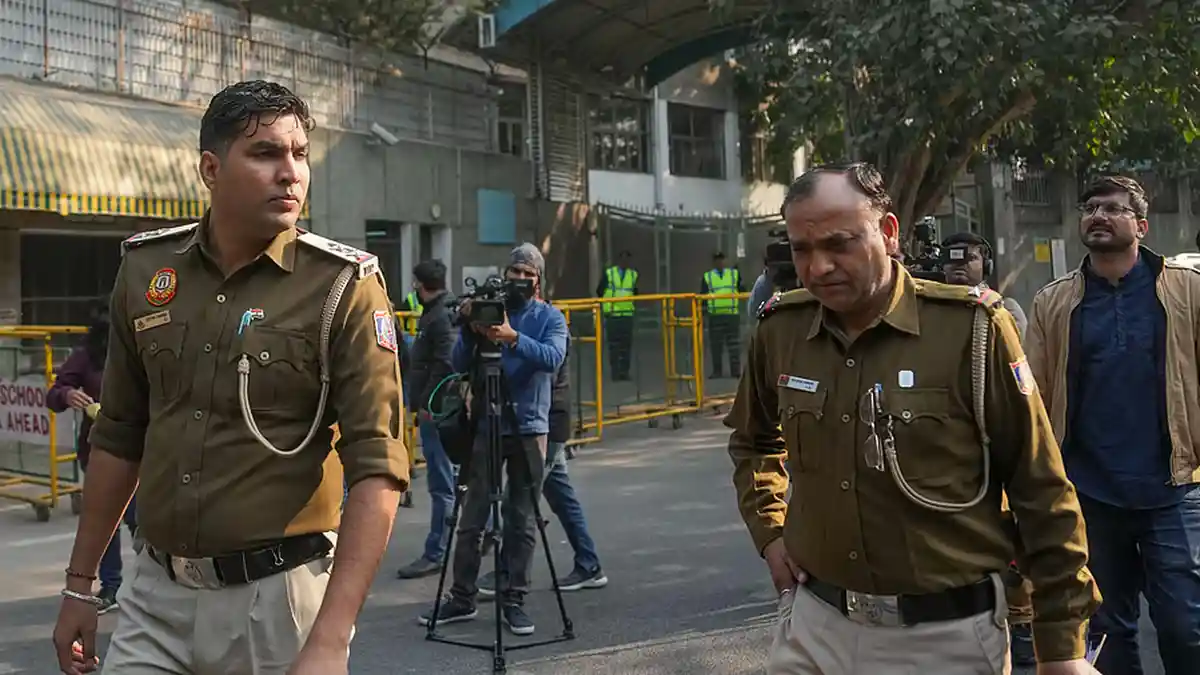
The protest season in Delhi in 2019 is not restricted only to street politics; it has been as vocal on social media platforms such as Instagram, X (formerly known as Twitter), and WhatsApp.
"Delhi Police urges all protestors to be peaceful, exercise restraint, and cooperate with the police for maintaining peace and public order," stated the widely shared post.
This appeal has now turned into something much more extensive; it has become a full-fledged messaging strategy designed specifically to address the phenomenon of protest moments becoming viral videos.
The spark was a summer where Delhi’s protest sites had turned into real content generators.
Delhi Police has responded to no fewer than 15 instances of false news on social media since the big protest in the city, while fact-checking units are busy verifying hundreds of viral videos and posts to find out how they began and who spread them.
It gives a sense of scale of what the police had been up against. Some of the items they rebutted included the assault of a 12-year-old girl and a woman protester by the police, the detention of an important activist, and a girl’s death in a stampede after the police crackdown — all, according to the police, false reports.
There was one case in which the sheer absurdity of this battle of misinformation became clear.
A video was shared on social media in which a man was presenting himself as a Delhi Police Sub-Inspector who had recently retired from his job to take part in the protests by students.
The Delhi Police took action against the spread of such false information. In an announcement made by the Delhi Police on its X handle, the police force announced that the claim was entirely baseless as there was no Sub-Inspector like this in their records.
Apart from fabricated stories, there was also the case of policing abuse that had been thrown at the highest office of the land.
The Delhi Police conducted an operation against social media posts which contained abusive and derogatory comments made against the Indian Prime Minister Narendra Modi and were apparently put up when there were student demonstrations against Jantar Mantar. This was done after it emerged that there was a team specially created to monitor any such post on the internet platforms.
There were some notices served to social media intermediaries asking them to take down the posts that violated any regulations.
As if things weren't confusing enough, some of the "protests" which the police were called in to handle never even took place.
The Delhi Police reported that no permission was given for any congregation at Jantar Mantar on account of the proposed protest concerning reservation reform, completely debunking the claim which went viral on social media.
It was officially reported that no person or entity was authorized to conduct such a protest, and prohibitory orders issued under section 163 of the Bharatiya Nagarik Suraksha Sanhita, which bans unauthorized congregations of five or more people and similar activities, remained in effect in the entire New Delhi district.
What sets this wave of advisories apart from the previous rounds of communication by the Delhi Police is the language itself – youthful, sharp, and tailored to how users actually scroll through content.
By sharing reels and memes on social media platforms as part of their efforts to communicate important messages, the Delhi Police has adopted what is called a "Gen-Z approach" of communicating about matters of public safety – an approach already applied to traffic safety issues, drug awareness, and online fraud, but which now is being expanded to cover protest behavior.
The idea behind this effort is rather simple: a cool and collected protester does not make for any viral material. On the other hand, an angry protester shouting on someone’s video can become one, especially because it is out of the police’s hands to dictate the caption underneath.
Beyond the viral memes and videos, the underlying message in the advisory has always stayed the same regardless of the number of times the police have issued the advisory.
Citizens have been cautioned against believing and spreading rumors, misinformation, and unverified posts using any medium and have been asked to depend only upon verified information sources and work with the police in ensuring harmony and public order.
This advisory, phrased differently each time, has been issued during various rounds of protests this year - starting from the CJP-led protests in July, to the subsequent NEET-protests, to the August rally that police claim did not even have permission in the first place.
However, the underlying reasons for this campaign go well beyond simple crowd control; they relate directly to how protests are framed and litigated in the aftermath.
One piece of viral footage – whether factual or not – may influence public discourse, spark political reactions, and find its way into litigation even prior to being verified officially. This is precisely the kind of phenomenon that the fact-checking units of Delhi Police have had to race against, issuing their clarifications weeks or even months after an unverified claim has been widely viewed by millions of people.
The very idea of framing the advisory through the concept "your reaction becomes content" reflects the attempt to stay ahead of that process.
The size of what triggered this change is evident by looking back at how the demonstrations in July went down.
A peaceful demonstration by students about NEET malpractice at Jantar Mantar morphed into civil unrest, involving political personalities, resulting in the pellet injury of at least one person, and creating misinformation to the extent that the police had to release a nearly daily update of their own to correct what went viral.
This particular wave of protest, and the viral videos that came out of it, seem to have served as the immediate context within which this new "do’s and don't’s" style of messaging has been developed.
With the Delhi protest schedule showing no indication of slowing down, and with the political situation surrounding topics such as NEET, reforms to reservations, and civic complaints remaining heated, this type of message will certainly remain part of the routine rather than a one-time campaign.
The real challenge, however, will be whether the memable style actually changes people’s behavior or just adds another item of debateable content to the screenshotters’ agenda.