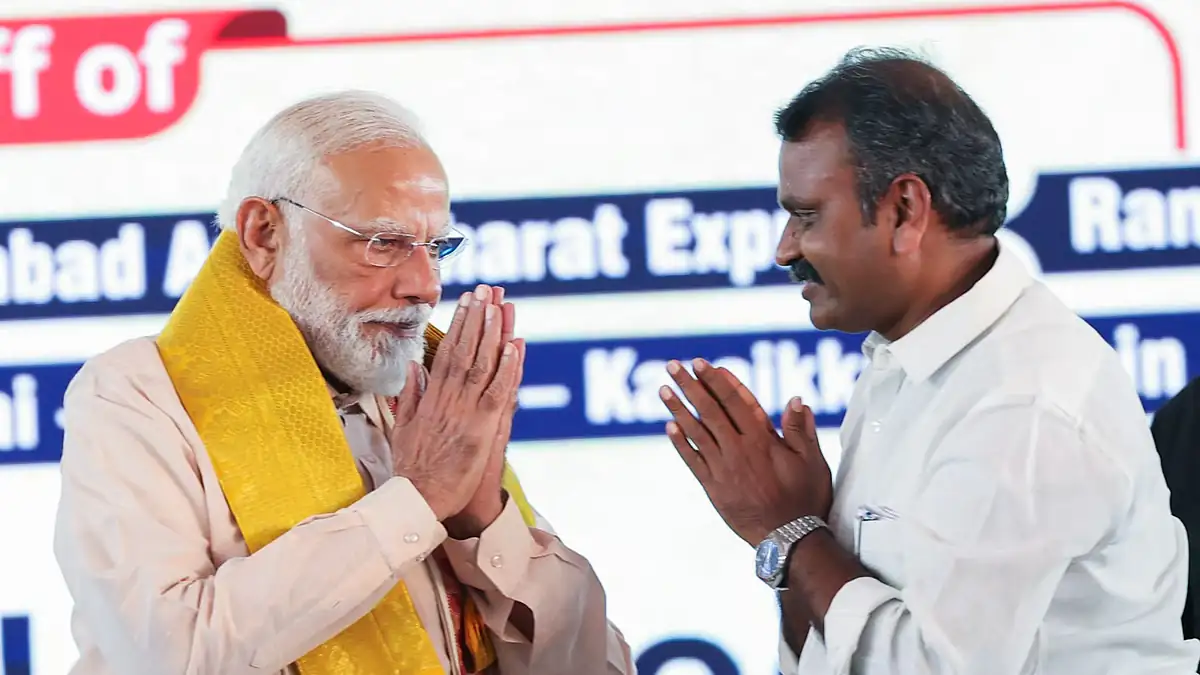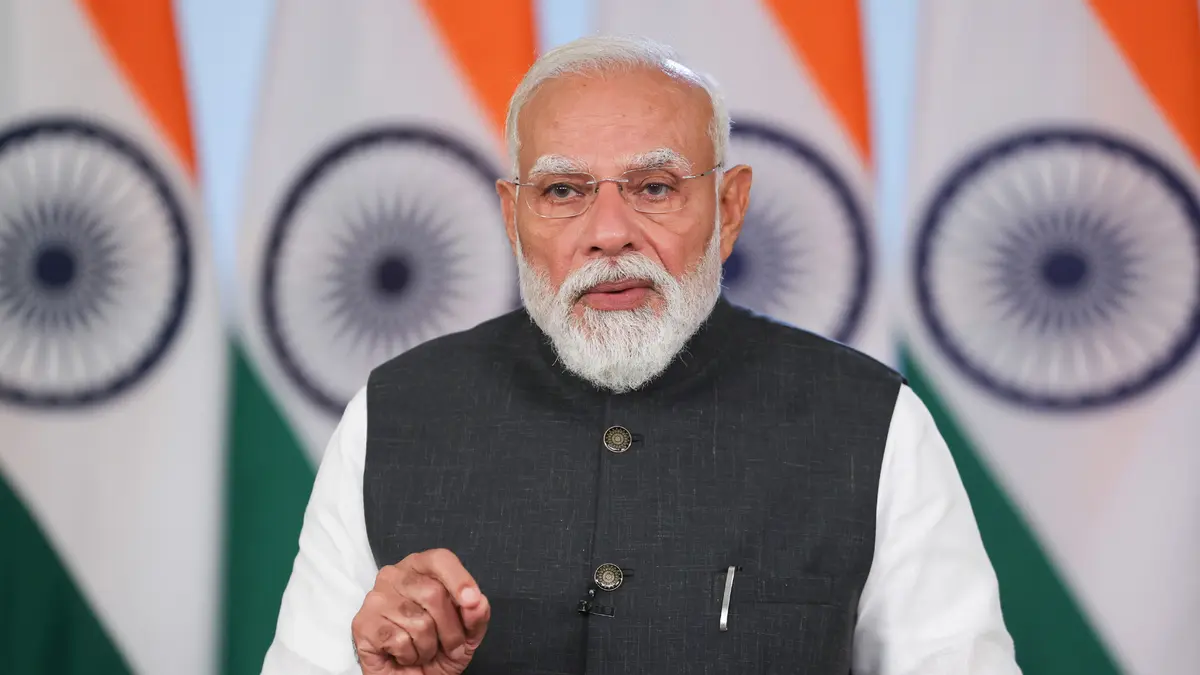
Narendra Modi, who is the prime minister of India, has launched another national movement titled "Nasha Mukt Yuva for Viksit Bharat Sankalp Abhiyan." This particular initiative is focused on saving young people from addictions.
During the launch of this program through a video conference, the prime minister said that the healthy youth, physically and mentally, is the foundation of an advanced India. In this context, he asked youth citizens of India to make a personal promise to stay away from drugs and spread this message in their families, educational institutions, and communities.
Describing this movement as one not for individuals but families, societies, and even the entire nation, he said that collective efforts were needed to fight against such a social problem on a national level.
He added that there was great strength in collective effort, and that was why this campaign, being run under the power of collective effort, would move every youth in the nation, including big cities and far-flung areas.
What makes this speech unique is the way in which Modi referred to the use of narcotics as a strategy being employed by enemies of India in order to subvert it from within. According to Modi, drug trafficking is employed by enemy nations as a strategy within their overall terrorism plan precisely because they know that the youth will be the country’s future.
While this statement might look like a health warning message, it is actually a way of recontextualizing the war on drugs as a national security issue. Drug abuse among youth is linked to the calculated efforts of external parties in order to subvert the country’s social fabric and productive capacities.
The reason why Modi decided to link substance abuse to national interest is that he probably wants to appeal to young citizens' patriotic emotions in order to get their attention regarding the issue.
The language used by Modi regarding the youth was straightforward and clear. He made it clear to the youth that even though drugs give a momentary high, what is given in return is one's entire career and personal life, which is brought down to its lowest level.
This phrase was meant to demystify whatever illusion the youth had about using drugs.
The comparison between these two states was meant to dispel all the glamorized illusions about drugs in the minds of the youth through peer groups, entertainment media, and social networking sites.
In addition to this, he ensured that no social stigma be attached to recovered addicts. It was emphasized that individuals who have had to struggle to emerge from the claws of drug addiction are nothing but fighters and therefore deserve respect and honor in society.
The launch of this campaign marks the beginning of a "Jan Bhagidari" campaign that will last for 100 weeks. Weekly, organized activities will take place on every Sunday in the nation in order to keep the message against drugs active in the minds of the citizens through constant reminders.
Activities such as sports games, walkathons, meditation, cultural programs, nukkad nataks or street plays, painting competitions, discussions, and overall community awareness campaigns at the level of schools, colleges, and civil societies will take place.
The idea behind the campaign is that it should continue for more than one day because unlike the government campaigns that tend to fade away quickly after the message is delivered, this campaign should keep reminding people of the message every week.
This way, the message can be incorporated into the regular activities of the community through almost two years.
Speaking to the youth, Modi referred to them as the “Amrit Peedhi” of India and pointed out how the generation would be a crucial part of deciding the destiny of India over the next 2 to 3 decades.
The anti-drug campaign has been linked to the greater Indian vision of Viksit Bharat by 2047, which happens to be India’s centenary year since its independence. In his speech, he said that their individual decisions today would define the destiny of the nation as far as India’s position in the global community is concerned.
It must be noted here that quite a number of people attending the launch of the campaign claimed to belong to the Gen Z category, and the launch of the campaign took place on the heels of the students’ protest against changes in the public examination system, thereby making the initiative even more relevant for the youth.
Apart from appealing to individual moral responsibility, he cited concrete actions that the government has taken to enforce regulations on drug traffickers functioning in India. There have been many more arrests made than ever before, and large-scale confiscations have been made involving several states and border regions.
As he says, these figures speak about the stringent approach of the government towards narcotics trafficking syndicates that work within and across different states and countries utilizing advanced logistics and finance.
He cited the figures to explain that the government has an effective strategy that includes awareness among people through campaigns such as these and also strict action against criminal syndicates that deliver narcotics among vulnerable sections of people, especially youth in schools and colleges.
The latest move does not come out of the blue as it comes as a direct extension of the Nasha Mukt Bharat Abhiyaan that was first started by Modi from the ramparts of the Red Fort way back in 2020.
The older campaign has gained momentum over the years with its reach exceeding 20 crore people across the nation, including six crore youth and more than four crore women spread out in more than 5.7 lakh institutions of education in both urban and rural areas.
It seems like the latest Sankalp Abhiyaan aims to give a new lease of life to this already existing initiative by imparting it with a new and fresh youth-oriented outlook in the light of current fears regarding the abuse of substances among the youth.
Having understood that the mere use of awareness campaign would not solve the underlying issue of addiction, the government is also taking steps to enhance the treatment facilities available in the country.
According to a statement by union minister Dr. Virendra Kumar to Parliament, the government intends to open Nasha Mukti Kendras, drug rehabilitation centers, in all the districts of India over the coming years.
Currently, 768 such centers have been established in the country which provide in-patient treatment and counseling for people suffering from addiction problems as well as their relatives who have to bear the pain of being addicted to substances.
Mansukh Mandaviya, Union Minister of Health and Family Welfare, who attended the ceremony, echoed the Prime Minister's sentiment by emphasizing that a developed nation can only be established through the healthy body and mind of its citizens.
He said that healthy people will make a healthy society, which then becomes the necessary building block of national prosperity and growth. His statements clearly connected the anti-substance movement to the Viksit Bharat mission of the government by showing the fact that youth without substance is not just another social matter but a necessity for growth and development.
It shows that the campaign is multi-ministerial in nature, involving the Ministry of Health and Family Welfare, Ministry of Youth Affairs and Sports, and the Ministry of Social Justice and Empowerment to take one common stand on the issue.