Millions of Indians everyday use the railway stations' water taps to refill their water bottles without any hesitation.
This blind faith received a rude shock.
The Comptroller and Auditor General (CAG), the watch-dog agency for policies and finances in India, discovered that the samples taken from various water coolers of railway stations were infected by the bacteria known as E.coli.
Within a day of this report becoming public, a complete package of remedial measures was announced by the Railway Ministry.
It is difficult to overlook the numbers.
Test results of samples of drinking water taken from taps on platforms of 49 stations in eight zones in 2022-23 and 56 stations in nine zones in 2023-24 revealed the presence of total coliform bacteria, including E. coli.
The audit spanned 512 non-suburban railway stations in the country.
The results were damning at a larger scale as well; out of the 512 stations, 458 stations were found deficient in terms of providing basic facilities for passengers, including drinking water.
This is no mere figure. Some real stations with heavy traffic have been mentioned here.
E-Coli bacteria have been found in water cooler samples collected from eight stations spread across four different railway zones including Coimbatore & Palakkad Junction (Southern Railway), Hyderabad (South Central Railway), four Central Railway stations and one station in Eastern Railway.
This Central Railway group is particularly worrisome.
Four Central Railway stations viz. CSMT, Kalyan, Bhiwandi Road & Lonavala have come up positive for E-Coli bacteria.
And CSMT alone is an NSG-1 category station which is considered amongst the busiest stations of India.
It may very well be that what is even more shocking about the entire incident is the absence of proper testing itself.
According to Railway Board norms, the water supply system of each station should undergo at least two tests per year with multi-parameter testing kits.
However, such kits were not available at 436 stations in total, belonging to 15 railway zones, including 28 stations belonging to Central Railway alone.
Plain and simple—testing wasn't done due to lack of appropriate instruments.
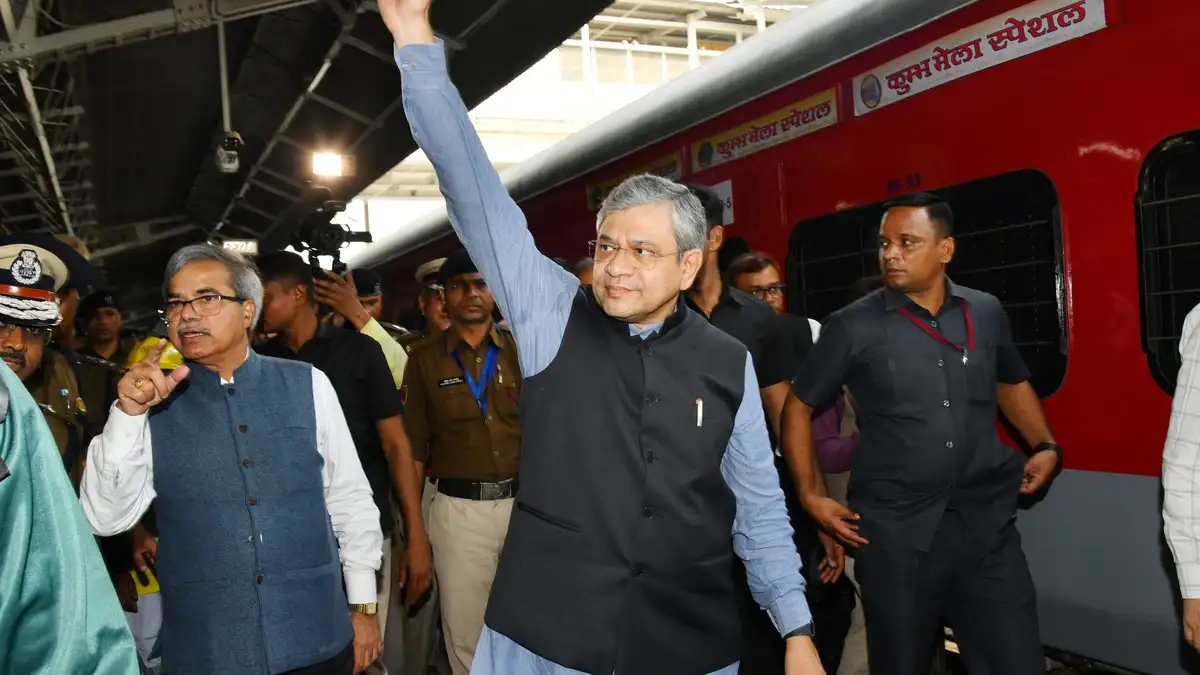
The Railway minister, Ashwini Vaishnaw, acted quickly once the results were out.
After the CAG report, a day-long review was done by Vaishnaw, Railway Board chairman and CEO, among others, followed by corrective actions immediately thereafter.
The highlight of the strategy includes a new "Tank to Tap" water filter system that will be put in place at about 20,000 places in the rail network, including water coolers.
In addition to filtration, Railways will also change water tanks and strictly follow the process of water testing at both the source and outlet ends.
The ministry is promising this won't quietly disappear into bureaucracy.
"This is a top priority area and will be monitored directly at the Board level. Progress and water quality reports will be published periodically to ensure transparency," the Railways said in a statement.
It's a pledge that puts the onus on the Railway Board itself, rather than leaving oversight to individual zones — the same zonal structure that the CAG says failed to comply with existing norms in the first place.
It is not the first time that railway drinking water has sounded alarms.
In another similar episode, the Northern Railway did not comply with a one-week notice from the National Human Rights Commission regarding the claims of contamination of drinking water in more than 700 railway stations under its jurisdiction.
This particular incident had followed an inquiry by the Railways themselves, which confirmed that there had been contamination—implying that the issue had been raised internally even before this current CAG report came to light.
At the time, the commission pointed out that "it raises a serious issue of violation of right to health of millions of passengers, if these findings are true."
This is not simply a technical detail; it is a health hazard.
This type of bacteria has been linked to fecal contamination, and some types may cause such diseases as diarrhea and food poisoning.
When it comes to a system of railways carrying such a large number of people each day, who get their bottles filled with water or drink straight from the tap on the platforms, this is not a mere paperwork problem but a health problem.
According to Railways, the process will be closely monitored and both Yatri Suvidha Kendra passenger facilities and the upgrade will be completed before the next festival season when there is an influx of passengers.
This renovation of the drinking water system has been presented by the ministry as an initiative taken in response to CAG’s observations on improving the entire passenger experience – a challenge that will be faced when the auditors come next time without notice.