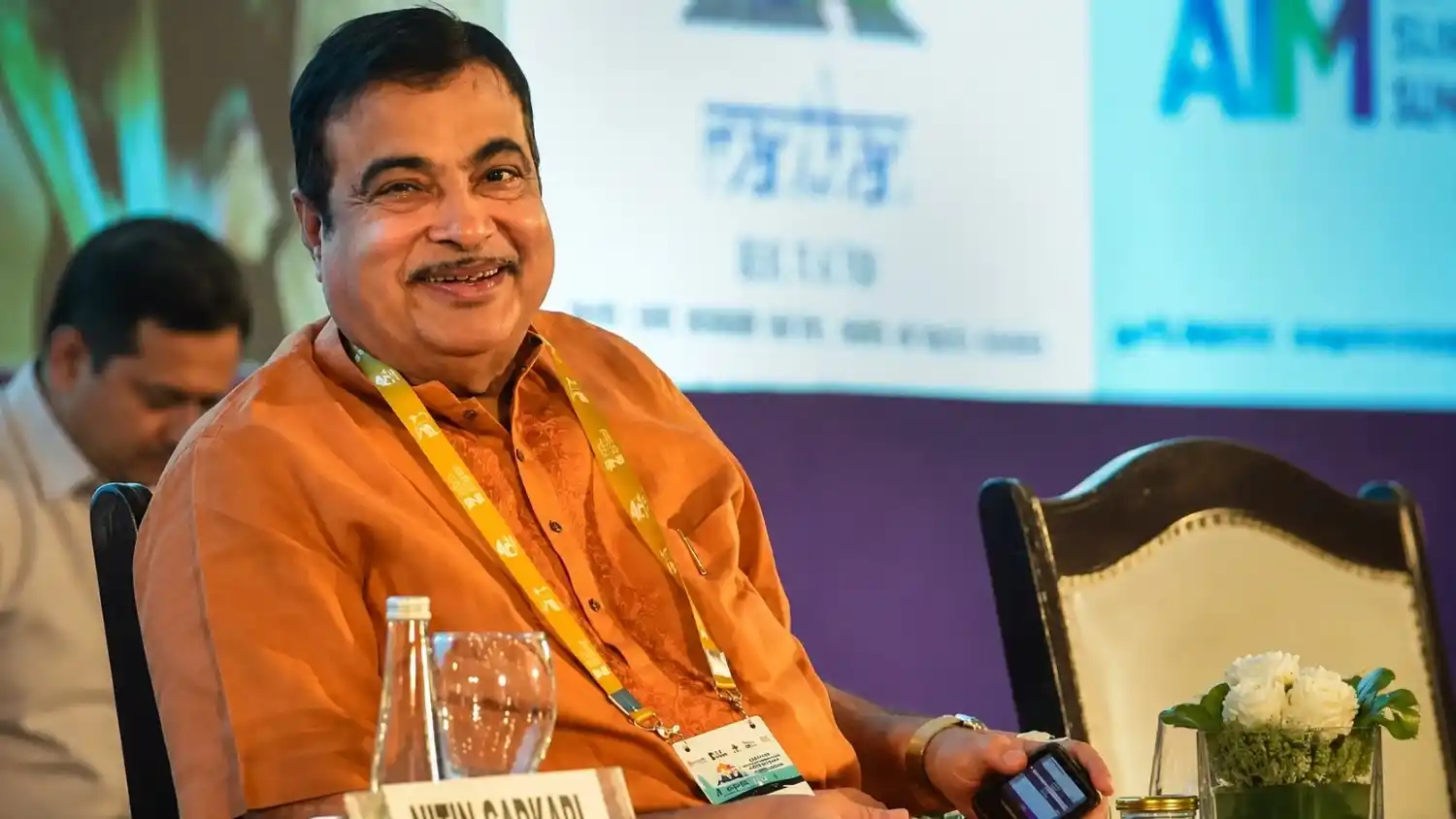
Nitin Gadkari, India's Union Road Transport & Highways minister, is on record for making a statement that has left no room for ambiguity. In his reply to Lok Sabha, he has officially acknowledged that the use of E20 fuel, which comprises 20% of ethanol, will cut down the miles per gallon by a range between 2 and 6 percent.
This revelation by Gadkari is one of the few times when the government has openly admitted a drawback in its ethanol blending program. It is not a small technical detail either. With a country like India, where fuel cost constitutes a considerable portion of the expenditure, even a small decrease in the fuel efficiency of 2 to 6 percent means a lot.
As per the response provided by the minister, the amount of decline in fuel economy depends on two main aspects, namely, the type of vehicle and its age. In simpler terms, a new vehicle which is specially manufactured for the use of E20 will have less decline in fuel economy as compared to an old vehicle meant for using E10 or even plain petrol.
In this regard, Gadkari made it a point to put his statement in context. The fuel E20 provides good acceleration and better riding quality in comparison to the E10 one, and there are carbon emissions which are around 30 per cent less as well.
To put it in simple words, Gadkari said that there may be some loss of mileage but then there are advantages too. Moreover, he mentioned that no engine failure has been recorded in engine durability test, both in dyno and road conditions, due to the use of E20 fuel.
The decline in mileage is not a puzzle or a malfunctioning product but simply a function of basic chemistry. The calorific value of ethanol is less than that of petrol, which results in less energy being released from each unit.
This point was made by engineers who talked to the press and stated that "it’s purely because of the lower calorific value of ethanol compared to petrol." It is a known scientific fact rather than something peculiar to India.
Even countries that have already switched to higher ethanol blends have faced the same problem with mileage. The issue has always been not whether there would be a decline, but how much, and if it is worth it or not.
The statistics used by Gadkari are not hypothetical in nature. These tests have been developed using the results obtained from the joint research conducted by Automotive Research Association of India (ARAI), Society of Indian Automobile Manufacturers (SIAM) and Indian Oil Corporation Limited (IOCL).
In this research, the effect of E20 in two wheelers and four wheelers that are BS-III, BS-IV and BS-VI type and certified to run on E10 petrol was analyzed.
A combination of standard testing methodologies along with test procedures formulated jointly by the OEMs was used for the process.
One of the other remarkable points raised by Gadkari pertains to the scale at which ethanol blends of fuel have been used. Gadkari pointed out that E15-plus petrol has been in use for over three-and-a-half years and that E19-E20 fuel has been in circulation for over two-and-a-half years.
In the meantime, around 20 crore two-wheelers and 3 crore petrol cars are believed to have run on such blends of fuels.
The minister asserted that there had not been any verifiable instances of engine failures or breakdowns caused by ethanol blending of fuel.
Gadkari said that according to manufacturers' servicing information, there was no unusual corrosion or wear associated with the E20 fuel and also that no warranty claims have been made.
Despite these reassurances, however, the implementation of E20 has been far from trouble-free. Opposition parties and consumer groups have constantly highlighted their concerns, specifically with regard to those vehicles that were never built, keeping in mind the possibility of a 20% ethanol blend.
There have been many questions raised by critics regarding the compatibility of all vehicles plying in India with E20, as well as concerns regarding lower fuel economy and higher costs of maintenance.
Further, there is a demand for a clearer definition of liabilities in case any issue occurs in the engine or fuel system of the vehicle when using E20. It has even been reported that some older BS-III vehicles would need replacing their rubber parts so as to make sure that the ethanol-blend fuel can be handled by them.
Not only has the government taken an official stand to defend its ethanol blending policy through a ministry, but also another minister, the Minister of State for Petroleum and Natural Gas, Suresh Gopi, has commented upon the topic during a similar period of time.
He stated that the EBP program is a phased and scientifically proven process, developed by consultation with concerned entities, such as the NITI Aayog. It has always been argued by officials that the ethanol program was a national energy security issue.
The country spends a large sum of money every year on fossil fuel imports, which, according to some estimates, goes up to lakhs of crores of rupees. By blending locally produced ethanol in petrol, the government is trying to address all these three issues at once—decreasing its reliance on imports, supporting the farmers providing ethanol, and reducing car emissions at the same time.
Gadkari had mentioned before that the goal of the country is to develop the ethanol economy significantly within the next years.
From the point of view of an ordinary car owner, the crux of the issue is simple: Is it a worthy sacrifice to give up 2 to 6 percent of mileage for the sake of reduced emissions and improved acceleration? The answer will certainly differ based on personal situations.
It is unlikely that someone who drives an E20-capable vehicle will feel much difference in mileage, whereas someone who owns an old two-wheeled vehicle will definitely feel the pinch at the gas pump.
The most important thing about this is that this is among the few occasions when the officialdom has admitted this aspect of the issue, as opposed to denying it outright.