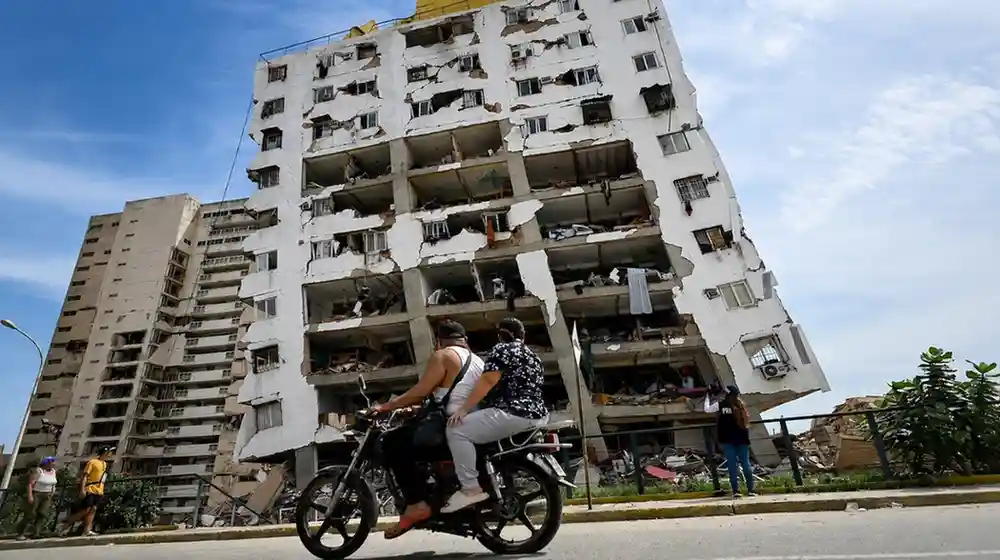
However, on the night of June 24, 2026, the country of Venezuela faced two strong earthquakes that hit almost back-to-back. It became the most devastating earthquake experienced in this country for over a hundred years. According to the latest reports, 1,400 people have already perished, thousands are wounded, and many more are reported as missing. The entire neighborhoods in the capital of Venezuela, Caracas, as well as the surrounding coastal area of La Guaira, are now flattened.
This is not just a natural disaster; it is a humanitarian disaster too, as the rescuers from around the world are trying to help save people trapped underneath the ruins. Let us look at the situation in more detail and learn what has happened.
What Exactly Happened
The accident happened on June 24, 2026, during a holiday in Venezuela (independence of Venezuela from Spain via the Battle of Carabobo). The reason for the accident to happen during the holiday is that most people were home due to the holiday and therefore not in their places of work or at schools, and this is why the authorities believe that this is what saved many lives.
- It is important to mention that there was an awful earthquake with magnitude 7.2 that affected the area near the city of San Felipe, the state of Yaracuy, Venezuela, at 6:04 PM local time.
- Thirty-nine seconds after the first earthquake, another one with a greater magnitude of 7.5 occurred.
- Only thirty-nine seconds later, the region was hit by another, more powerful earthquake—its magnitude was 7.5.
- The fact that there were two consecutive earthquakes contributed much to the level of destruction that the events caused, as, according to the specialists, the strength of the first earthquake was increased by the second one.
- The earthquake damaged the capital of Venezuela, Caracas, as well as the province of La Guaira, situated on the coast.
- Four hundred aftershocks occurred during several days after the main earthquake, and one of them was the earthquake with 4.9 magnitude, occurring on June 26. It caused serious destruction in many constructions and even the collapse of the bridge being constructed for the purpose of rescue.
Experts say this was the strongest earthquake to hit Venezuela since the year 1900, and the worst to affect Caracas since 1967, when an earthquake killed around 200 people.
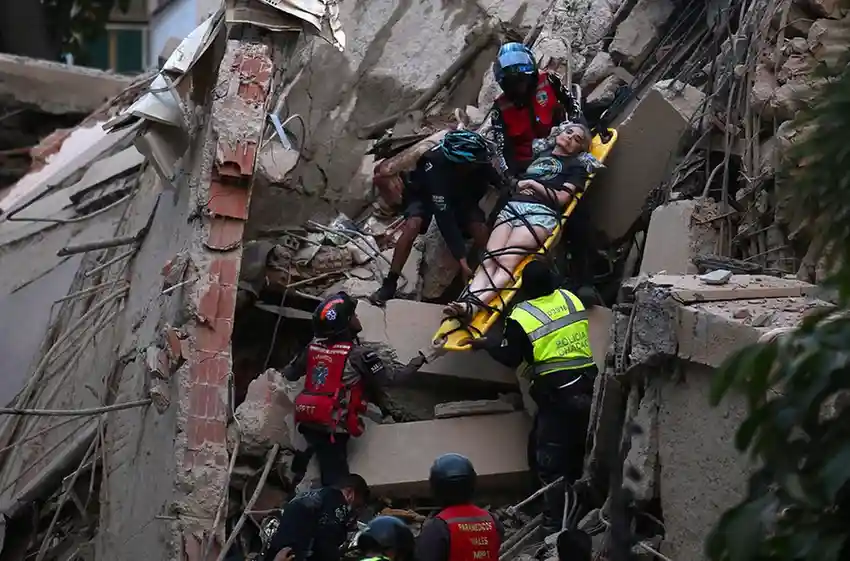
Photo: @Juan Barreto/Getty Images
The Toll: Lives and Property Lost
The magnitude of damage caused by this disaster is very huge and keeps increasing as the rescue workers go on with their operations in the midst of the wreckage.
- Over 1,430 individuals have lost their lives so far.
- Close to 3,200 individuals have been injured.
- Over 68,000 people are missing according to reports, but perhaps many of them will be found safe considering that communication has not been working well in some areas.
- The earthquake specialists have predicted that the death toll can increase very drastically to levels that may go up to as high as 100,000 following the completion of the search mission.
- The citizens of other countries have also become victims of this disaster, such as China, Spain, Italy, Brazil, Portugal, the Dominican Republic, and Chile. Over 28 people from Portugal have lost their lives.
- In La Guaira, among other severely hit regions, there was the destruction of over 1,400 buildings.
- In Caracas, there was the collapse of several skyscrapers and other buildings in the southeastern part of the city.
- There were two buildings that collapsed in the region of Chacao, trapping many victims under the debris.
- The nation’s major airport, named Simón Bolívar International Airport and located near the capital city, was seriously damaged and had to close. Its terminal had roof damage.
- Other important buildings such as the French embassy and the building housing the Venezuelan Red Cross were also damaged.
- A minimum of 13 hospitals throughout the country were affected by the quake, thus hampering treatment of the injured.
- The UN believes that overall damage will range from $4.7 billion to $8.7 billion, accounting for 4 to 8 percent of Venezuela's GDP. Some experts argue that the actual cost may turn out to be even bigger—three times more expensive than the estimate above.
Why the Damage Was So Severe
There are several aspects that have contributed to the severity of destruction during these earthquakes. Firstly, both tremors occurred simultaneously, leaving buildings little chance to settle down. Secondly, Venezuela has been going through tough times financially, which is why there were many constructions built without consideration of earthquake safety measures; besides, the hospitals and emergency service stations did not have enough capacity to deal with such a massive challenge before the earthquake happened. Finally, aftershocks, including a bridge collapse on June 26, have posed an additional threat to rescue workers.
On top of everything else, Venezuela has extremely limited access to the Internet and media channels, because more than 200 websites are currently blocked in the country, including news channels and social media pages. It makes it increasingly hard for people to communicate with each other, search for family members, or seek help, but the UN has already asked the Venezuelan government to change that situation.
Who Is Helping: The Global and Local Response
Despite the scale of the disaster, help has been pouring in from many different sources:
- Financial aid amounted to $150 million, and as well, the US sent search and rescue teams from Virginia and California and airplanes for damage assessment and for rescue operations in the hard-to-reach coastal zones. Also, rescue teams from the United States played an important role in the repair of a runway in the major airport.
- The rescue team from El Salvador performed several impressive rescues, among which was the rescue of a 15-year-old girl trapped on the ninth floor of the collapsing building.
- Other countries that have experienced earthquakes in their history were also willing to help.
- In particular, there are nearly two dozen countries that send various types of aid to Venezuela.
- President Rodríguez called on all hospitals in the country to help out with the treatment of those injured.
- The Venezuelan rescue team has been making use of special equipment in order to carefully bust through concrete with the hope of saving more survivors who were still trapped alive.
- All the schools in Venezuela have been closed, and the citizens have been advised not to enter any buildings due to the quakes.
- Since there are limited official rescue supplies, some common citizens have also been engaged in rescue operations using simple implements such as shovels, hammers, and pickaxes to facilitate digging through the ruins.
- While some places have witnessed a lot of volunteers gathered at one time, there have been some areas where almost no assistance has come in, illustrating the lack of aid distribution across the areas.
- Celebrities are not an exception; popular social media influencer Lele Pons, a Venezuelan-American with over 52 million followers, called on people to report which areas need urgent aid using her social media handle.
- The sports world has paid its respects to the tragedy: FIFA observed a minute of silence in honor of those who lost their lives during the quake during its matches, and Major League Baseball, which includes many Venezuelan players, provided its assistance and tributes.
What Happens Next
The reconstruction of the country will be an uphill struggle because, according to experts, the rebuilding process will take a long time due to the country’s existing limitations in public service provision and financial problems. The rescue efforts will last for several days because hundreds of people have been reported missing while government authorities warn that the casualty count will continue to increase as more and more search efforts cover different parts of the country.
Foreign aid will continue to flow into the country in the following weeks, but it will take some time before all the rebuilding processes such as road repair, home building, rebuilding of the hospitals, and assistance to displaced families are completed.