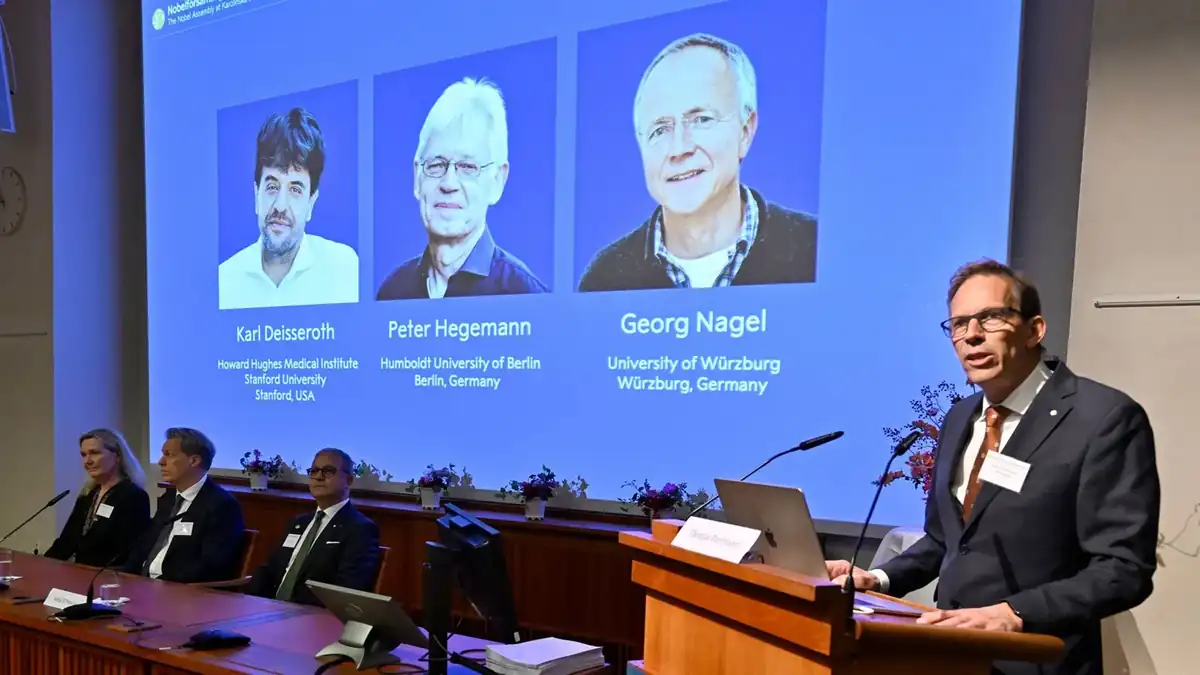
It was Monday morning when he got the call, and Michael Woodford was in New York at that time. He talked to the prize committee via phone and said that the news was a "tremendous honor" and a "surprise."
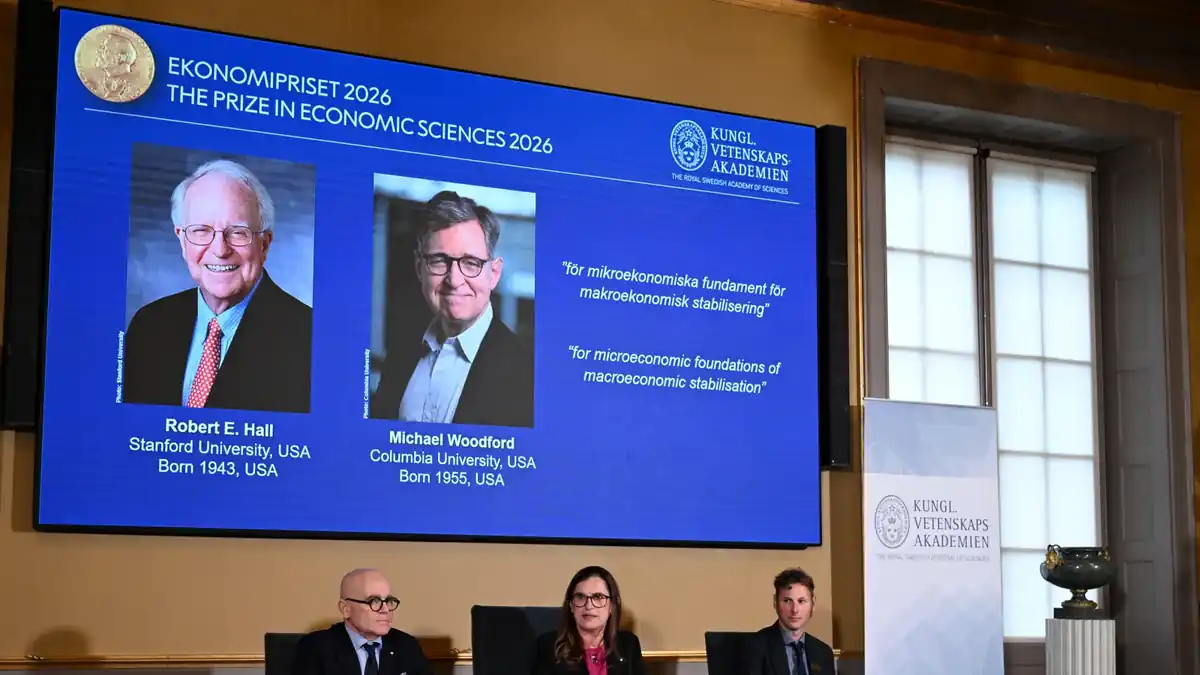
A few hours before, in Stockholm, the Royal Swedish Academy of Sciences had declared him, along with Robert E. Hall of Stanford, the recipient of the 2026 prize for economics. The citation says "for microeconomic foundations of macroeconomic stabilization."
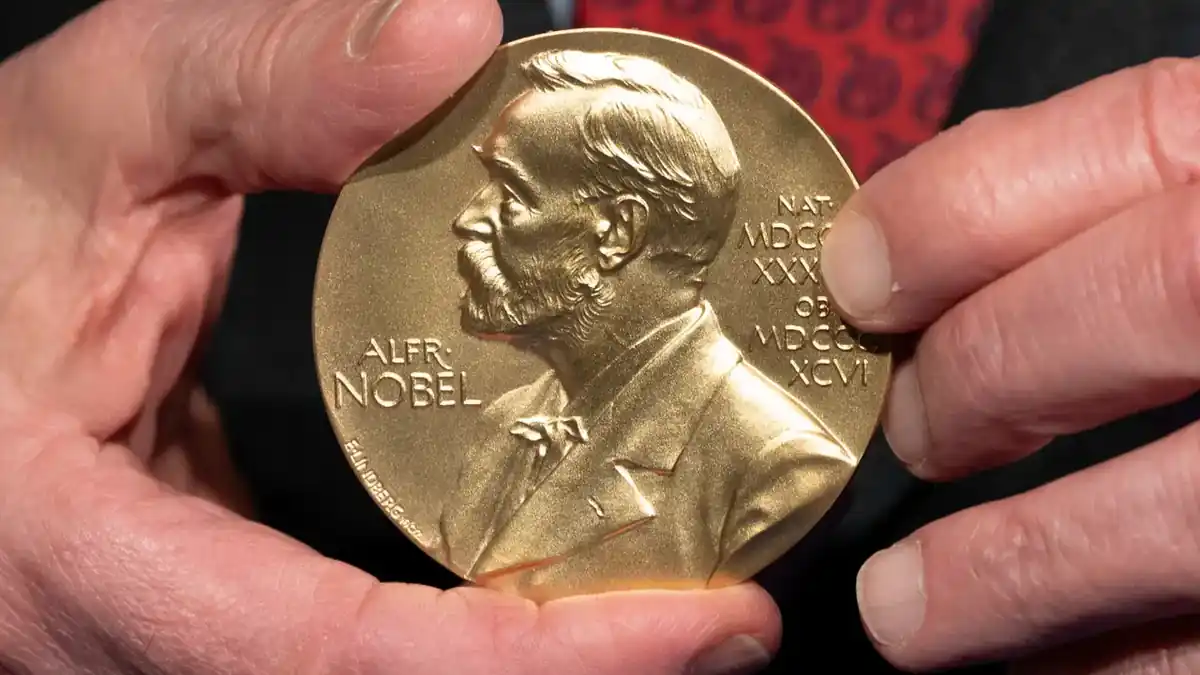
This is the last Nobel Prize for the year, with a total prize money of 12 million Swedish crowns, or around $1.2 million. This award ceremony is fixed for the date of December 10.
The old Keynesian recipe broke, and these two helped write a new one.
The prize recognizes years of work to revitalize macroeconomic theory. The economic problems that existed during the 1970s exposed limitations within Keynesian theories.
The economists needed a theory to show how an economy cycles through growth and recession and how the policymakers can help. As economist Timo Boppart explained to NPR, the “Keynesian recipe [was] shattered.”
By building models based on the decision-making of the actual individuals and firms within the economy, Hall and Woodford improved the foundations for policy by making it more realistic.
The two economists worked in different areas of the economy. Hall focused on demand, examining how households make decisions regarding consumption based not only on current income but on future expected income.
Woodford worked on supply issues and pricing in the economy. According to NPR, this was the cornerstone of the "New Keynesian Economics" theory.
The committee emphasized the fact that the two worked independently. As stated by John Hassler, chairman of the committee, "In their separate contributions... the two have provided a new foundation for stabilization policy."
It is known that Woodford made an important contribution to this theory. Woodford and Julio Rotemberg created one of the first New Keynesian sticky-price models micro-founded.
The winners represent different generations. Hall was born in 1943 in Palo Alto, California, and works at Stanford University, while Woodford was born in 1955 in Chicopee, Massachusetts, and holds a professorship at Columbia University.
The first researcher is also well known for his activities outside macroeconomics. Hall co-created the Hall-Rabushka flat tax, and he is a senior fellow of the Hoover Institution. Woodford occupied the John Bates Clark chair at Columbia since 2004, working previously at the Chicago and Princeton universities.
The work of the second winner has already been recognized by the scientific community. In 2024 he got both the Erwin Plein Nemmers Prize in Economics and the BBVA Foundation Frontiers of Knowledge Award.
This is not only an academic distinction, according to the committee. According to Hassler, "the stable theoretical foundation" for today's models employed by central banks around the world was created by the work of the laureates.
It is stated that the research enabled a better management of the most severe macroeconomic crises compared to previous times.
Hassler emphasized the types of shocks the models are supposed to account for. They include energy crises and abrupt changes in household consumption.
This is important since there is a constant danger facing the policy makers. The central banks and governments seek to limit the swings and avoid an economy suffering from either too much unemployment or excessive inflation.
The economics prize is relatively new to the family of Nobel prizes. It was first awarded in 1969. Unlike the five original prizes endowed by Alfred Nobel in his 1895 will, it was established by Sweden's central bank.
The purist often make a distinction between the two. Nevertheless, it is always presented along with the rest on December 10, the date of Nobel's death in 1896.
The prize has been biased towards one direction. Almost all the previous recipients have been Americans, with only three female winners so far. The latest was Claudia Goldin in 2023.