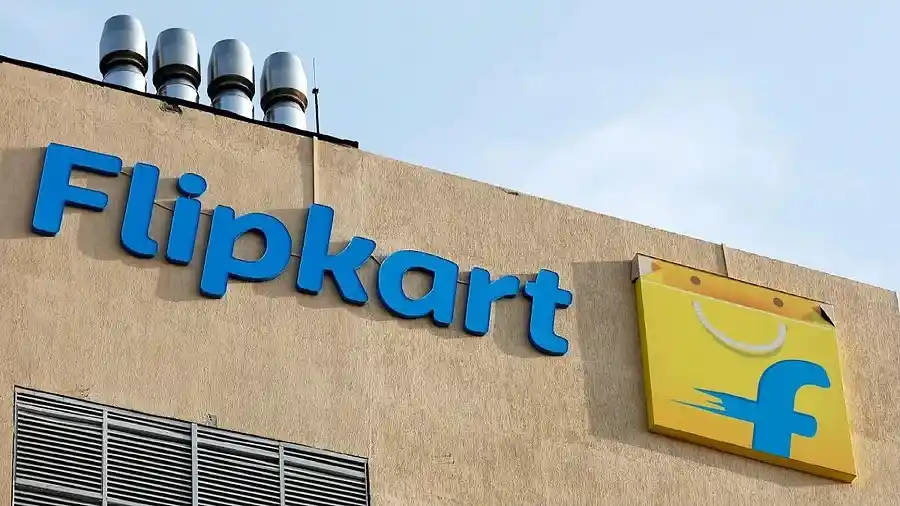
Flipkart, which is backed by Walmart, is set to unveil its food delivery application in Bengaluru around August 15, signaling the formal entry of the e-commerce company in the space that has long been held by Zomato and Swiggy. Bengaluru, being the obvious starting point of the pilot project, has been selected as per Flipkart’s strategy of experimenting with any new category through smaller launches before rolling out further.
Bengaluru makes sense as a starting city due to the presence of tech-savvy customers there, high food delivery penetration rates, and the fact that the city houses the headquarters of many such rival companies. In fact, Kalyan Krishnamurthy, Flipkart Group CEO, has stated that food delivery can be viewed as a new use case in their e-commerce ecosystem, meaning that the food delivery service will be integrated in the existing Flipkart application over time. Interestingly enough, the launch comes at a time when restaurants in the city are facing growing dissatisfaction regarding the charges imposed by the two major incumbent companies.
At the heart of Flipkart’s strategy for attracting restaurants is a significant reduction in commission rates.
According to sources, Flipkart plans to impose a 10 percent commission on its restaurant partners, which compares favorably with the current 16 to 30 percent commission imposed by Zomato and Swiggy, with some reports claiming a higher 24 to 25 percent range for the existing players.
For many restaurant owners, who have been complaining for a long time that the steep fees charged by the platforms have a negative impact on already tight profit margins, this price difference may be a compelling reason to change sides or diversify.
As industry analysts observe, however, mere lower commissions alone cannot ensure long-term success because delivery efficiency, orders, and customer experience are the key factors that keep the restaurants committed to the platform after the initial incentives have expired.
However, in the current situation when the commission rate has become a contentious issue for many restaurants, Flipkart’s pricing strategy makes it a compelling alternative.
This Flipkart entry is taking place amidst a difficult phase for Zomato and Swiggy. Restaurant operators in Bangalore have announced that they would boycott both players from the date of August 15 onwards, which happens to be the period during which Flipkart will launch its service in India, citing the reason of high commission being levied on them.
The confluence of these two events has made observers comment that Flipkart might have chosen its launch date either inadvertently or deliberately, taking advantage of a situation where two big players in the market are at their weakest point.
A restaurant boycott, either large-scale or partial, could provide a window of opportunity to a new entrant with enough funds in hand to onboard partners who would take a lot of time in approaching from the current players.
Integration with the Open Network for Digital Commerce, the project conceived by the government aimed at building an interoperable open network for digital commerce, forms an integral part of Flipkart's approach. Being able to connect to ONDC helps Flipkart connect to a broader ecosystem of restaurants without making each partnership independently, which would be possible through pure internal onboarding of the restaurants.
According to Krishnamurthy, Flipkart is trying out two models of working in the space of food deliveries—a dedicated food delivery app as well as integrating the service directly into the main Flipkart website. This two-step process is how Flipkart traditionally approaches launching new product categories, testing the idea initially with a pilot program and collecting data and feedback.
On the one hand, the ONDC approach is consistent with Flipkart's strategy and the way it works.
On the other hand, it is in line with the government initiative to counter the dominance of the large players in the market through the adoption of open network approaches in all spheres of e-commerce and mobility.
However, it is not the only recent entrant to the sector. Owning by Rapido, the food delivery platform operating with a zero commission, flat delivery fees scheme, has managed to establish its presence in Bengaluru and reportedly acquired some 20,000 restaurants as partners, taking around 7 to 10 percent of the local market share just months since its launch.
Swiggy, in response to competitive pressures, has rolled out Toing, another alternative food delivery app, offering flat rates for customers looking to save money.
Despite this competition, the duo of Zomato and Swiggy continues to hold its grip on the market almost one year since the launch of Ownly, as seen from the current market share estimate giving around 57 percent to Zomato and 43 percent to Swiggy in terms of the national food delivery services.
Thus, it becomes clear from past experience that it takes more than a good commission scheme to unseat the two market leaders.
The decision by Flipkart to venture into food deliveries is part of the wider trend by digital commerce platforms to consolidate into one app which can address various daily needs including groceries, quick commerce, travel, and now food deliveries.
According to Krishnamurthy, Generation Z has emerged as a significant customer category for Flipkart.
The young generation tends to prefer experiences over material items, and spending more money on things like travel and eating out has become a trend that can be seen on Flipkart’s travel division, Cleartrip. Instead of just relying on competitive pricing, Flipkart claims to use differentiation by offering a variety of selections, quality of service, and reliability, seeing food delivery services as an integral part of its current offerings in quick commerce and retail as opposed to a stand-alone venture.
In the view of analysts, it is this very cross-category strength of Flipkart that gives it an edge, since having one app which can deliver across categories including groceries, retail, travel, and food deliveries would create sticky user habits.