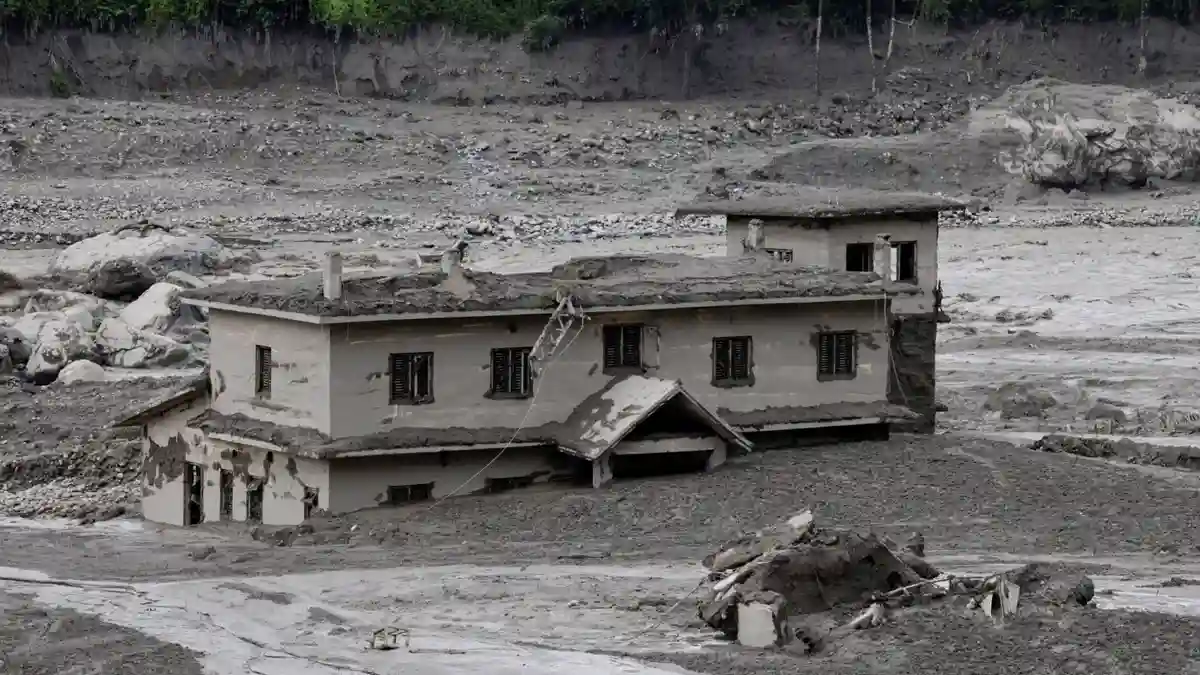
It began as a regular Wednesday, but ended with the drowning of whole towns, in Nepal, close to its border with Tibet.
Scientists have found that the fatal flash floods experienced in Nepal Wednesday were probably triggered by a large portion of the glacier which collapsed and temporarily created a blockage on the river.
It is believed that some hours later, the pent-up water burst downstream with tremendous energy, causing the floods.
The results have been disastrous and are accumulating. Over 353 individuals died, while over 1,300 remain unaccounted for.
While investigators have been working fast, it is hard for any science to be quick.
The U.S. Geological Survey determined the quake to be a magnitude 5.2 glacier collapse resulting in a devastating mass movement of debris downstream, which was confirmed by information from nearby seismic stations, long-period seismic waves, and satellite imagery.
In this case, the national disaster organization of Nepal gave an elaborate geographical description of the place where the incident occurred. According to Nepal's National Disaster Risk Reduction and Management Authority, the "glacier-included flood" occurred in the Lhende River due to a landslide that was around 20 kilometers northeast from the Nepal-China border post.
According to Geologist Prakash Pokharel, analyzing satellite images from Planet Labs, "the flash floods were caused by an ice-rock avalanche on the Nepali side."
Another hypothesis which the investigators are trying to understand is the one involving a seismic trigger prior to the occurrence of the collapse.
The exact cause of the collapse of the glacier is not known, however, Nepal officials have indicated that an earthquake in the region prior to the collapse is a possible cause.
Experts warn that there may be construction activity in the region which could be a contributing factor, while any role played by climate change will be studied in the coming period.
Despite even a complete explanation of this particular incident yet to come, there is already a well-known general process that is taking place.
The increased temperature might have contributed to the collapse that caused the flooding in Nepal, with melted snow able to get into the cracks of the glacier and the rocks, thus undermining the structure.
The ice mass loss from the glaciers in the Hindu Kush Himalaya – which is the region that includes Nepal – has doubled since the year 2000 according to the latest study – a melting rate that is changing the stability of these mountains.
This was not an unforeseen occurrence of any kind; this phenomenon falls under a hazard type for which Nepal has been monitoring carefully for many years now.
Nepal is highly susceptible to "glacial lake outbursts" in which the large pools of water caused by the melting of glaciers become so saturated that they break through the natural barrier of land or ice keeping them contained, leading to massive floods and the flow of debris down the sides of the steep mountains.
Tom Robinson, senior lecturer at the University of Canterbury, explained the problem in very clear terms: "These glacial dams are no different from constructed dams."
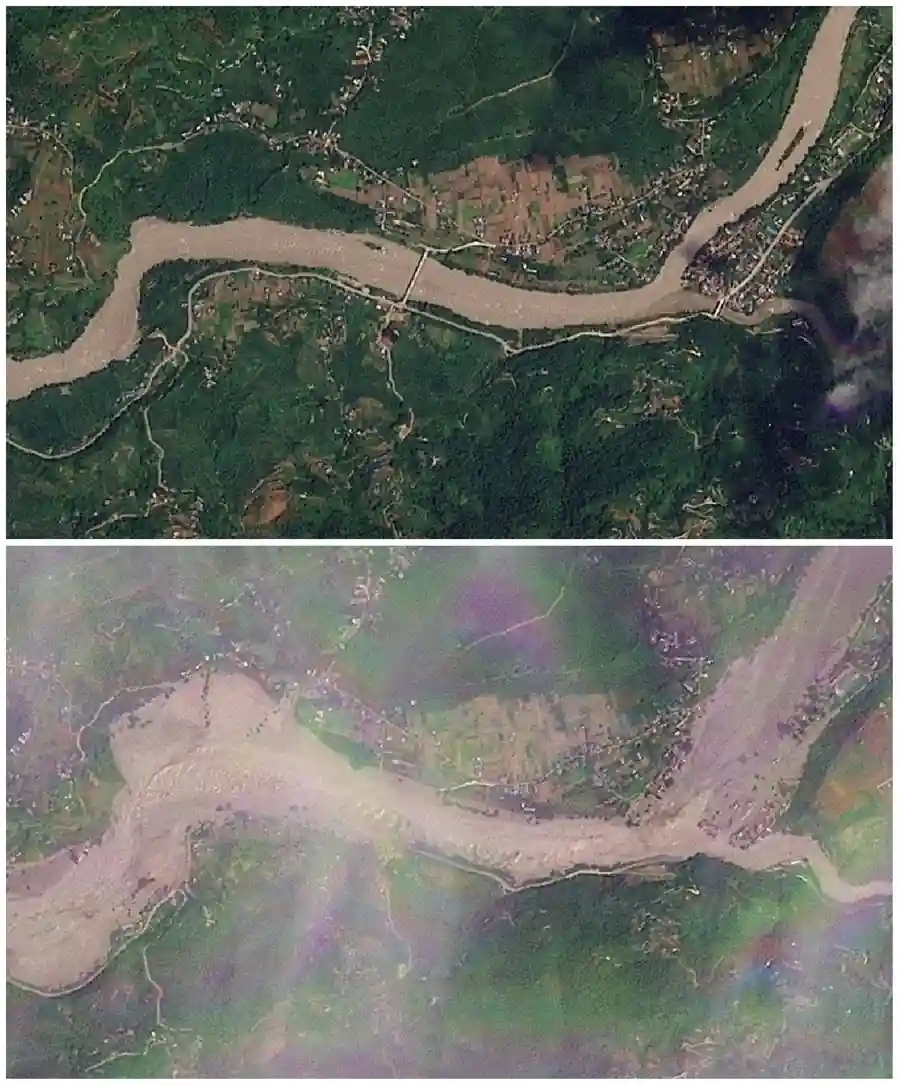
Photo: @2026 PLANET LABS PBC /via REUTERS
What makes these disasters particularly deadly is the limited amount of time between the triggering point and when catastrophe strikes downstream.
Once cascading disasters happen, there may be very little time to respond, according to researchers following the region. "We don't have hours to prepare; we have sometimes a few minutes to actually prepare," Sanyal, one of those researchers, stated.
People living downstream of glaciers and glacial lakes have to act quickly enough in order to evacuate in time even if an early warning system functions properly.
There is an economic infrastructure located along these pathways that poses yet another risk to people’s lives besides the settlements of human beings.
There are various hydroelectric power plants situated in some of the worst-affected regions in Rasuwa, a hilly region having a population of around 50,000 people.
The flood on Wednesday is no one-off disaster; it is a recurring phenomenon, and a pattern that has been seen with distressing frequency in Nepal’s glacier country.
In fact, in 2015, Nepal experienced severe avalanches as part of its massive earthquake, a clear demonstration of the danger of seismic activity in such a terrain with its glaciers.
Some of the glacial lakes in Nepal have already been marked by the monitoring systems as a potential threat to life in recent times.
In addition to the technical discussion, some scientists who are researching the area are voicing their frustration with the lack of decisive action taken after prior warnings have already been issued.
According to Jakob Steiner, a geoscientist from the University of Graz, a “red line” has already been passed whereby certain parts of Nepal are now just too dangerous for people to live in.
He did not mince his words when he said what multiple disasters with a lack of appropriate actions say about regional preparedness: "We hoped that previous disasters would serve as a wake-up call to the governments in the Himalayan region, but it is a little bit frustrating that the damages never seem to be bad enough."
Steiner’s apprehension leads to an open gap that needs to be addressed — that is the ability of Nepal to detect and warn the affected community in advance.
In his statement, he noted that the recurring loss calls into question whether enough has been done to develop warning mechanisms for both the locals and tourists since the mountainous area of the country has always been a major attraction, welcoming more than one million tourists each year to Nepal.
Generally, scientists believe that early warning systems and information sharing become increasingly essential due to higher temperatures and unstable mountainous landscapes, but monitoring thousands of glaciers, steep slopes, and valleys around the Himalayan arc is a daunting challenge.
Aside from its effect on glacial stability by itself, there is another issue that has been recognized by scientists as another complicating element.
The impacts of climate change have been making rainfall events more extreme, which may result in fatal flooding regardless of glacial collapse – in other words, while scientists try to determine the exact cause of Wednesday’s tragedy, a rising temperature in the Himalayas is increasing the risks in multiple ways.
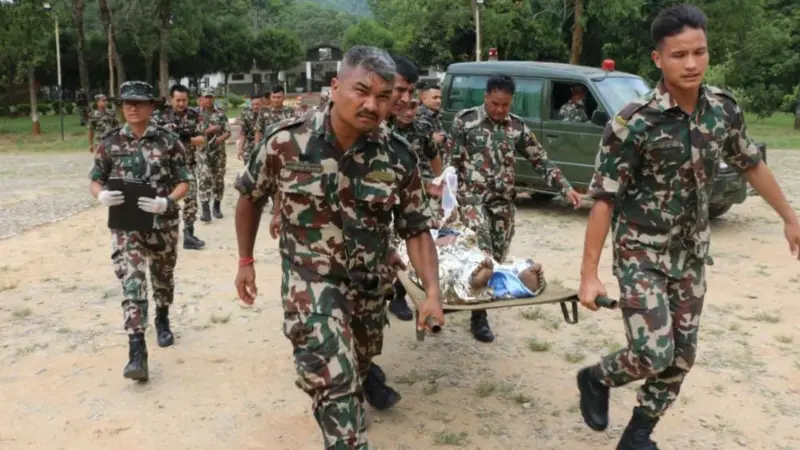
As at least 1,300 people are still unaccounted for and as the government in Nepal as well as in China gets ready to see the death toll from the disaster go past the 350 already registered, the most urgent task ahead is the search and rescue operation.
Looking ahead, scientists state that the most challenging issue is whether this particular disaster will serve as the trigger for setting up warning and monitoring infrastructure in the Hindu Kush Himalaya, or, alternatively, become yet another item on a long list of disasters not devastating enough to bring about real change, like Steiner expects.