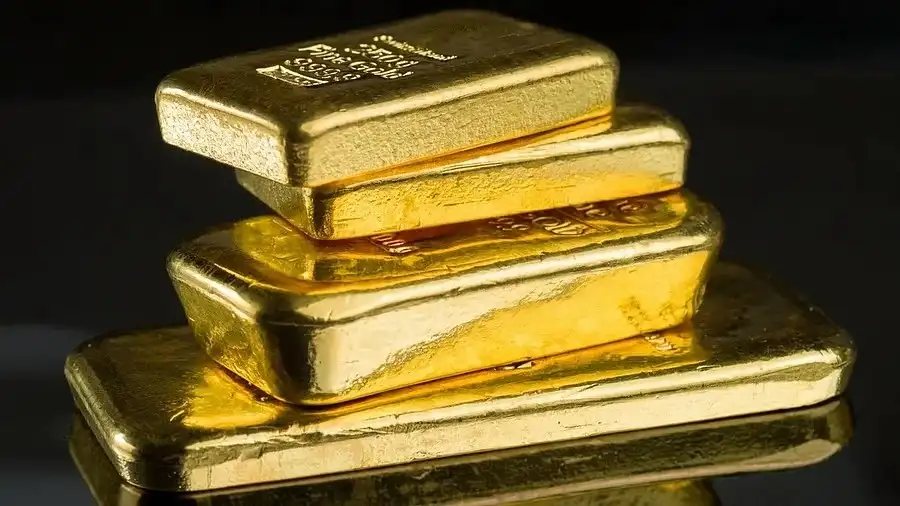
New Delhi: In the country, the cost of gold has been rising because the price of the precious metal is approaching the level of ₹1.47 lakh for each 10 grams owing to a resurgence in tensions between the US and Iran.
The spike has been seen as among the strongest gold gains for the year. This is particularly concerning since Indians are already dealing with high gold prices before the festival and wedding season.
The most recent rise in the price of gold can be attributed almost solely to geopolitics.
With hostilities escalating daily between the USA and Iran, investors across the world have scrambled to secure their investments in assets that can survive in the face of potential economic and military upheaval.
Gold has traditionally been a go-to investment in such times, and this time has not been an exception. According to market watchers tracking gold prices till July 2026, the domestic 24 karat gold price has fluctuated broadly within ₹1.44 lakh to ₹1.47 lakh for each 10 grams, depending heavily on the news from the Middle East.
The price of gold in India takes into consideration many aspects other than the conflict mentioned above. The first among them includes the international spot gold prices, the rupee-dollar exchange rate, the tax structure of India and import duties in addition to GST.
Given the fact that India imports most of its gold, any weakening of the rupee vis-a-vis the dollar will work in tandem with the already rising international gold prices.
The recent price movement is part of a series of on-and-off conflicts among the United States, Iran, and Israel that have characterized the markets in the last year.
The confrontations have, at different stages, involved other players in the region, created fears of interruption to the supply of oil in the region, and led to periodic instances of safe-haven investment in gold and silver.
Each new spike has led to further rises in the price of gold, but lulls and discussions of peace or cease-fire talks have also resulted in pullbacks in the prices. The volatility in both directions in the prices of gold has made the metal one of the most followed indicators of investor perceptions of the state of affairs in the conflict situation.
Analysts watching the gold markets have observed that any further escalation, including any interruption to production and shipment of oil, will continue to support the precious metal. However, any signs of de-escalation or a settlement will result in declines in the current prices of gold.
The spike in prices has serious implications for the people of India. India continues to be one of the biggest markets of gold in the world due to cultural reasons that include weddings and festivals and savings options.
At present, it has been observed that because of high prices, the purchasing of jewelry tends to drop significantly, as consumers postpone their purchase or reduce their gold consumption on the occasion of weddings and other events.
At the same time, the high prices have further increased the importance of gold as an investment option as opposed to being just an ornamental one. It has become a common practice among financial experts to recommend gold as a means of securing your portfolio from inflation and devaluation of currency.
These kinds of situations have often seen an increase in investors buying instruments like gold exchange-traded funds, sovereign gold bonds, and digital gold whenever the prices have gone up in the past.
Looking ahead, the path that gold prices take in India will largely depend upon two things: one is the status of the hostilities between the United States and Iran, while the second is the overall monetary policy position of the central banks.
If there is any sign of peace and an easing of tensions between the two countries, this will result in some amount of profit-taking and prices coming down to lower levels, which is what happened before in similar situations. However, any increase in tensions, especially if there are any threats of blocking oil shipping routes via the Strait of Hormuz and getting more parties involved in the conflict, will send gold prices higher. There will be domestic factors affecting prices as well.
Gold purchases by the Reserve Bank of India, import duties on gold, and exchange rate will keep on playing their parts in determining how close the Indian prices will follow the international price rally. With the peak festival season still some months away, it will be interesting to watch whether prices at the present level decline before that, or the elevated levels continue to prevail.