Google loves a slow reveal. This one took about four months.
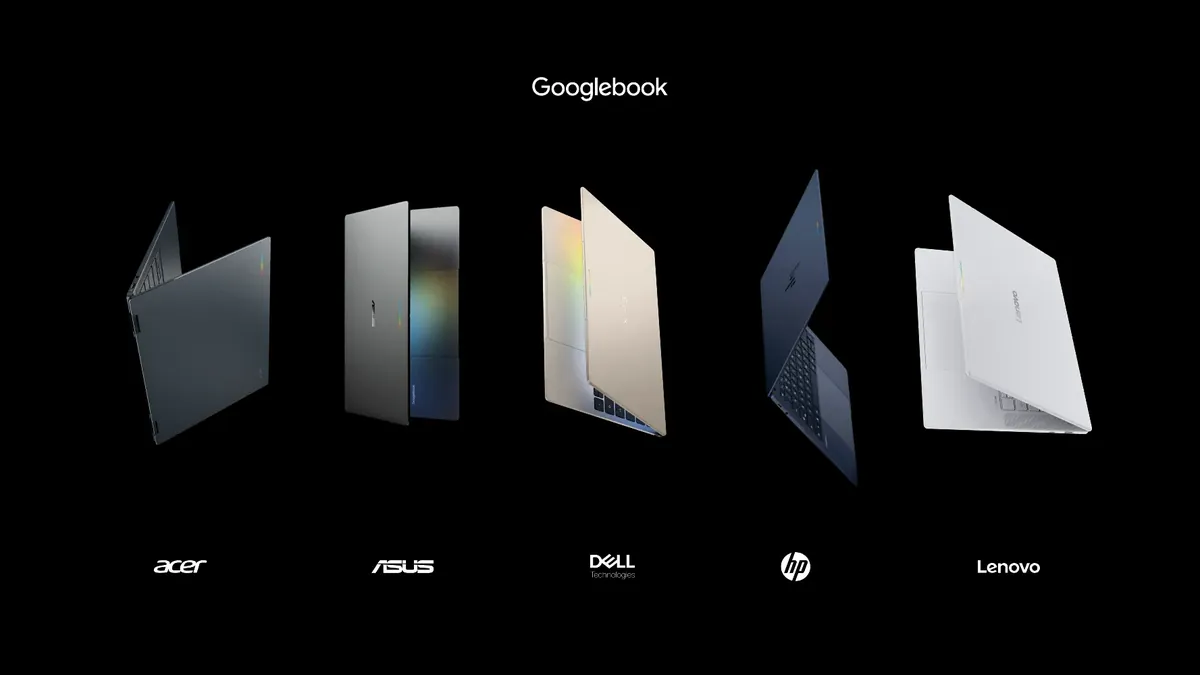
Back in May, at the Android Show: I/O Edition, Google showed off something called Googlebook and then basically walked away without answering the two questions everyone actually cared about: how much, and when. This week, both answers finally landed. Preorders are open now, the first units ship October 4, and prices start at $899, with initial models coming from Acer, Asus, Dell, HP, and Lenovo running on either Intel or Qualcomm chips.
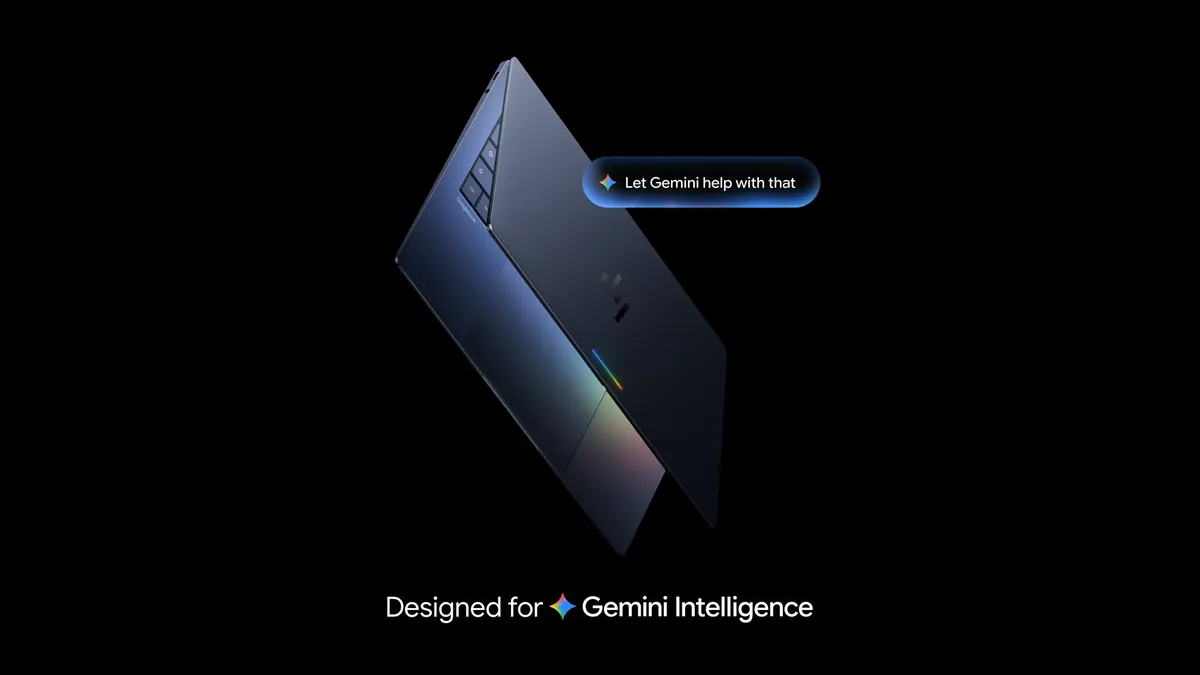
Photo: Google
Here's the short version. Google took the app ecosystem from Android, the browser first simplicity of ChromeOS, and mashed them into one new operating system, reportedly the project long rumored internally as Aluminium OS. Then it wrapped Gemini around the whole thing so the AI isn't just another app you open, it's baked into how the laptop works.
Google's own framing, from senior director Alex Kuscher, is that computing is shifting from an operating system to what the company calls an intelligence system, and Googlebook is Google's attempt to build a device around that shift rather than bolt AI onto something that already existed. Whether that's marketing spin or an actual meaningful difference is something reviewers are still arguing about.
Chromebooks, for what it's worth, have spent the better part of fifteen years being the cheap laptop schools and budget shoppers reach for. Googlebook is explicitly not trying to be that. This is Google going after premium territory, competing more with a MacBook than with the $250 Chromebook sitting in a classroom cart.
If Googlebook has a signature trick, it's Magic Pointer, a cursor redesigned in collaboration with Google DeepMind. The pitch is simple. Wiggle the cursor over something on your screen and Gemini reads the context and offers to act on it. Hover over a date mentioned in an email and it can offer to build a calendar invite. Select two images, say a living room and a couch you're thinking about buying, and it can preview them together.
It's a neat idea on paper. Whether it actually feels useful day to day, rather than gimmicky, is the kind of thing that only shows up after people have lived with the hardware for a few weeks, not during a launch event.
There's also Quick Access, which lets you browse, search, or drop in files from your phone directly through the laptop's file browser without transferring anything first, and Create My Widget, an Android feature that lets you build a custom widget just by describing what you want to Gemini, pulling from Gmail, Calendar, and the web to assemble it.
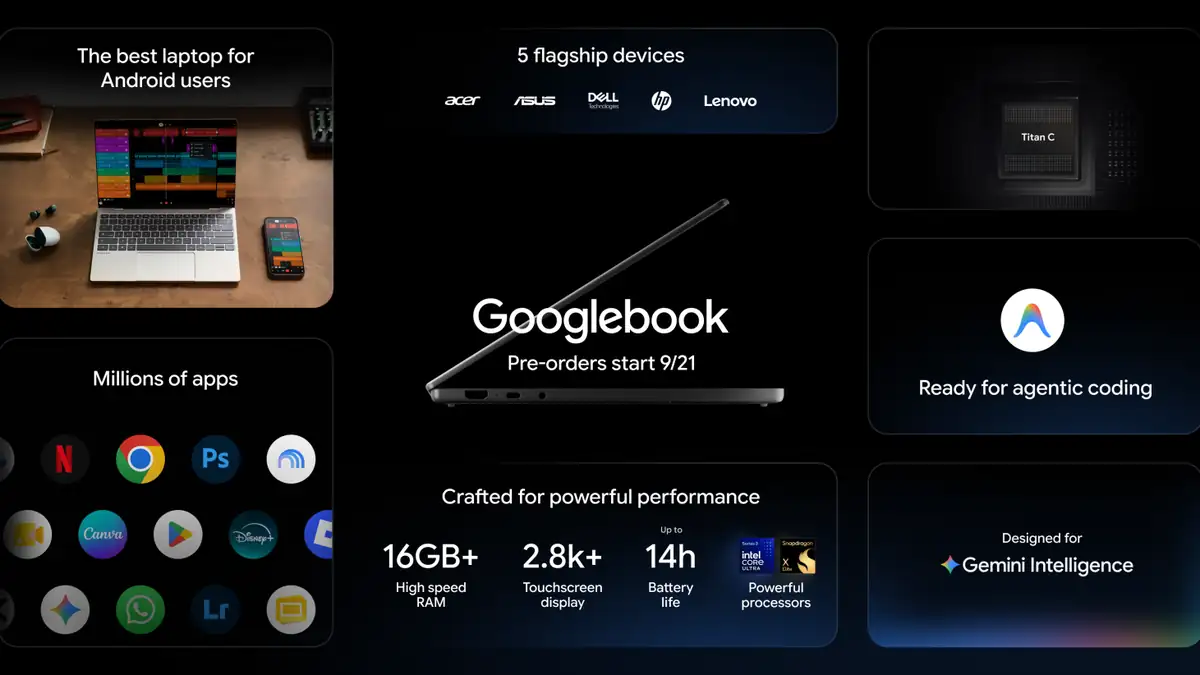
Photo: CNET
And because the OS is Android based under the hood, phone apps run natively on the laptop. No emulation, no awkward touchscreen controls stretched across a trackpad. Google's blog post put it bluntly: it just works, no downloading required.
Every Googlebook ships with something Google calls a glowbar, a light strip on the lid meant to visually mark the device as part of this new category, similar in spirit to the glowing logo on older MacBooks. Beyond that, the initial five models bring OLED displays, up to 14 hours of battery life, and a mix of Intel Core Ultra Series 3 and Qualcomm Snapdragon X Series processors depending on the model.
Google is promising ten years of software updates, which is a meaningfully longer support window than most Windows laptops get and puts it closer to how Google already treats ChromeOS devices.
Samsung, notably, is the one major Chromebook partner missing from the initial lineup. Acer, Asus, Dell, HP, and Lenovo are all confirmed and already showing off their own takes, including a Dell XPS Googlebook and an Asus model reportedly featuring a dedicated Gemini key on the keyboard.
Early analysis has already started poking at the price. One breakdown estimated component costs alone sit close to $600, meaning Google and its partners aren't leaving themselves a huge margin at $899, unless there's some subsidy structure happening behind the scenes that hasn't been disclosed.
There's also the obvious comparison nobody can avoid making. Apple has its own budget MacBook play, and Microsoft has spent the last two years pushing Copilot+ PCs as its answer to AI first computing. Googlebook is arriving into a market where three major players are all making roughly the same pitch: buy this laptop because the AI is baked in, not bolted on. Whether Gemini's implementation actually feels different enough to justify a switch, especially for people who aren't already deep into the Android and Google ecosystem, is the real open question heading into October.
For now, Google has the specs and the price out in the open. What it doesn't have yet is proof that Magic Pointer and the rest of it change how people actually use a laptop day to day. That verdict comes once real units are in real hands.