The service had been going for about fifteen minutes when the shooting started.
That's how Dorgham Halasa, who was inside St George's church in the village of Hamoud on Friday, described it to reporters. People ran. He never saw the attackers, he said, though others told him they counted four. Roughly 150 people were in and around the church, by his estimate, which he gave to CNN. They had come to bury one of their own.
Seven of them died. Dozens were hurt.
The village sits in Karak governorate, around 180 kilometres south of Amman, and the Associated Press put the first alarm on Friday morning. By Saturday there were no arrests on record and no official account of who was behind it.
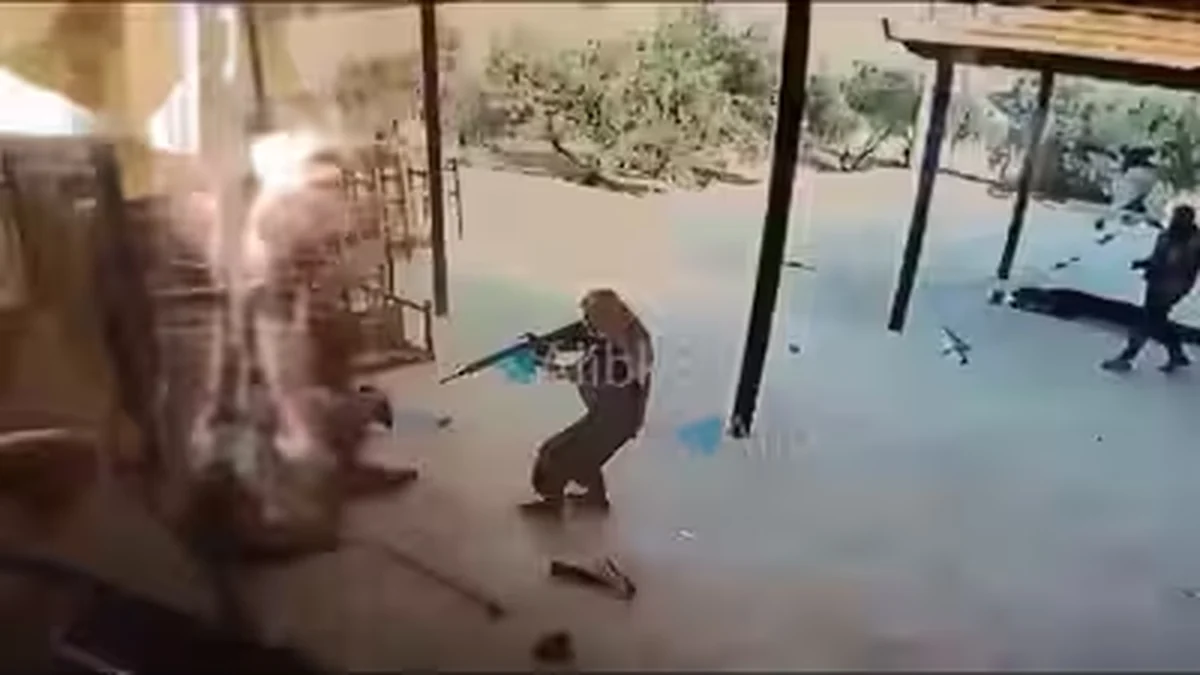
Jordan's Public Security Directorate said the assailants stepped out of a vehicle and opened fire as a funeral procession reached the church compound, per CBS News. State television aired footage afterward. It shows two men with what look like pistols walking up to the building and shooting. A third arrives carrying what appears to be a semiautomatic rifle. All three then head for the church, the AP reported.
The government's own statement was thin. "Unknown assailants," it said. No word on whether anyone had been caught or shot.
Early reports said six had died. By midday it was seven, and that number hasn't moved.
The wounded are another story. The directorate first said 34. The AP carried that for hours, then moved to 40 in later updates, and the Washington Post followed. Roya News, citing Jordanian authorities, said 27. Health Minister Ibrahim al-Budour said two patients were in critical condition, which matters, because a toll like this can still change.
First-day counts almost always wobble. Different hospitals, different tallies.
King Abdullah II posted on X that the attack would be met with the "harshest" penalties. That evening he went to Karak Government Hospital to see the injured. Prime Minister Jafar Hassan held a security meeting in Karak, called the attack the work of terrorist ideology, and announced three days of mourning from October 23 with flags at half-staff.
Government spokesman Mohammad Momani went further on the ideology. He blamed "extremist takfiri" thinking, meaning the belief that other people are unbelievers. Investigators, he said, were still working out whether the attackers belonged to any organisation, and results would come out when the inquiry wraps up. He also stressed that Christians are a core part of the country, not guests in it.
Jordanian outlets say the prosecutor has banned publication of case details. So expect little from official channels for now.
Unknown. Officials have said "terrorist" since the first hours, but that word describes the act. It doesn't tell you who carried it out. No group had claimed it in any of the reporting reviewed here, and talk linking it to Islamic State is speculation until investigators say otherwise.
Christians make up roughly 2 percent of Jordan's population, and CNN called sectarian violence there rare. The Greek Orthodox community in Karak goes back centuries. Jordan sells itself, with some justification, as a place where Muslims and Christians share the same streets, and officials leaned on exactly that message Friday night.
Karak has seen this kind of day before, though not this kind of target. In December 2016, gunmen shot at police, then barricaded themselves inside the town's Crusader castle. Ten people died, seven of them officers, along with a Canadian tourist. Security forces killed the attackers. Islamic State claimed it. That attack went after the state and a tourist site. Friday's went after people at a funeral.
The New York Times called it one of the deadliest attacks in the kingdom in years.
It came fast. The US embassy in Amman sent condolences. So did Egypt, the UAE, the Gulf Cooperation Council, Iraq's foreign ministry, and the Palestinian presidency. The UN secretary-general condemned it. The Greek Orthodox Patriarchate of Jerusalem and the World Council of Churches both issued statements, and Estonia's foreign minister was among the European voices.
Arrests, or a name. A claim of responsibility, if one comes. Whether the gag order eases. Final casualty numbers, once the hospitals stop moving patients around.
The mourning period runs through Sunday, October 25.