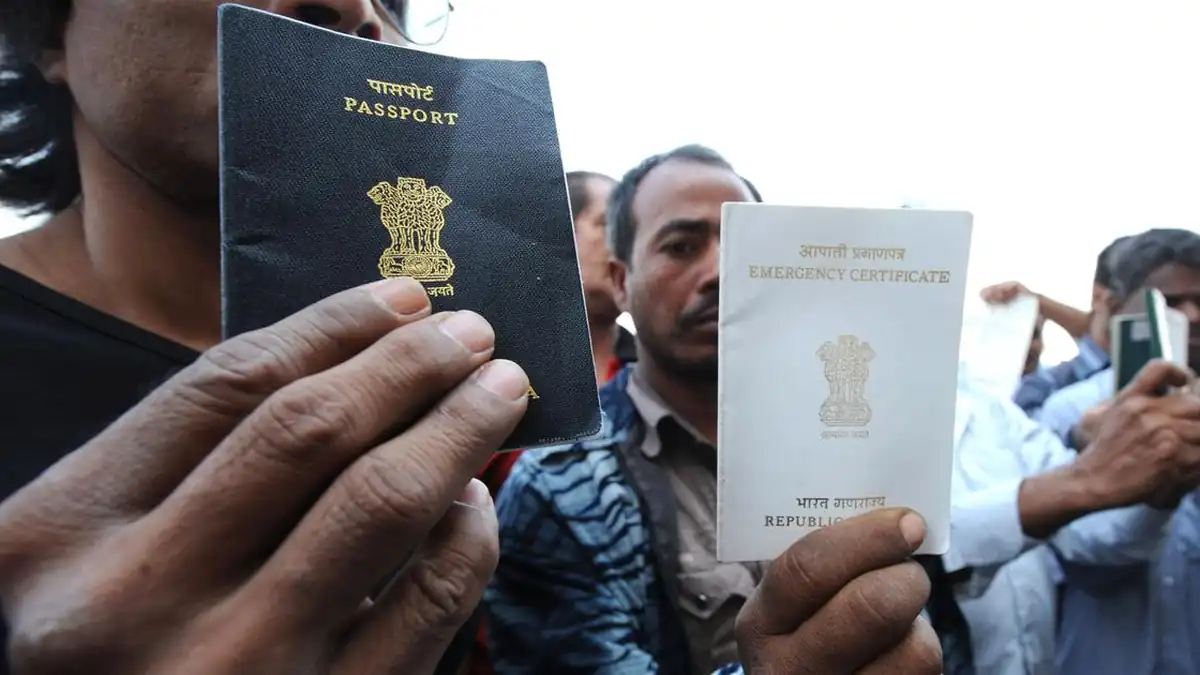
For those thousands of refugees fleeing from Pakistan, Bangladesh, and Afghanistan, the issue has never been only about how they got in. The issue is if they will be able to stay.
There have been some modifications made to the 2025 Immigrations and Foreigners (Exemption) Order issued by the Ministry of Home Affairs. Those individuals belonging to six non-Muslim communities from Afghanistan, Bangladesh, and Pakistan, who have come to India before December 31, 2024 due to religious persecution without proper passports, will require "a visa."
This amendment is dated 4 November 2026, and takes effect forthwith upon the notification thereof and the amendment of the order made in 2025 under Section 33 of the Immigration and Foreigners Act, 2025.
These six communities mentioned in this amendment are Hindus, Sikhs, Buddhists, Jains, Parsees, and Christians. Nevertheless, the exemption from having a valid passport and visa on entry remains in the amendment.
What is new is the stay condition; those exempted have to get a visa subcategory post their arrival in India.
This rule is not restricted to just the six communities. This also consists of the Pakistani nationals who entered India up until December 31, 2009 with the help of a valid passport and intended to make India their permanent home, some of the Partition refugees who returned from Pakistan and made India their permanent home in the state of Kerala, and the persons of Indian origin having the Malaysian or Singaporean nationality who are unable to obtain a new passport.
The Tibetian refugees and the Sri Lankan Tamils would retain their privileges.
In the amendment, there is a new term defined. "Visa Manual" refers to a booklet published by the Union government that gives guidance relating to visas, immigration and other issues.
In addition, the same order makes changes in the rules regarding travel to Nepal and Bhutan. Any citizen traveling from India to Nepal or Bhutan and vice versa should possess any of the documents as per the Visa Manual.
However, the reports considered do not provide concrete answers on such issues as what type of visa this is, what its duration and cost are, and how one will apply for it without a passport. Furthermore, there is no information about what will happen to those who fail to get it.
There is no clear rationale for the reports presented by the government. The terms of the order should be read carefully.
This order comes side by side with the Citizenship Amendment Act 2019. According to the Citizenship Amendment Act, those individuals belonging to the same six communities will be granted Indian citizenship if they have stayed in India for at least six years until the end of 2014.
This order of 2025 set a different cut-off date for stay. Under this order, individuals belonging to the six communities can stay in India until the end of 2024 without any passport or travel document. These three issues are independent of each other.
The September 2025 directive was criticized. It was criticized for targeting only non-Muslims, continuing the trend of the Citizenship Amendment Act, as well as by the Assamese community. According to the All Assam Students’ Union, the extension will come as another blow to the natives, who have an identity crisis, and demanded exemption in Assam.
It was argued that the directive was granting succor to persecuted individuals. An official from the Bharatiya Janata Party stated that individuals entering West Bengal from Bangladesh till December 31, 2024, would not be deported but could be granted citizenship via naturalization. This is a political statement rather than a legal interpretation.
The responses towards the amendment were not reported in the sources.
The introduction of a visa condition transforms a discretionary stay to a documented stay. For families, it may mean a more definite status and access to facilities as well as a documented record that would help future applications. On the other hand, it may be expensive and troublesome for those who came without any documentation.
It will depend on how the regulation will be implemented in practice, and the specifics have not yet appeared in the literature.