- Modi met Putin one-on-one and pushed him, again, to move from "endless war" to something that actually looks like peace in Ukraine.
- With Pakistan's Shehbaz Sharif sitting a few rows over, Modi told the SCO there's no room for "double standards" on terrorism.
- The 26th SCO Summit wrapped with 13 outcomes on paper: a Bishkek Declaration, a new counter-terror centre, English added as an official language.
- All of it under the shadow of a 50 percent US tariff on Indian goods, most of it tied to India's continued Russian oil buying.
Two days in Bishkek. Somehow Narendra Modi found time to needle Islamabad, nudge Moscow toward a ceasefire that hasn't come, and pose for the obligatory group photo with Xi Jinping, all without the schedule visibly falling apart. SCO summits used to be a bit of a punchline in foreign policy circles, a photo-op for a grab-bag of countries that don't always like each other much. Not anymore, really. This one landed at the bloc's 25th anniversary, under a theme that sounds like it came out of a UN drafting committee ("Together Towards Sustainable Peace, Development and Prosperity"), but the actual business inside the hall had teeth.
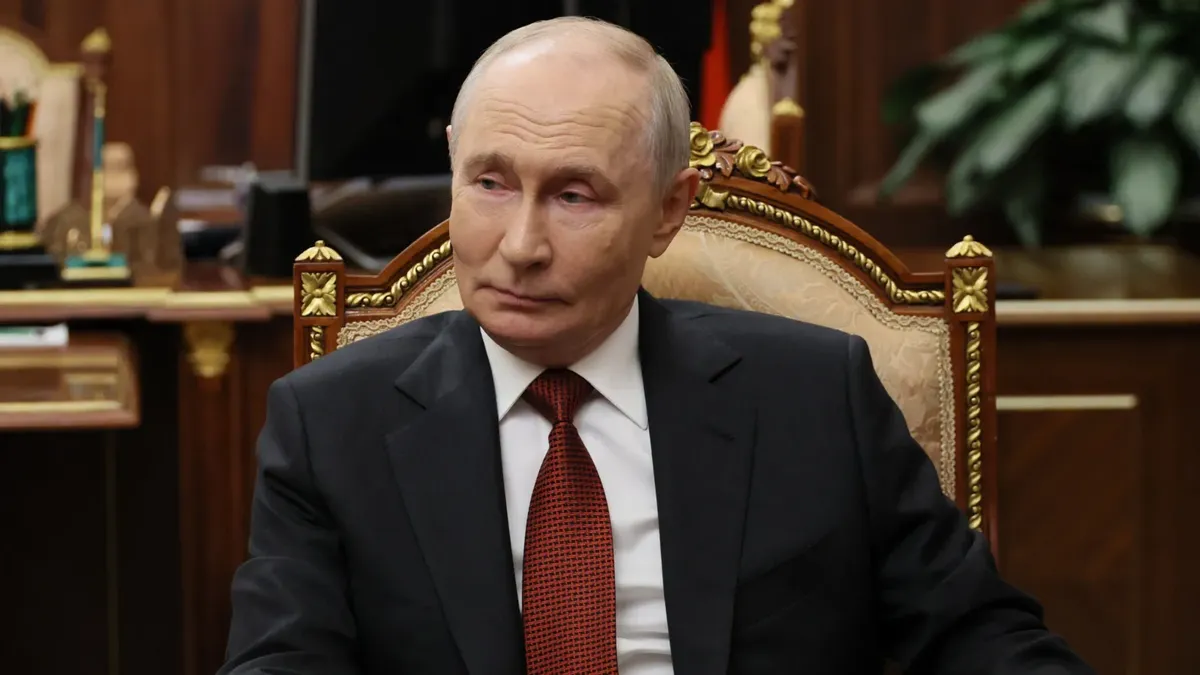
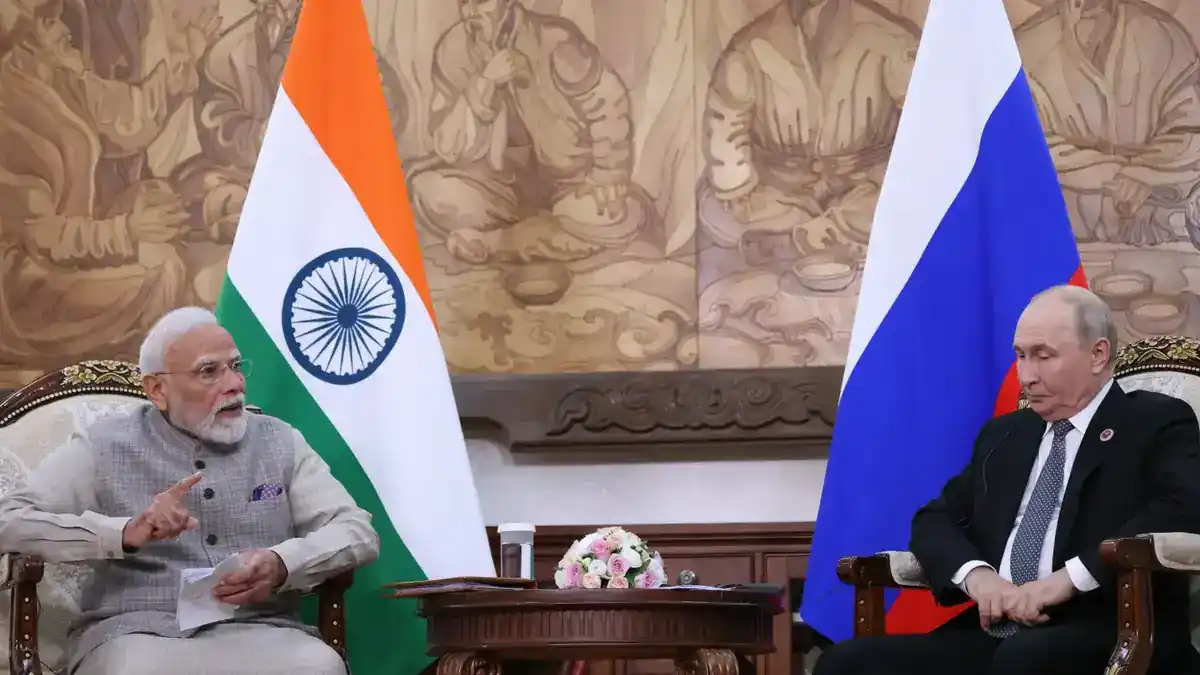
They sat down in the Aksakal Meeting Room at Bishkek's Ala Archa State Residence, first face-to-face since Putin's state visit to India last December. Modi opened the way he tends to with Putin, warm, personal, the "my friend" line, a nod to trade numbers ticking upward between the two countries. Then the tone changed.
The war has to actually end, he said, not just pause. Every day it drags on sets humanity back a step; every step toward peace does the reverse. He's used some version of that line before, going back to Samarkand in 2022, when he told Putin flat out that the current era isn't one for war. Saying it again now, three and a half years and who knows how many casualties later, lands differently. Less like a fresh appeal, more like someone repeating themselves because nothing changed the first four times.
What actually went on in that room depends on who's telling it. Politico's dispatch had Putin looking uneasy through the exchange, staring at the floor, tapping a foot. Can't really verify that from the outside, and Russian state media ran the opposite story entirely, all handshakes and Putin talking up how strong the relationship's gotten. Truth's probably somewhere in the gap between those two accounts. What isn't in dispute: nothing actually shifted. Oil purchases keep going, the appeals for peace keep coming, and there's still no public break between New Delhi and Moscow.
Which costs something, by the way. Washington's tariff on Indian exports sits at 50 percent now, largely justified by the Russian crude purchases, layered on top of a steady stream of not-especially-diplomatic commentary from US officials. India's called the tariffs unjustified more than once. Showing up in Bishkek and standing next to Putin regardless wasn't really an accident. It was India saying, in its usual roundabout way, that it isn't getting pushed around on this particular point.
If the Putin meeting ran on patience, the plenary speech didn't bother with any. Shehbaz Sharif was sitting right there, days ahead of Pakistan taking over the SCO's rotating chairship, and Modi didn't tiptoe around it. No double standards on terrorism, he said, and the bloc needs to say it together. Countries that treat terrorism like a policy tool, that shelter the people who carry it out, need to hear plainly that it can't be anyone's strategic asset.
He went past the rhetoric too, calling for the whole machinery behind terrorism to come down: financing, recruitment, radicalisation, the safe havens, all of it. Somewhere in there he also floated his pitch for where the SCO should be heading, a three-word acronym, Security, Connectivity, Opportunity. Catchy enough. Whether it means anything six months from now is anyone's guess.
Sharif answered without naming him back, calling terrorism a "hydra-headed monster" that needs fighting with conviction, and pushing back on what he called using the issue for diplomatic point-scoring. Neither man said the other's country out loud. Didn't need to.
Underneath all the sideline theatre, the summit actually got things done, or at least signed things. Leaders adopted the Bishkek Declaration marking 25 years of the SCO, approved changes to the bloc's founding charter, and agreed to stand up a new Universal Centre for Countering Security Threats. English became an official SCO language, a small detail, but a telling one given how far the group's stretched past its original Russian-Chinese core. India's foreign ministry counted 13 outcomes in all, four MoUs, more than twenty separate decisions.
Modi also raised Afghanistan, promising continued humanitarian support, and flagged the West Asia crisis as a threat to energy security and supply chains that lands hardest on the Global South. Off to the side, he met separately with Azerbaijan's Ilham Aliyev, with the leaders of Tajikistan and Laos, and fit in a stop at a Gandhi memorial before flying home.
Worth remembering how large this bloc actually is now. Something like 36 percent of global trade and 42 percent of the world's population runs through the ten SCO member states, plus a growing crowd of observers hovering at the edges. That scale is exactly why Bishkek got watched as closely as it did, less for the speeches themselves and more for what they hinted at underneath: a cautious thaw between China and India after boundary talks in Beijing weeks earlier, and just how tightly Moscow and Beijing are leaning on each other as Western pressure keeps piling up on both.
For India, this summit meant threading three needles at once. A peace pitch to Russia. A warning shot at Pakistan. A trade pitch to Central Asia. Somehow Modi left Bishkek without any one of those undoing the other two. Whether that lasts past the flight home is a different question, and not one Bishkek was ever going to answer.