It would be difficult to time this any better for New Delhi. In a report titled "The Great Transshipment Scam," released by the White House on Thursday, there is a very pointed charge: "India is one of the major enablers of the global network used by Chinese exporters to evade US tariffs." More than 40 countries have been found to have higher levels of risk of such transshipments, and India is one of the major "enablers" of China's evasion of tariffs.
Coming right on the heels of massive US tariffs on Russia-fuel oil imports from India, this is the second economic battlefront opening up for New Delhi.
The mechanics described by the White House are quite comprehensive and damning as well. The report identifies the genesis of the plan in 2018 when the Trump administration had slapped Section 301 tariffs that varied between 7.5% and 100% on China because of its unfair trade and technology practices.
It has been stated by the White House that after this move, Chinese exporters started exporting the goods through third parties where limited activities like assembly, finishing, repacking, relabeling or any kind of documentation changes could help them to pass off their products from different nations.
It is important to note that not all 40+ mentioned countries in the report have the same status—they have been ranked according to the extent of their involvement in the process. Among those countries in Tier 1 are India, Canada, Japan, the European Union, Israel, and Mexico—certainly not an ideal company for New Delhi.
The numbers involved are staggering and depend on which government agency’s figures you believe. According to White House Report estimates, the value of potentially illicit transshipment is in the region of $60 billion, which translates into tens of billions of dollars in lost tariff revenue for the US.
There was another study performed by the Commerce Department in which the value was estimated at a slightly different number. Namely, in the year 2025, $67 billion worth of goods from China to the US had been transshipped using the services of the top three countries: Mexico, India, and Vietnam. The result was an estimated $28 billion loss in tariffs for the US.
Either way, the point made in the report by officials in Washington is the same—it is definitely not about some customs technicality.
It is about massive laundering activity, and the report does not shy away from describing who pays for the infrastructure of such activity. According to the report, tariff arbitrage provides the financial muscle behind the operation, while the money saved is more than enough to finance the required capital equipment, logistics infrastructure, light assembly facilities, repacking activities, and “screwdriver factories."
The expression "screwdriver factories" is doing much in this report. The idea is clearly meant as a dig at the existence of some Indian assembly plants, which do not really produce anything but carry out sufficient processing only in order to mask Chinese origin and avoid import tariffs.
It should be noted that the White House does not just name culprits—it is preparing instruments for identifying offenders in the future. The administration employs an AI-powered system known as "Detective Border" to help the United States' Customs and Border Protection detect suspicious shipments, analyzing such factors as shipping routes, product details, ownership, and others in order to distinguish legitimate business from fraud.
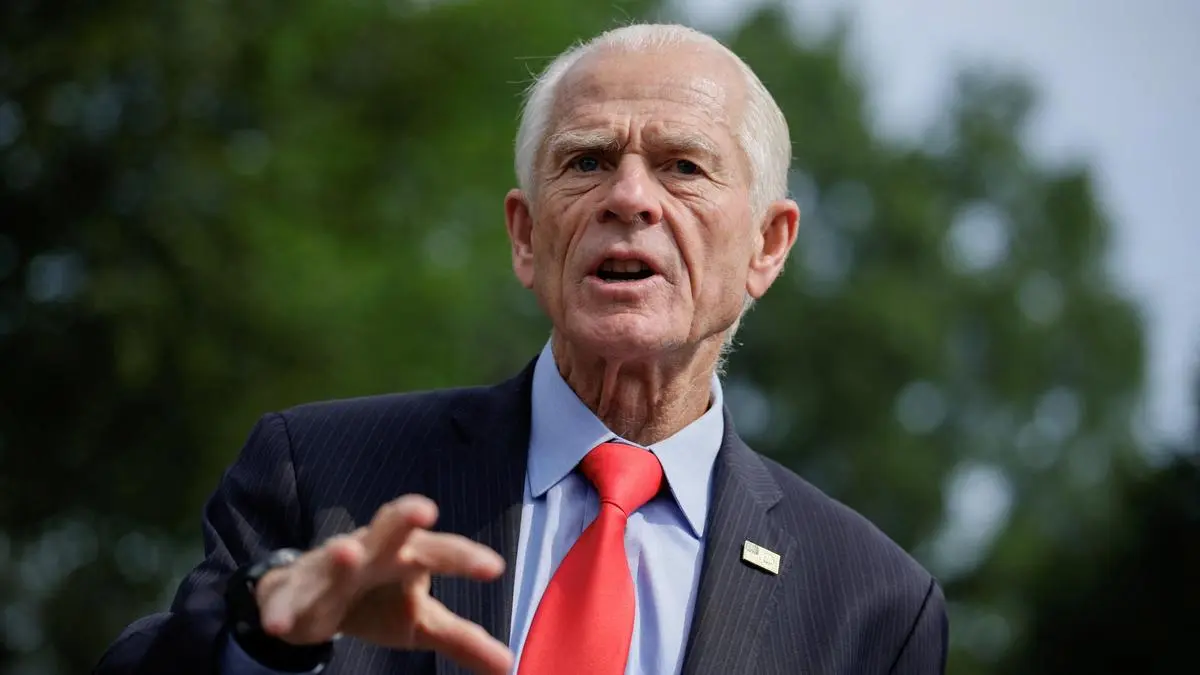
While briefing reporters about the report, Peter Navarro, the White House's top advisor on trade and manufacturing who is the author of the report, characterized the whole operation in rather sharp terms: "For years, the great transshipment scam has enabled Communist China to launder its exports through more than 40 countries. " And he did not end up there—the proposed solution to the problem may include immediate seizure, penalty tariffs, sanctions, and even exclusion from the US market in some cases.
What stings about this particular report is the fact that it comes on top of what could be considered a bruised relationship. The trade relationship between India and the US had already seen a decline due to the purchase of discounted Russian crude oil after the invasion of Ukraine by New Delhi.
As such, Navarro has himself criticized India's actions on this matter, saying that the percentage of Russian oil imports by India has increased from 1% pre-2022 invasion to around 35% currently, stating that India was running a "profiteering" business and not realizing its part "in the bloodshed."
This is not something that was said out of the blue; it came with some muscle behind it.
The Trump administration has increased tariffs on Indian imports twice as high as 50%, even imposing an extra 25% tariff on India due to its purchase of Russian oil, whereas, in the case of China, which is the largest importer of Russian crude oil, nothing like this has been done.
Despite such harsh actions against India, India has always justified its purchase on the basis of national interest, which in turn has been backed up by the External Affairs Minister S. Jaishankar, who has mentioned that it was Washington itself that requested New Delhi to stabilize global energy markets.
Up to now, the conflict between the U.S. and India was mainly related to energy—which is an issue where India had a case in point that it made a sovereign decision regarding energy imports. However, this new report on transshipment changes everything.
Now the issue is not only about India buying oil from Russia but is an accusation that Indian territory and manufacturing industries are involved, knowingly or unknowingly, in aiding a third country, China, in breaking the American law. It's a new and more serious charge because now it is linked to India's manufacturing and exporting systems.
With an AI-enabled detection technology already being developed and penalties, sanctions, and access denial measures clearly under discussion as possible responses to the issue, Indian exporters, especially in industries vulnerable to assembly and re-exportation, such as electronics, will soon be subject to much more stringent inspections of their shipments entering American ports. So far, India's official reaction to the accusation of transshipping goods has not been given out, but considering the history of resistance shown by the government against the criticism regarding Russian oil imports, a rebuttal seems probable.