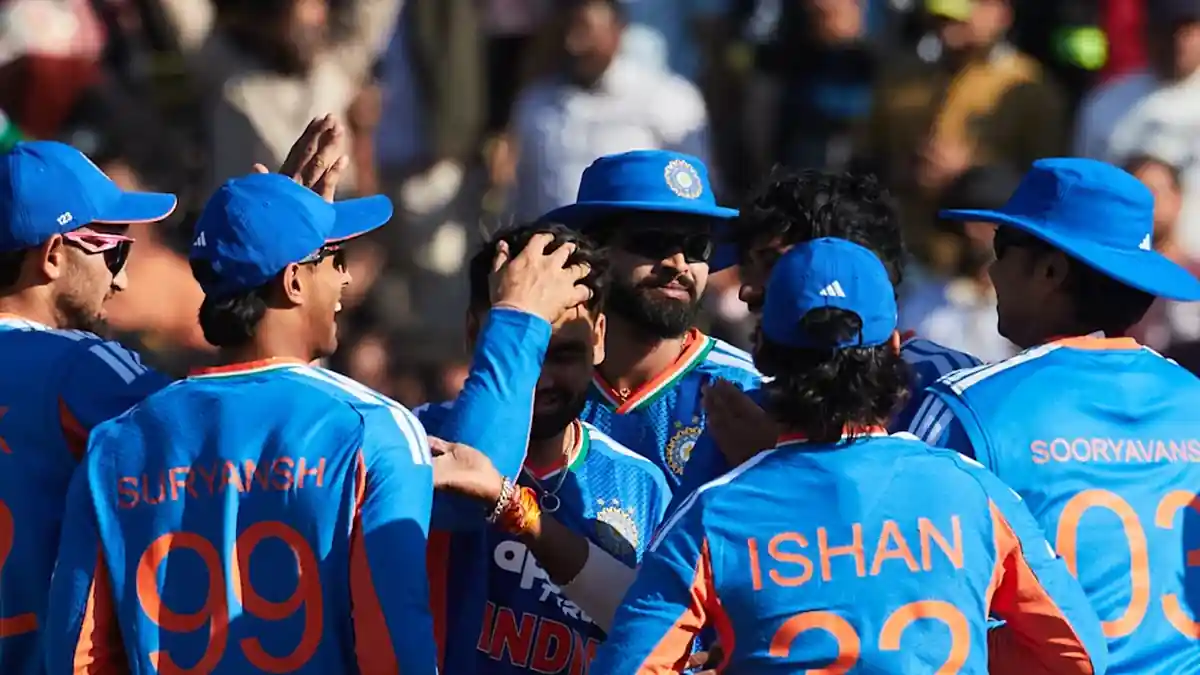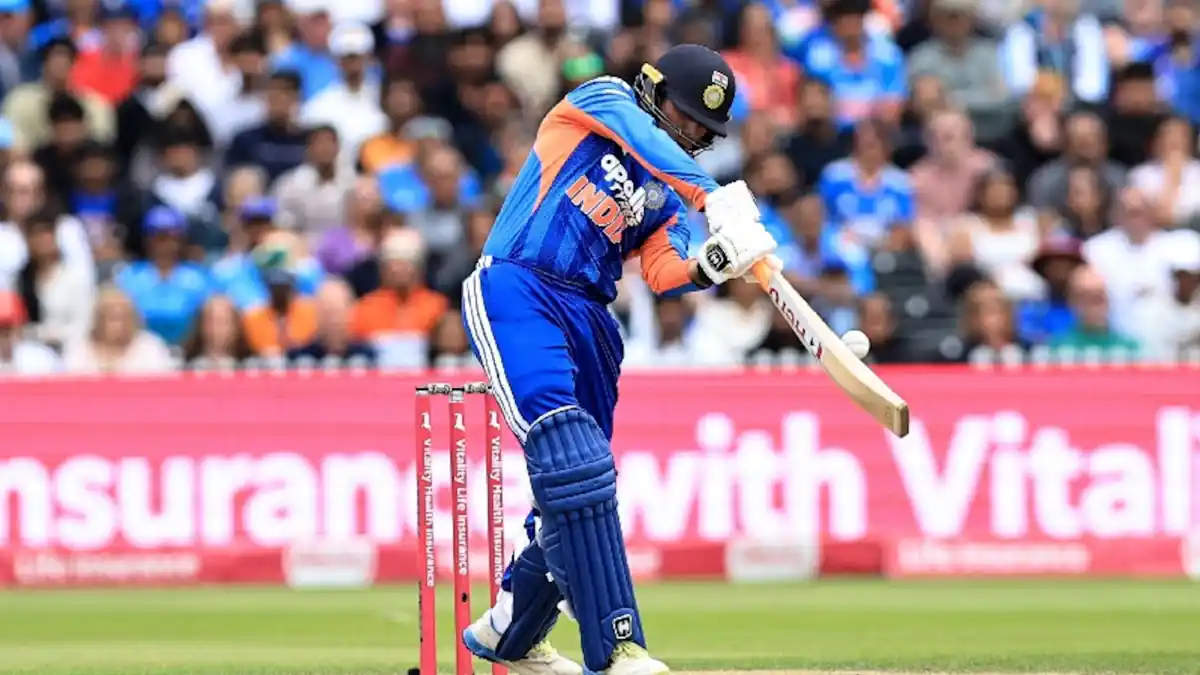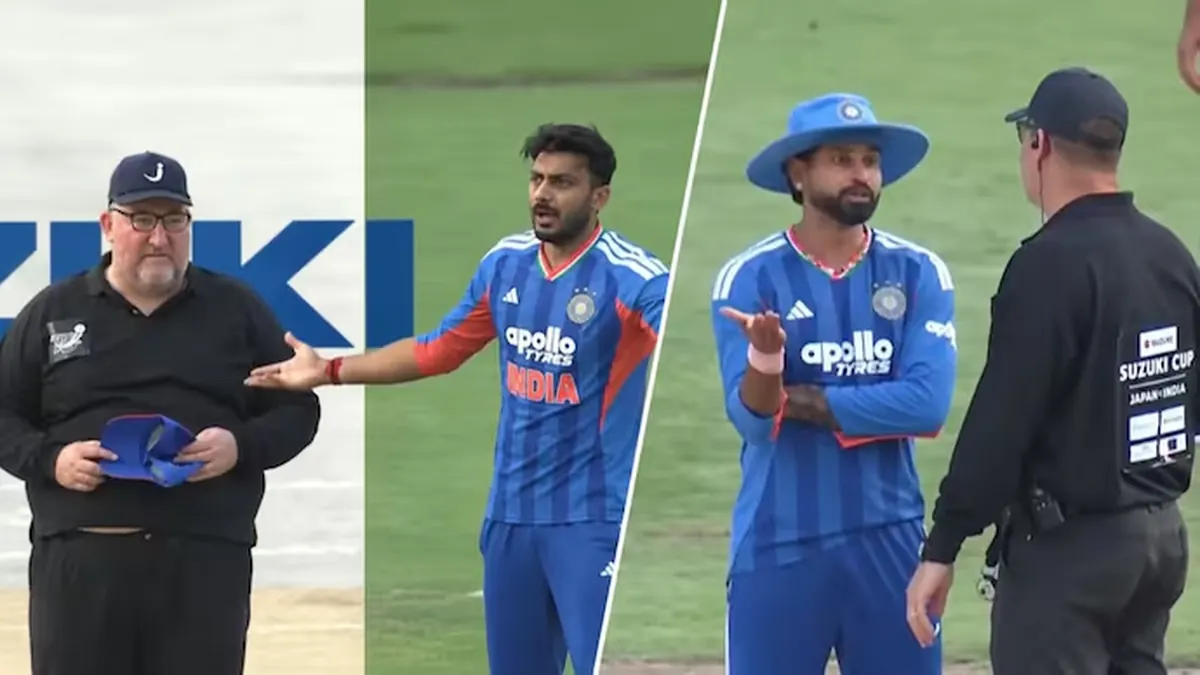
T20I between India and Japan, played in less-than-ideal weather conditions at the Sano International Cricket Ground, ended up being a controversy over the law at the end of the game, where on-field umpire Chris Thurgate changed his decision of a wide ball after an argument with Indian team captain Shreyas Iyer.
The match had been reduced to five overs per side due to the rainfall. India made 32/4 and almost lost the game due to stiff competition from Japan, but India won the game by just two runs.
Japan needed eight runs in the last over, which would be bowled by Axar Patel. The batsman facing the over was the left-handed batter Alexander Shirai-Patmore, who tried playing a reverse hit on a delivery moving towards the leg stump.
But he failed to play the shot, and the delivery went past him without hitting anything, which should have ideally been the leg stump for the batsman if he had maintained his usual position. For the delivery, Thurgate at the striker's end gave a call of wide.
The next delivery too was identical, and it resulted in a wide being called.
Chris Brown, who was part of the Elite Panel of Umpires of the ICC, intervened at this point. As per reports, Brown requested Thurgate to review his decision of making it a second-wide delivery, and following a quick discussion between them, Thurgate rescinded his decision.
It became a legitimate delivery. It took the pressure off Japan as it went from needing seven runs off two deliveries to being in a difficult position again, and in the end, they ended up scoring 30/3 and lost by two runs to India.
There was no television umpire and no Decision Review System available in this match.
The central issue of law is based on how wide is considered in case a batter moves stance during delivery. As per laws related to calls for a wide ball, a delivery may be termed as wide in case it passes wide of the spot at which the batter stands, as well as a batter standing in a regular guard stance.
However, according to the very laws related to the wide-ball call, an umpire must not consider the delivery as a wide in case the movement by the batter leads to the delivery passing wide of the batter. In other words, if it was the batter’s voluntary movement that resulted in the ball passing him in a manner that it could be termed as a wide, it should not be considered as such.
The particular rule has been reported to fall under Law 22.4, where an umpire "shall not adjudge a delivery as being a wide."
However, there is some controversy about how the rule ought to have been implemented in this case. Some people, on the other hand, believe that changing one's stance only invalidates the wide-ball rule if it was an intentional move and occurs before the bowler initiates his/her run-up, and it was apparent from the video footage that Shirai-Patmore did not change his stance until the ball had already been released by Axar.
On the other hand, some experts in cricket have opposed such interpretation, claiming that according to the guidelines, time becomes insignificant once a batter changes his stance to take a shot; in that case, the whole width of the pitch is considered the off side.
The dispute in question is centered around whether or not the timing of the stance change is relevant.
Can an Umpire Even Reverse a Decision?
However, aside from the issue of the wide ball, there is an even more fundamental issue to be considered: Can an umpire actually change their mind during the game?
As reported, in accordance with the laws regarding umpiring decisions, the answer is affirmative, provided certain preconditions are met. An umpire can change any of their decisions, so long as it is done in a prompt manner without violating the condition about not being able to rescind a dead ball.
After this change has been implemented, the revised decision becomes the final one. As for that particular issue, according to a number of reports, it seems that Thurgate did follow the procedure.
There have been divided views amongst cricket analysts regarding this episode. One kind of analysis that has appeared is that ICC's rules themselves are sufficient to settle the issue, in that the decision has been a legal one based on the fact that the time of change of stance makes no difference to the exemption of wide balls.
Other kinds of commentary on the issue have been much more severe in tone, claiming that India has resorted to the tactic of "player pressure" to get its way in overturning the wide ball decision and that there was no justification for such an overturn based on the video evidence.
It has not been reported that any disciplinary action has been taken against any Indian players, including Iyer, by the match referee regarding the dispute on the field with the umpire.
As there has been no reported punishment for any of the players involved, the outcome of the match will continue to stand as a two-run win for India. The debate, however, may well continue to revolve mainly around how the law of wide ball should have been interpreted.