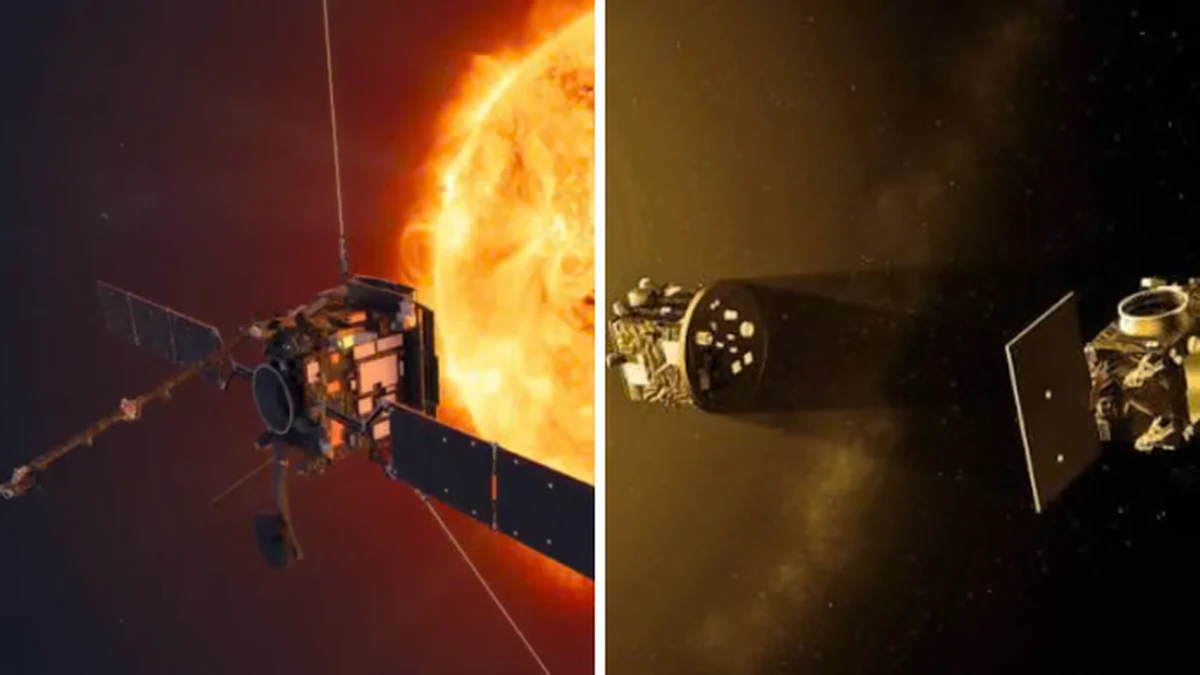
Two space telescopes, built on opposite sides of the planet, happened to be staring at the same spot on the Sun at the same time last September. Turns out that overlap was worth a lot more than coincidence.
The study centers on two coronal mass ejections, basically massive bursts of plasma and magnetic field blasted off the Sun’s corona. One hit on September 14, 2025, the other just two days later on September 16. Both got caught, at the exact same time, by Aditya-L1’s VELC instrument and Proba-3’s ASPIICS instrument.
That kind of overlap doesn’t happen often, and it’s exactly what made this whole study possible. Researchers from the Indian Institute of Astrophysics, working alongside international partners, used it to measure the mass, density, and energy of both eruptions as they happened close to the Sun, an area that’s historically been a pain to observe in any real detail.
Here’s the interesting part. Even though these two eruptions happened just two days apart, they acted completely differently. September 14’s eruption moved fast, roughly 645 kilometers per second. September 16’s crawled in comparison, at about 145 kilometers per second.
The energy split was just as different. In the fast eruption, thermal energy barely showed up at all, just 1% of the total energy. In the slower one, though, thermal energy kept climbing until it was basically on par with the kinetic energy driving it. The study also found the September 16 CME’s density dropped off more steeply the higher it went, meaning it was expanding more aggressively right out of the gate.
So two eruptions that might’ve looked similar from far away turned out to be doing pretty different things physically. And that’s exactly the kind of detail you only catch by watching from two angles at once.
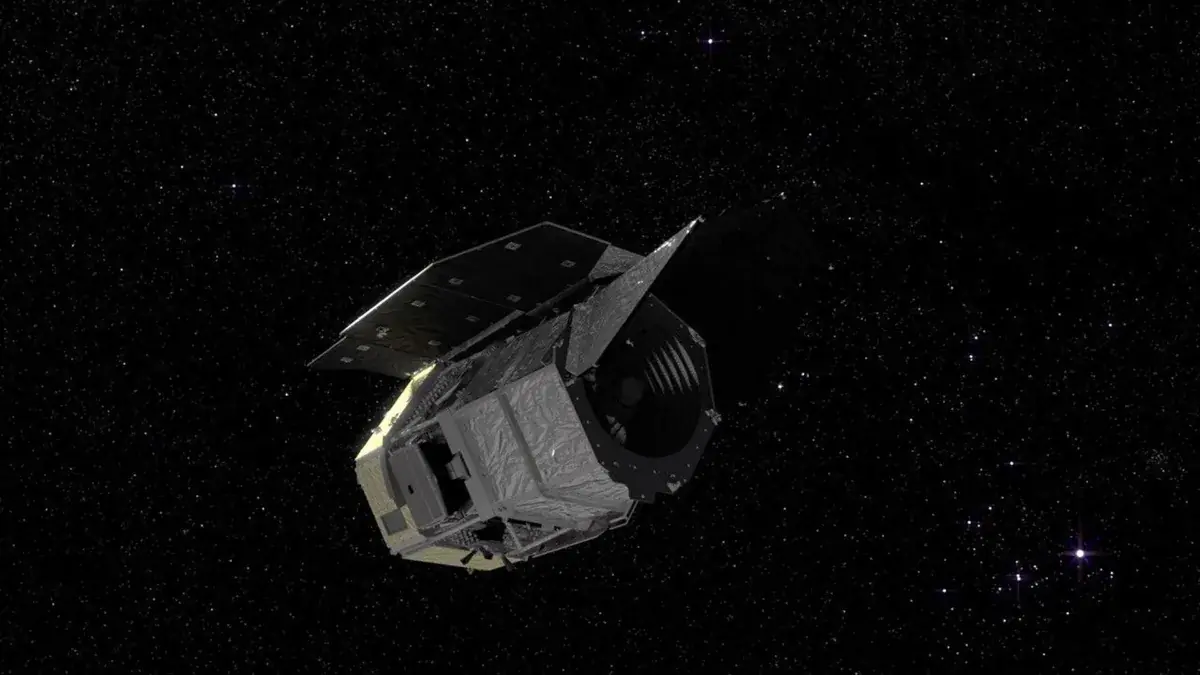
VELC and ASPIICS don’t do the same job. VELC reads the light coming off the corona to figure out stuff like temperature, speed, and what it’s made of. ASPIICS actually images the corona directly, using an artificial eclipse created by Proba-3’s weird setup, two satellites flying about 150 meters apart, blocking the Sun’s glare so the much fainter corona becomes visible.
Alone, each one only tells part of the story. Together, researchers say, they give a much fuller, cross-checked view of how these eruptions actually start and grow. ISRO even pointed this out directly in their statement, saying that combining an imaging coronagraph with a spectroscopic one lets scientists double-check density and thermal energy numbers against each other.
CMEs aren’t just a cool thing to look at. When they’re pointed at Earth, they can mess with satellites, knock around power grids, and throw off GPS, real space weather effects that matter way beyond academic papers. Figuring out exactly how these eruptions behave early on, before they’ve traveled far from the Sun, is a big part of eventually predicting which ones might actually cause problems down here.
That’s really the point of a study like this. It’s not about either eruption specifically being dangerous. It’s about building a clearer, physics-backed picture of how CMEs form and grow, so scientists have better tools for forecasting space weather later on.
Both Aditya-L1 and Proba-3 launched through ISRO earlier this year, and Aditya-L1 holds the title of India’s first dedicated space-based solar observatory. Proba-3, meanwhile, is the first precision formation-flying mission of its kind anywhere, a genuinely new way to study the Sun’s corona that just wouldn’t work with a single spacecraft.
This joint study is a fairly early example of what happens when two missions from different space agencies end up pointed at the same thing at the same moment, more or less by chance, and someone actually bothers to combine the data instead of treating it as two separate sets. Given how much interest there already is in coordinated solar observation, this probably won’t be the last time Aditya-L1 and Proba-3 cross paths like this.