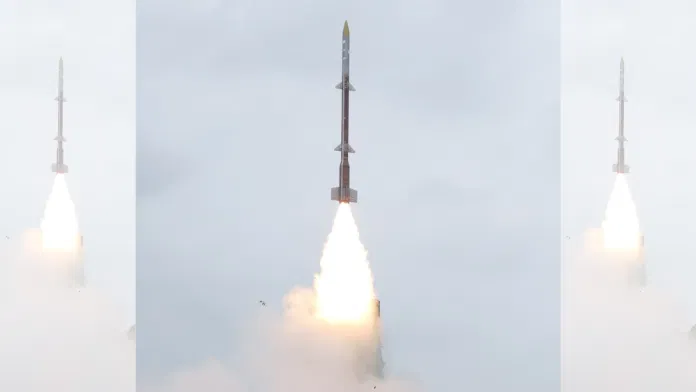
Thursday morning off the coast of Odisha, at APJ Abdul Kalam Island, a missile that has existed mostly as slides in defence ministry briefings finally left the ground. The Defence Research and Development Organisation fired the first prototype of its Long-Range Surface-to-Air Missile, codenamed Kusha, at an electronic target built to mimic a fast, high-altitude aircraft or missile. It hit.
That's the news, technically speaking. But strip away the press-release language, and what happened is bigger than one clean intercept.
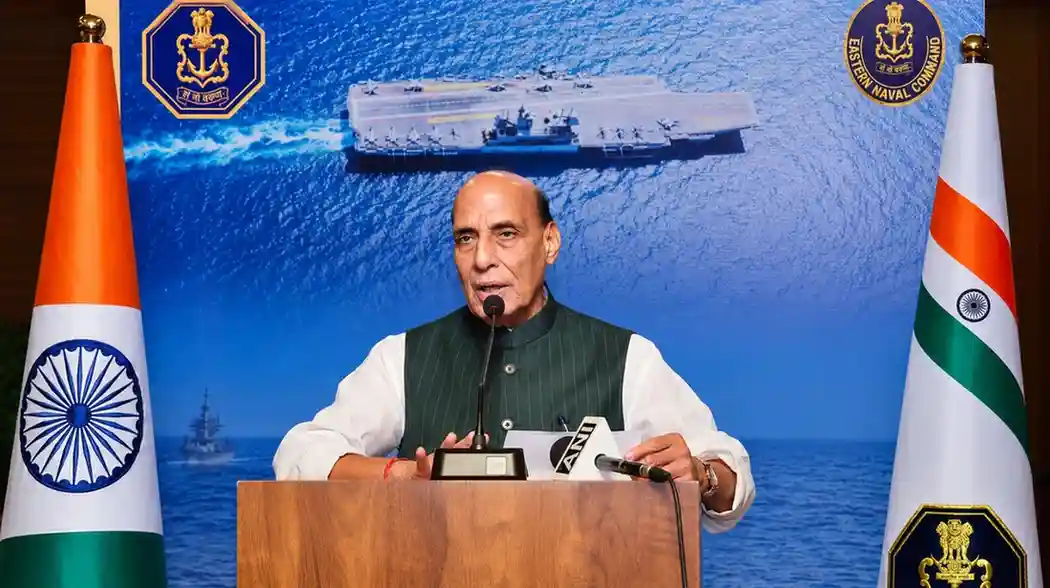
The test involved the full weapons package missile, radar, command-and-control assembled entirely by DRDO labs working with industry partners. Nothing was flown in from Moscow or Tel Aviv for this one. Defence Minister Rajnath Singh, never shy about a milestone, posted about it on X within hours, framing the test as proof that India now belongs to a small group of nations capable of building long-range interceptors from the ground up. He also argued the system would cut India's reliance on imported air defence hardware over time.
Whether or not the "select nations" framing holds up to scrutiny that group arguably already includes the US, Russia, China and Israel the underlying claim is fair. Building a missile that can find, track and kill a target hundreds of kilometres out, using homegrown radar and homegrown guidance software, is not a small technical lift. Most countries that attempt it don't finish.
Here's the part that tends to get buried under the celebratory coverage: Kusha was never meant to replace the S-400. It's meant to fill the hole underneath it.
India's Barak-8 medium-range missiles top out around 80 kilometres. The Russian-built S-400 designated "Sudarshan Chakra" in Indian service reaches out to roughly 400. Everything in between has, until now, been empty space. Project Kusha is designed as a three-tier system, with interceptors reportedly built for bands of roughly 150, 250 and 350–400 kilometres, stitching that gap shut with hardware India owns outright.
That last part owns outright is arguably the real story here, more than the intercept itself. The S-400 agreement, signed in 2018, cost India $5.4 billion for five squadrons, and deliveries from Russia are still trickling in years later. Every S-400 unit carries a diplomatic and logistical dependency with it. A functioning Kusha wouldn't.
The Indian Air Force secured formal clearance to acquire five Kusha squadrons back in September 2023. Thursday's flight is the first real milestone in that long procurement chain and if the track record of Indian missile programmes is any guide, that chain still has years left to run. DRDO and government sources have pointed to 2028–29 as a realistic window for the system to mature. Nobody serious is calling this operational yet.
None of this is unfolding in a vacuum. Since the 2025 conflict with Pakistan, India's air defence posture has turned from a back-page procurement story into a live political one. Drone and missile activity near sensitive sites including reported strikes in the vicinity of the Golden Temple combined with pointed nuclear rhetoric out of Islamabad, have fed into a broader push, branded "Mission Sudarshan Chakra," to layer India's skies with overlapping defences by 2035. Kusha is meant to be one of the load-bearing layers in that structure, not a standalone system sitting off to the side.
Prime Minister Modi has leaned hard into the framing, naming the wider mission after Krishna's discus weapon from the Mahabharata, the one that, in the stories, could block out the sun itself.
It's a large metaphor for a programme that, as of Thursday, has flown exactly once.
That gap between ambition and hardware is worth sitting with for a second. A successful intercept of a simulated target, under controlled range conditions built for exactly this purpose, is a genuine engineering achievement. It is not the same thing as a combat-ready system that can track a drone swarm or a manoeuvring cruise missile in contested airspace. DRDO knows this better than anyone. The three-tier interceptor architecture still needs years of further trials, production scale-up and integration with India's existing radar network before any of it reaches an actual squadron.
What Thursday proved is narrower than the headlines suggest: the underlying physics and systems engineering work. The politics, the procurement and the production line are what come next and those, historically, are the parts where Indian missile programmes take their time.