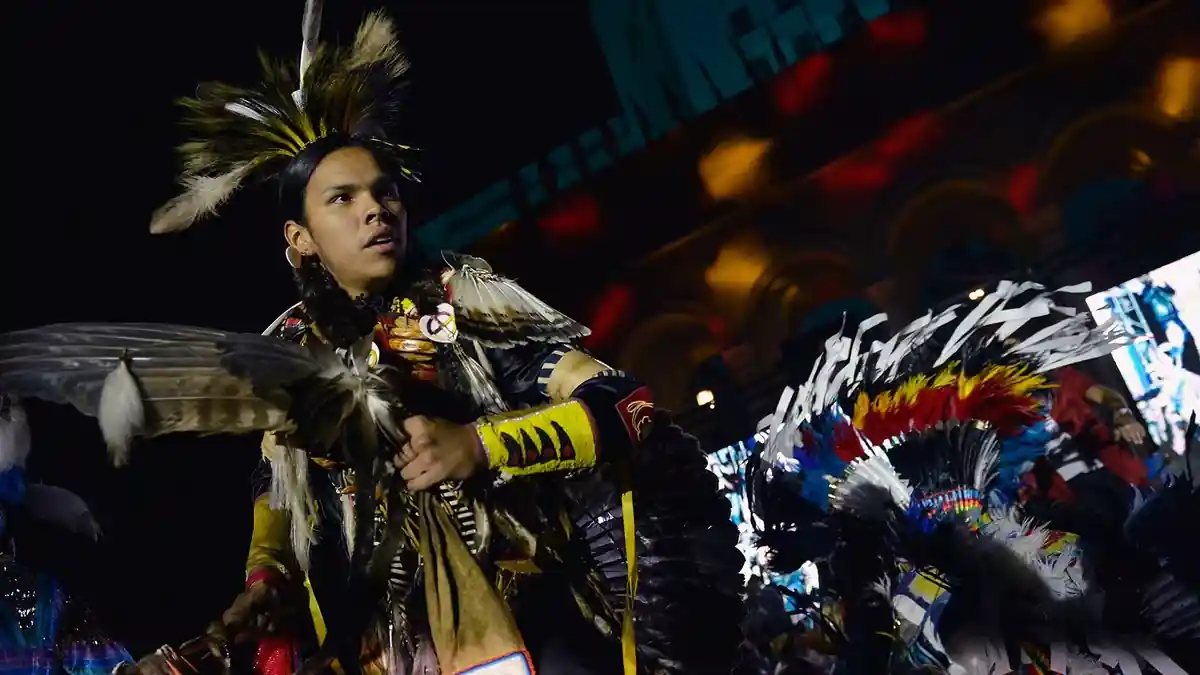
Today is Monday, October 12, and this date marks the celebration of Indigenous Peoples’ Day in many cities, from Alaska to Boston. This holiday is observed on the second Monday of October every year and serves as recognition of the history, culture, and continuous existence of Native communities in the Americas.
This holiday will be celebrated through events organized by many people in various locations. Native News Online mentions a variety of events organized in universities, museums, and community centers, among which there are the Heard Museum, the Eiteljorg Museum, the University of Denver, and the University of Alaska Southeast. Also, marches and celebrations will take place in such cities as Boston, New York, and Philadelphia, as well as other kinds of events.
Though it has significant influence, Indigenous Peoples’ Day does not exist as an independent federal holiday. The holiday recognized by the U.S. government for the second Monday of October is Columbus Day, meaning that both holidays will occur on the same day this year. How the day will be observed depends greatly on the location.
A number of states recognize Indigenous Peoples' Day in one way or another, either as an alternative to or as an additional observance to Columbus Day. These include Alaska, California, Hawaii, Maine, Minnesota, New Mexico, Oregon, Vermont, Wisconsin, and Washington, D.C. Cities and school systems also recognize the day, such as New York City, Los Angeles, Denver, Phoenix, Seattle, and Boston.
Recognition does not necessarily imply taking the day off work. Indigenous Peoples’ Day can be observed as a replacement of Columbus Day by the state or local government, alongside Columbus Day, or using a different name altogether. For most people, October 12th will remain just another regular Monday.
It was initially celebrated as a counter-celebration on the same day as Columbus Day, with the argument that celebrating Columbus was ignoring the ongoing trauma that the Indigenous people experienced due to European colonization of the Americas. This concept started to be supported following a UN conference held in Geneva in which there were discussions about the possibility of replacing Columbus Day in the Americas with Indigenous Peoples' Day.
One of the early adopters of this holiday was Berkeley, California, which has observed it for many years. Since 1993, it also celebrates an annual powwow and festival on this date. More recently, it has become common for states and municipalities to observe Indigenous Peoples' Day on the second Monday of October.
Joe Biden was the first president in 2021 to recognize Indigenous Peoples' Day on the same date as Columbus Day.
Controversies persist. Columbus Day was made a federal holiday in 1937, partly due to lobbying by Italian-American Catholics. In the latter half of the nineteenth and the beginning of the twentieth century, the group lobbied for the creation of the holiday, hoping to insert Italian Catholics into American history and beat those wanting to celebrate Leif Erikson.
President Donald Trump signed a proclamation of Columbus Day in 2025, praising the explorer's contribution to the country. The document claimed that Columbus became a victim of the efforts to whitewash history.
Activists argued that monuments to Columbus ignore his crimes such as slavery of the Native population and praise him as one who discovered the continents inhabited by people for millennia. Leo Killsback, author and activist of Indigenous rights, claimed that the day of Indigenous Peoples provides a more accurate reflection of values in America than Columbus Day since the matter of who came there first is not the key issue.
The advocates of Columbus Day referred to the importance of the holiday for Italian-American community.
The two stances reveal an obvious controversy in views on how the history of America should be treated.
Supporters in Congress are still calling for the event to be nationally recognized. A bill in the Senate calls for the second Monday of October in 2026 to be declared Indigenous Peoples’ Day and supports making it a federal holiday.
It talks about the oppression, forced assimilation, and genocide of indigenous peoples and their cultures and acknowledges the contributions of indigenous peoples to the United States in science, philosophy, and tradition.
Another call for support came from California Representative Norma Torres in 2023, as she stated that a federal designation of the day would be just a small but meaningful step in acknowledging the wrongs of the nation’s history and acknowledging the cultures of the Indigenous.
It has been noted that this day has more to do with the present than with the past. Shannon Speed, the Director of the American Indian Studies Center at UCLA and a citizen of the Chickasaw nation, has written that her students received very little information about the history of oppression and genocide of some 10 million people that were living in this country before the arrival of Europeans. She also mentioned a common the notion of the “vanishing Indian” that suggests that Native Americans are part of the past, not a living culture.
This is one of the reasons why schools and museums celebrate the day teaching about Native American history and the Indigenous communities as they exist today. Moreover, the holiday is different from other similar dates.
Native American Day varies from state to state, the International Day of the World’s Indigenous Peoples takes place on August 9 and National Native American Heritage Month lasts all through November.