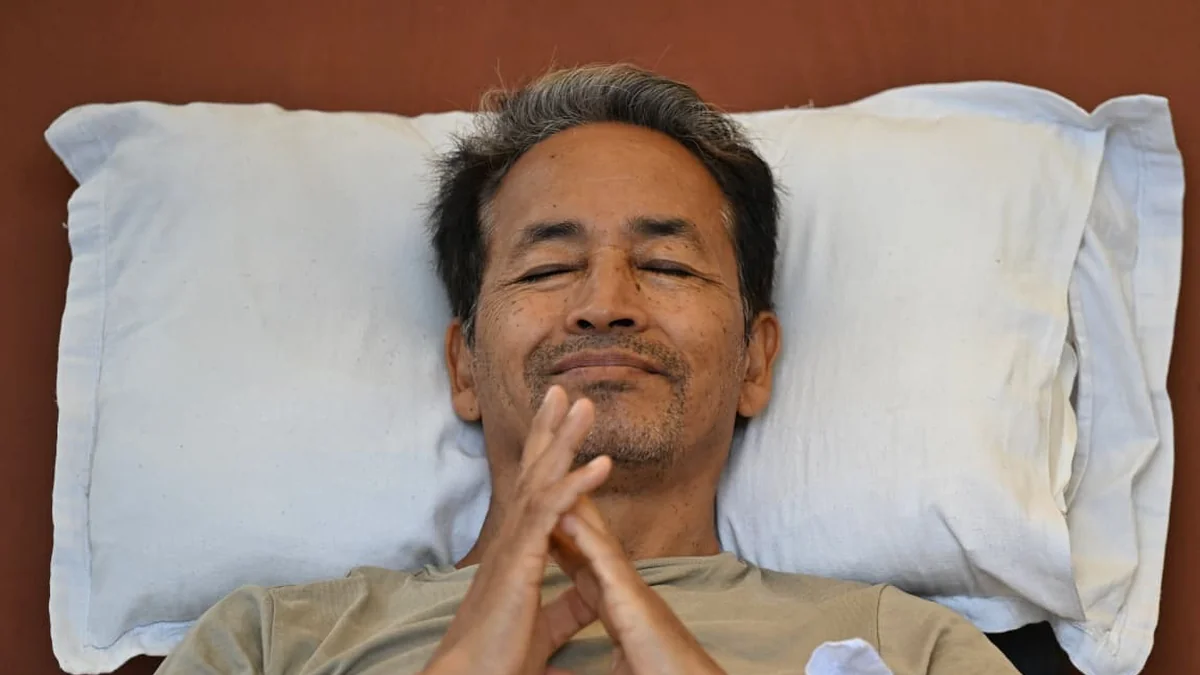
Ladakh's climate activist is refusing food, water and IV fluids from a hospital bed. CJP's Abhijeet Dipke has picked up the fast where Wangchuk left off. And a fresh political storm has broken out over what happened before sunrise on Saturday.
By the time most of Delhi woke up on Saturday, the tent city at Jantar Mantar had already changed hands.
Sonam Wangchuk- the Ladakhi engineer-turned-activist who has spent 21 days refusing food over paper leaks, exam scandals and student suicides was gone. In his place stood a ten-foot barricade, rows of police vehicles, and officers who hadn't been there the evening before. Newslaundry's team, present at the site both nights, described it as an almost unrecognisable scene by 9 am.
What happened in between is now the story.
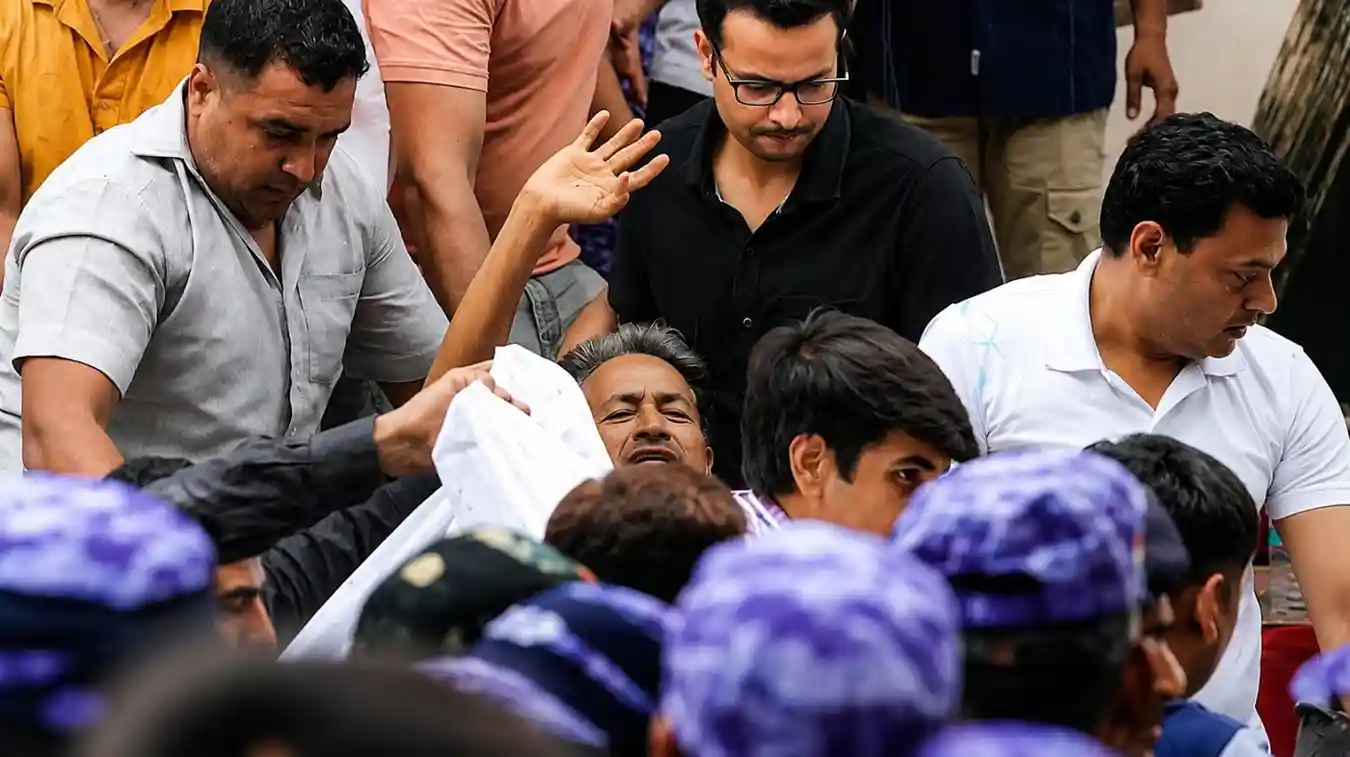
According to reporting cited by The Indian Express, New Delhi district police quietly assembled around 3 am under the cover of what they called a routine security drill. At Mandir Marg police station, officers were reportedly briefed that Wangchuk needed to be out within 30 seconds of the operation beginning. A phone jammer went up near the site. Only a handful of senior officers knew the actual plan.
The timing wasn't accidental, either. Police had apparently tracked the protest's daily rhythm closely enough to know the narrow window each morning when CJP founder Abhijeet Dipke stepped away from the tent.
That's the gap they used. Wangchuk was in an ambulance within two minutes.
Delhi Police tell a plainer version of events. The Deputy Commissioner (New Delhi), Sachin Sharma, said the move followed a Delhi High Court order and expert medical advice after Wangchuk's health took a turn for the worse. A force statement added that some protesters tried to obstruct the exercise, leading to what it called a "slight commotion", but insisted restraint was exercised throughout.
Protesters and eyewitnesses describe something rougher shoving, verbal abuse, a phone allegedly smashed while someone was filming. Delhi Police has not responded to those specific claims.
The operation, notably, came a day after the Union Home Ministry replaced Delhi's police commissioner, Satish Golchha, with Anurag Kumar.
- Day 21 of the fast, and Wangchuk still won't eat. Personal doctors told Outlook India he has consumed no food, water or glucose since being admitted, and is refusing IV fluids, ORS and medication despite signs of dehydration.
- His medical team says his vitals are normal — and is questioning why he was shifted to Safdarjung Hospital at all. They also allege they've been denied access to him and his records, with only his wife permitted to visit.
- Dipke has begun his own indefinite fast at Jantar Mantar, alleging he was assaulted and briefly detained during the operation. Some protesters say students formed a human chain trying to stop Wangchuk's removal.
- The demand has widened. What began as a call for Education Minister Dharmendra Pradhan's resignation is now, per Dipke, a call for the Prime Minister's resignation as well.
- A night vigil and a march are planned. Dipke has asked supporters to gather at Jantar Mantar overnight, warning of a possible further "crackdown," ahead of a planned march to Parliament on July 20 — the day Monsoon Session begins.
- Solidarity is spreading beyond Delhi. In Guwahati, two men were detained for painting murals of Wangchuk on public walls near a city auditorium.
Congress didn't wait long to weigh in.
Leader of Opposition Rahul Gandhi accused the government of running on "Asatya" and "Hinsa" falsehood and violence and argued that no amount of force would silence students angry over paper leaks, rising education costs and suicides.
Mallikarjun Kharge went further, calling the episode a fresh blot on the Constitution and pointing to what he described as a "Chhatron ki Goonj" an echo of student anger travelling from Kota and Dehradun toward Delhi. Party general secretary KC Venugopal used the word "fascist."
The backdrop matters here. Last month, roughly 2.2 million medical aspirants sat a re-examination under heavy security after the original test was scrapped over a leak. A separate marking fiasco in school exams added fuel. Together, they've powered weeks of youth anger that Wangchuk's fast came to symbolise and that his removal has, if anything, sharpened.
A Delhi High Court order earlier in the week had already put the state on notice, telling authorities that whatever intervention was needed to save Wangchuk's life should happen.
That order is now the government's justification for Saturday's operation and the protesters' evidence of bad faith, since it was used, they argue, to break up a peaceful sit-in rather than negotiate with it.
Wangchuk, for his part, doesn't appear to be backing down from his hospital bed. Whether Delhi Police move against the night vigil Dipke has called for, and whether Monday's planned march to Parliament actually happens, will likely decide how this week end and how much louder Ladakh's most famous activist gets, even while lying still.