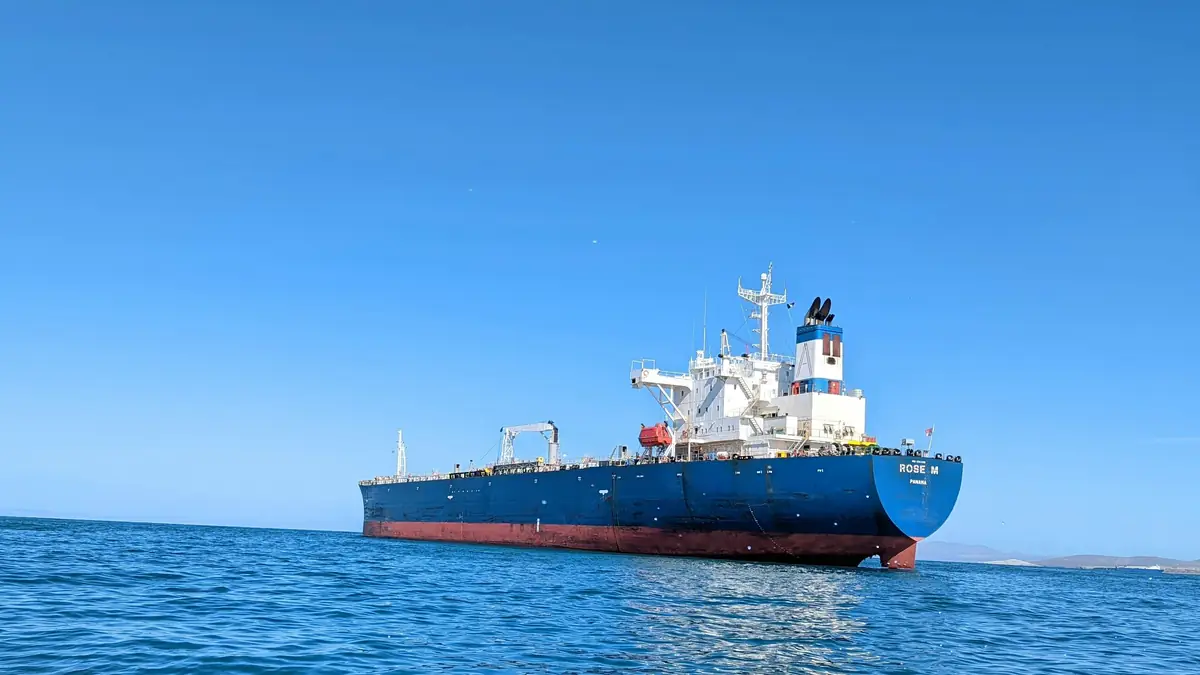
As America was once again blockading the Iranian shipments using its navy this week, two ships carrying Iranian crude oil have decided to do something different from what they usually do; they changed their declared destination to Karachi, Pakistan.
The Bloomberg data collected through tracking these ships showed that both the ships named “Rani” and “Amil,” carrying a total amount of about 1 million barrels of crude, changed their destination signal to the Pakistani port on Tuesday.
Both these ships, one being a Suezmax and the other a medium range tanker, were outside the Persian Gulf even before America imposed its blockade on them. Pakistan has not imported Iranian crude in at least a decade, according to the data intelligence firm Kpler, and doing so now would risk exposing the country to US sanctions. Analysts instead believe the tankers may simply be seeking safe waters to wait out the blockade, or positioning themselves for a ship-to-ship transfer of their cargo to other vessels — a common tactic used to obscure the origin of sanctioned oil before it re-enters the global market.
In this case, the return of the US maritime blockade against Iran is not an isolated event.
The current situation in the Gulf region has been marked by mounting tensions since the end of February 2026, following a series of joint military strikes carried out by the US and Israel against Iran. This was the start of what came to be called the "40-Day War." As a result, Iran's Revolutionary Guard Corps Navy threatened military and commercial ships trying to cross the strait, attacked them, and laid mines in the Strait of Hormuz, causing the traffic of oil tankers in one of the most strategic passages in the world practically to come to a halt. First of all, Washington imposed its maritime blockade on Iran's ports back in April, which lasted about two months until a brief diplomatic accord brought it to an end in mid-June.
Now, however, it has formally ended: a special sanctions exemption was annulled, and the grace period for concluding ongoing deals was set to end on July 17, which resulted in Washington's reimplementation of the naval blockade against Iranian oil shipments.
Iranian representatives are not giving the issue much importance. In particular, Iranian oil minister.
There are clear similarities between what is happening now and the earlier blockade phase, where both parties have tested each other's will at sea.
In the earlier blockades, US Central Command has said that no ships broke the blockade directly and some commercial ships heeded the warning and returned to their respective Iranian ports, with CENTCOM underscoring the blockade would be carried out against vessels from all countries heading to and from the Iranian ports and not those heading somewhere else through the Strait of Hormuz.
Iran has shown its ability to evade the blockade. By the end of April, shipping intelligence firm Lloyd's List said there were many Iranian ships that have been able to circumvent the blockade, including some tankers which have sailed out of the Gulf of Oman successfully, even as the CENTCOM counted hundreds of intercepted vessels.
There are also reports of Iranian tankers using the Pakistan and India coasts to avoid being spotted before sneaking through the Strait of Malacca to deliver their cargoes to Asian customers. Despite the earlier blockade severely reducing the country's exports, Iran has resorted to using the so-called "shadow fleet" of ships that used false flags and had their transponders.
However, the economic impact of the embargo on Iran has been significant.
The previous estimates by the US Department of Defense indicate that Iran lost almost $5 billion in oil revenue within approximately two weeks during the initial period of the embargo. Dozens of tankers with tens of millions of barrels of crude were effectively stranded in the Gulf at that time.
Oil revenues constitute approximately 50% of the budget of the Iranian government, according to the US Energy Information Administration.
Most of the Iranian oil exports go to China despite existing American sanctions against Iran.
However, Iran was able to export quite a large amount of its oil during the brief period between the imposition of the embargo and its suspension, as per the calculations of TankerTrackers.
This option for Iran has now become unavailable, since the embargo has resumed once again. Nevertheless, the full embargo of Iranian oil, which would exclude 2 million barrels of oil a day from international markets, would have a relatively modest impact on oil prices due to the reduction and diversification of Iranian oil exports.
Another indicator of the re-imposition of the blockade is the failure of a diplomatic initiative that once seemed to have brought some kind of de-escalation of tensions to an end.
The re-imposition of the blockade indicates the failure of the temporary deal reached between Washington and Tehran following the 40-Day War.
The main reason for the re-occurrence of tensions lies in the new approach of Iran’s leaders who are increasingly challenging the previous deal.
There are also indications that Iran might be preparing for another challenge to the effectiveness of the blockade.
Just prior to the US re-imposition of the naval blockade, there were reports based on maritime intelligence of a series of oil tankers being assembled in the Indian Ocean loaded with oil.
In the meantime, the diversion of the Rani and the Amil to Karachi seems to be more of a defensive measure on the part of the Iranians than a real shift in their strategy of exports — a move designed to ensure that they hold their precious cargo safe from any danger as both Tehran and Washington see how far they can go in raising the stakes in their naval confrontation. For its part, Pakistan seems unlikely to serve as a new market for Iranian crude oil.