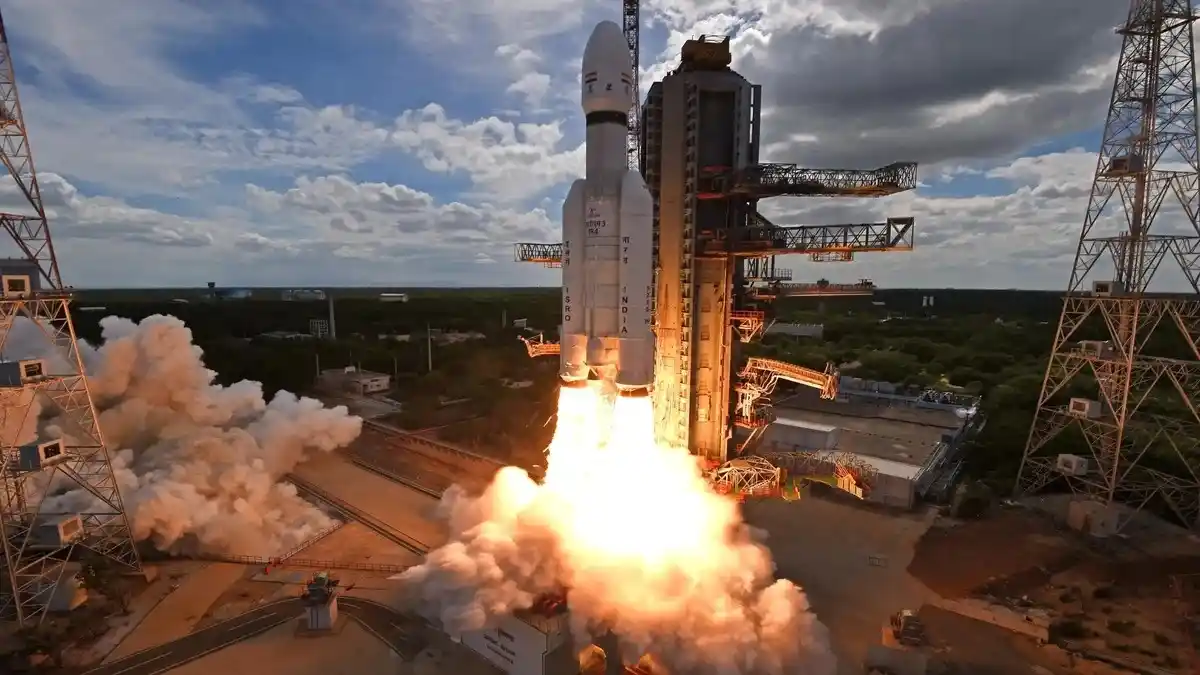
On June 24, 2026, deep inside the ISRO Propulsion Complex at Mahendragiri in Tamil Nadu, something roared to life at a scale India had never quite managed before.
ISRO successfully conducted a hot test of its semi-cryogenic engine power head test article, known as the PHTA, at a thrust level of 175 tonnes, which is 88% of the engine's rated capacity.
The test ran exactly as predicted. All parameters stayed within expected limits. The turbopumps performed at 400 and 500 bar outlet pressures. For an engine still in development, that's not just a number—it's a statement.
This was the eighth hot test in the PHTA development program. Eight tests. Years of incremental push, from ignition trials in 2024 through cautious runs at 47% and 60% thrust, and now here at 88%, with full confidence and zero deviations.
Before understanding why this matters, it helps to understand what a PHTA even is. The Power Head Test Article encompasses all the critical systems of the semi-cryogenic engine, including the pre-burner, gas generator, turbopumps, and control systems except the thrust chamber. Think of it as testing the heart of an engine without the exhaust nozzle. Everything that governs power, pressure, and combustion stability was tested and validated. The thrust chamber comes later.
The engine under development is called the SE2000. It uses liquid oxygen and kerosene propellants in an oxidizer-rich staged combustion cycle, achieving a chamber pressure of 180 bar with a specific impulse of 335 seconds. Those are serious numbers for a domestically built system.
India's current LVM3 — the country's heaviest operational rocket runs its core liquid stage on UDMH and nitrogen tetroxide. Toxic. Corrosive. Complex to handle. The kind of propellants that require full hazmat protocols and slow down ground operations considerably.
Unlike the existing hypergolic propulsion system, the new semi-cryogenic engine uses Liquid Oxygen and purified kerosene, a combination known as Isrosene — a cleaner, more efficient, and less toxic propellant mix widely used in modern heavy-lift launch vehicles.
The implications of that shift are bigger than they sound. Kerosene is denser than liquid hydrogen, meaning you need smaller tanks. It's stored at room temperature, meaning you don't need the extreme cryogenic infrastructure. And it's dramatically cheaper. With easier handling, India can also launch more rockets every year. Right now, for big rockets like LVM3, India manages about six flights a year. The aim is to raise India's share of the global satellite launch market from 2% to around 10% by 2030 or 2032 — and this is where the semi-cryogenic engine becomes truly important, as the whole process becomes simpler, faster, and cheaper.
The SE2000 won't just be a better engine slotted into the same rocket. It's the centerpiece of an entirely new propulsion stage—the SC120—which will replace the L110 liquid core stage currently flying on the LVM3.
This upgrade will increase the rocket's payload capacity from four tonnes to five tonnes in geostationary transfer orbit, while its low Earth orbit capacity rises from eight tonnes to ten tonnes. A 25% jump in GTO capacity. Not incrementally meaningful.
The semi-cryogenic propulsion stage will work alongside the uprated CE20 cryogenic upper stage, enabling future LVM3 missions to carry heavier communication satellites, deep-space probes, modules for the proposed Bharatiya Antariksh Station, and upcoming human spaceflight missions.
That last bit deserves a pause. Gaganyaan. The Bharatiya Antariksh Station. Lunar missions. These aren't distant hypotheticals anymore they're programmes in active motion, and they all demand heavier payload capability than what the current LVM3 can offer. The SE2000 is essentially the engine that unlocks that next chapter.
This hasn't been a fast project. Not remotely.
ISRO's semi-cryogenic engine program has been in development for well over a decade. There were international collaborations, delays, and geopolitical complications. ISRO is also looking to procure a Russian semi-cryogenic rocket engine to meet near-term mission requirements, with officials having visited Moscow for technical discussions with Roscosmos; the draft contract is currently under the approval process. That dual-track approach, developed domestically while securing a bridge solution, tells you something about how seriously India is treating the timeline here.
And yet the domestic program has found its rhythm. What started as halting ignition tests two years ago has now cleared 88% thrust with documented stability. ISRO has confirmed that the successful trial provides sufficient confidence to proceed towards demonstrating steady-state performance at the engine's full 200-tonne thrust level—the final major milestone before flight qualification begins.
The path from here to an actual flight is still long. Full 200-tonne tests. Integration into the SC120 stage. Flight qualification on LVM3. Reliability verification across multiple test campaigns. Mission certification. None of that is trivial.
But the trajectory is now undeniable. Once fully certified, the semi-cryogenic propulsion stage is expected to become a cornerstone of India's next generation of launch vehicles.
India's commercial space market ambitions, Gaganyaan's crewed missions, deep-space exploration — all of it eventually runs through this engine. The roar from Mahendragiri on June 24 wasn't just a test. It was a signal. The upgraded LVM3 is coming. And it's being built, increasingly, on India's own terms.