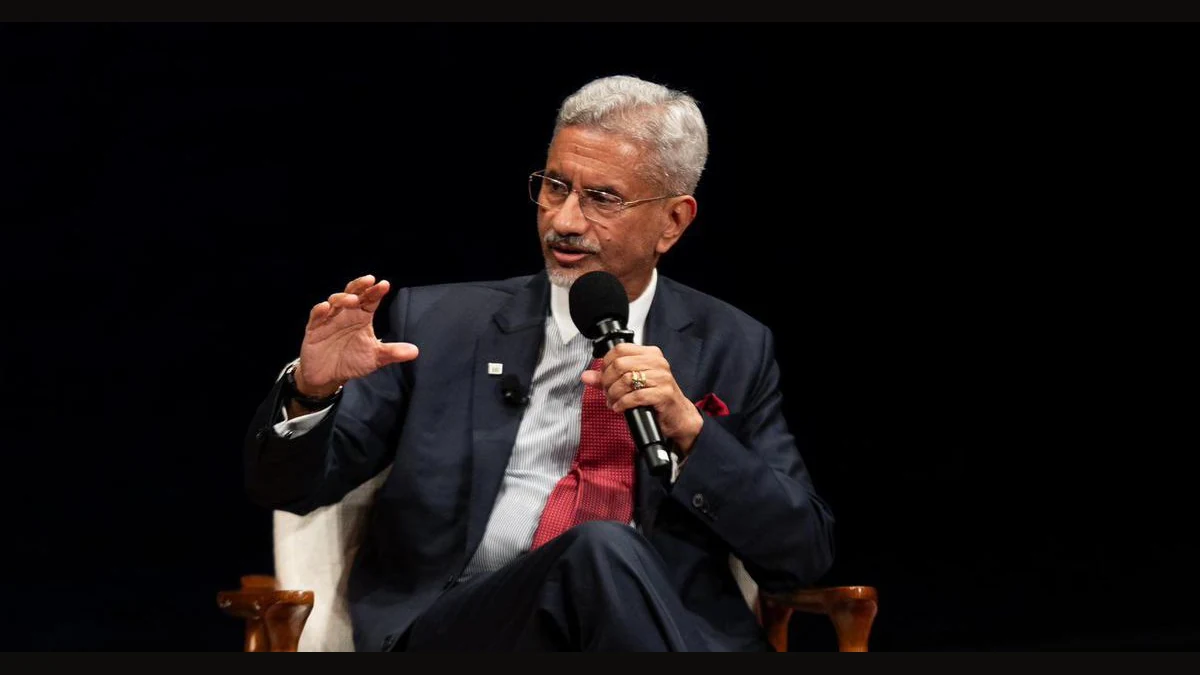
It is the 81st birthday of the United Nations, and one of the senior Indian officials used this platform to raise questions about its relevance.
External Affairs Minister of India S Jaishankar delivered his speech on Sunday at the Chinmaya Amrit Mahotsav Global Sammelan titled "Non-Dualism for World Understanding" that was organized at Bharat Mandapam in New Delhi. This was a speech made on the sidelines of the United Nations Day being celebrated in India.
His primary point of the speech was brief. "UN must lead, not be a spectator to global crises."
The body is being lagging behind its world, Jaishankar added. “Today, states are creating their own little clubs for managing security, like the Quad, AUKUS, and the SCO,” he said, adding that such arrangements were pragmatic and existed outside the UN structure.
“UN is paralyzed, and the world is going around it,” said Jaishankar, giving a blunt criticism of an organization from a minister whose country is an active participant in the forums.
The minister cited schools run by the UN in Gaza and UN peacekeepers in Lebanon, saying that even UN properties have become targets. The UN is short on money too.
Jaishankar emphasized that the repercussions of war go beyond the battlefield. He has been stressing the fact that other countries are paying for the escalating cost of conflicts in Ukraine and the West Asian region.
"The societies and economies, people far away, who are having very little say in the matter, are actually paying the price," he said. He stressed that there is no option but to get involved, saying, "We cannot remain helpless spectators," he said.
The involvement of India would be through pushing for negotiations. "India represents the voice of the world when we ask for dialogues and diplomacy as the sole solutions," he said.
However, the basic element of his speech remained the call for reform in the decision-making process of the UN.
"The case for reformed multilateralism is getting more compelling by the day," he asserted. "Large chunks of the world cannot be marginalized in decision-making," he further added.
Reform of institutions like the UN Security Council and the exclusion of the Global South from the governance of the world should come to an end, he said. This is a very old Indian position.
Jaishankar once again reiterated India's persistent call for reformed multilateralism. There were no new proposals or timelines for the same from this speech.
The next big issue was that of terrorism. He called it a menace against peace and stressed that employing it as an instrument of diplomacy was totally unjustifiable.
"This can never be justified. This can never be rationalized," he stated. There was no mention of any particular country in his analysis of the reports under consideration.
"Due to the fact that some states still lack zero tolerance towards it, terrorism remains very much alive. Some still let their political interests supersede everything else," he pointed out.
He appealed to the international community to have a better sense of common menace and act collectively against it.
Jaishankar made a connection between security and the economy. In particular, he mentioned the interconnection of peace, economic growth, and prosperity and noted that inequality in economic development within an interconnected world could result in further instability.
This is a recurring issue that Jaishankar has mentioned before. There is another quote published during the same week, where Jaishankar said the Global North "has to understand that it has equal stakes in addressing crises in the Global South."
However, his speech did not consist entirely of criticism. He stressed that while the world acknowledges the necessity for those much-needed changes, countries should reaffirm their determination to cooperate. "We are common, we are shared, we are united," he remarked.
He acknowledged that the United Nations itself is flawed. "We live in an imperfect world, but we all constantly strive for improvement," he said.