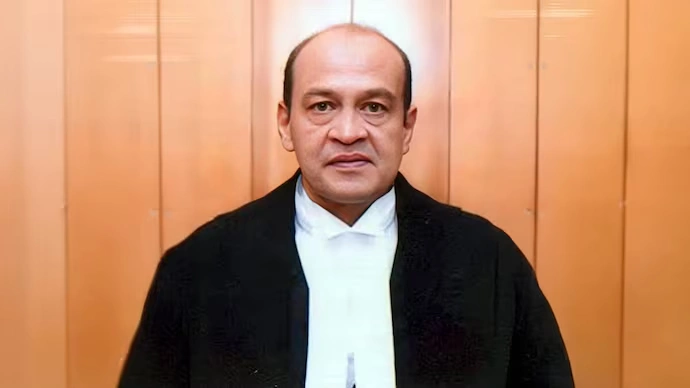
It took more than a year. But when the report finally landed in both Houses of Parliament on Wednesday, it didn't hedge.
All three charges against Yashwant Varma, proved. Not "largely proved." Not "proved with reservations". Just proved, on every single count the committee was asked to look into.
If the name rings a distant bell but the details are fuzzy, here's the short version. On the night of March 14, 2025, a fire broke out in a storeroom at Varma's official residence on Tughlaq Crescent in Delhi. The firefighters who showed up to douse it noticed something else. Bundles of five-hundred-rupee notes, half-burnt, soaked through, stacked in a way that didn't look like anyone's idea of clutter.
That single night has now produced a 126-page report, a second volume running to 64 pages, an in-house Supreme Court probe, a failed Supreme Court petition, and a parliamentary committee with a Supreme Court judge on it. For a storeroom fire.
The committee's job was narrow: examine three specific articles of charge and decide, yes or no, whether each held up.
Article I concerned the cash itself. The panel found that a substantial amount of unexplained currency turned up in a room that fell within Varma's official residential premises, and that's the phrase doing the heavy lifting here, because his lawyers spent a lot of energy arguing the storeroom wasn't really his in any meaningful sense. The committee didn't buy it. Institutional control, they said, was enough. And he never gave a satisfactory answer for where the money came from or whose it was.
Article II is the messier one, honestly. It's about what happened after the fire, not during it. The storeroom wasn't sealed right away. Cleaning happened before any formal inspection took place, and by the time investigators actually got in to document things properly, the cash that firefighters described had vanished. The committee laid that at Varma's door too.
Article III came down to his own words. The panel called his explanations evasive, incomplete, and misleading in effect. Three adjectives, none of them kind, all of them stacked into one sentence describing a sitting High Court judge's testimony.
One caveat worth flagging, because it's the kind of thing that gets lost in headlines: the committee never said Varma personally pocketed the money in a criminal sense. That's a real distinction, and you can bet his defenders will keep repeating it. But there's a wide gap between "we can't prove theft" and "you're innocent", and this report sits firmly on one side of that gap.
To his credit, Varma never changed his story. He wasn't home. He knew nothing about any cash. His family knew nothing either. At one point his team even suggested the whole thing might have been engineered, planted evidence meant to force him out.
None of it moved the committee. They weighed his account against independent official witnesses and other corroborating evidence and, over and over, found it wanting.
Eventually he pulled out of the inquiry altogether, saying he'd been denied a fair hearing and that no real evidence linked him to the cash. Then, days later, he resigned. The letter went to President Droupadi Murmu in April, right as the removal motion against him was picking up momentum in Parliament.
Here's the strange part. Varma resigned back in April. It's now August, and his name is still sitting on the Allahabad High Court's list of judges. The Law Ministry hasn't notified the resignation. Nobody in government seems eager to fix that.
Congress MP Manish Tewari put it bluntly in Parliament this week: can you even impeach someone who's already resigned, if that resignation was never formally accepted? Fair question. Sources close to the government suggest the reluctance is deliberate, that quietly accepting Varma's exit would let him sidestep the whole accountability process, and set a template for the next judge in trouble to do the same.
So the removal proceedings, which his resignation should have made pointless, are still very much alive. Word is the government wants to push impeachment through when Parliament returns for its Winter Session.
Twice now the Supreme Court has waved off petitions demanding an FIR, calling one attempt earlier this month little more than a publicity move. Whether that door stays shut for good, once Parliament is finished with Varma, is anyone's guess.
For now, a former judge is stuck in limbo of his own making. Resigned, but not officially released. Found guilty by a parliamentary panel, but never charged in a criminal court. Whatever Parliament decides next, this report just made it a lot harder to shelve the question.