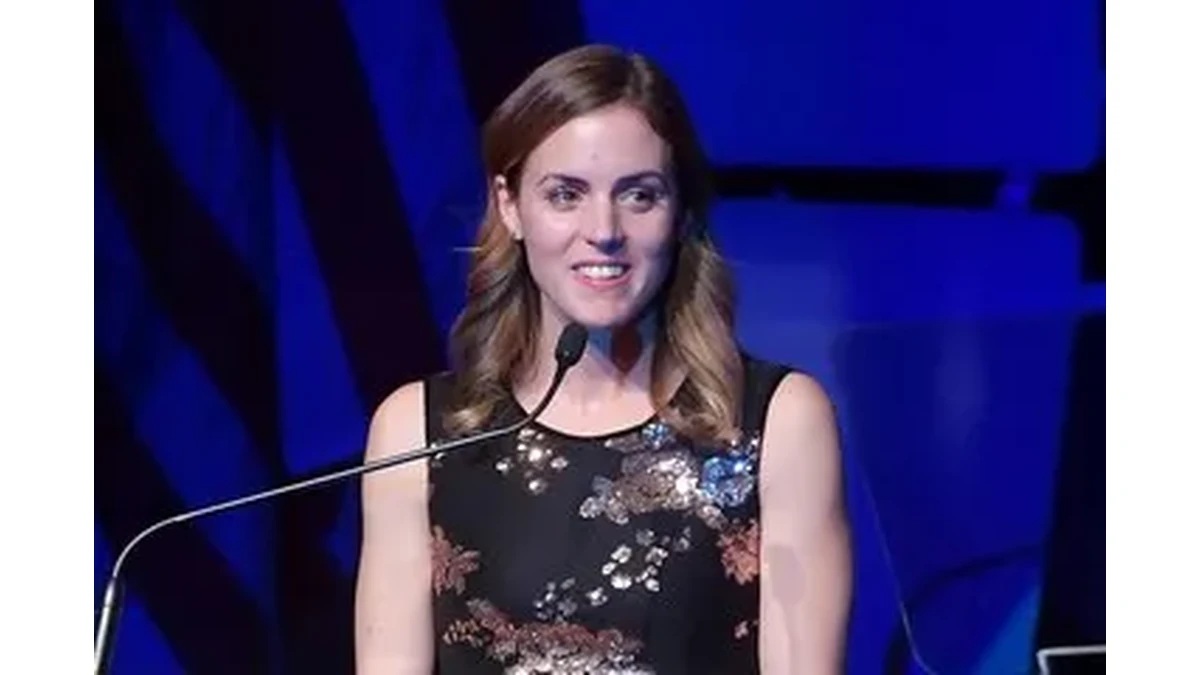
Kyle Kennedy's name was familiar long before she began building a career of her own. She was part of the Kennedy family, one that has spent generations in the American public eye. But the work she chose for herself had little to do with political campaigns or public office.
Kennedy worked in education, first in classrooms and later in education reform. After a spinal cord injury left her paralyzed in 2020, her attention turned toward the treatment of people with disabilities, particularly those trying to navigate the healthcare system.
She died at her home in Westwood on September 21. The news became public on October 20 through reports about her death and family obituary. She was 42.
There is still an important unanswered question. According to People, which cited the Westwood town clerk, Kennedy's cause of death remained pending. The available reports have not established what happened, and there is no confirmed evidence connecting her death to her earlier injury.
Kennedy was born in Washington, D.C., on July 6, 1984. Her parents were Michael Kennedy, one of Robert and Ethel Kennedy's 11 children, and Victoria Denise Gifford.
She studied history at Georgetown University, then continued her education at Pace University and Harvard University's Graduate School of Education. Her academic interests led her toward teaching and the question of how children, especially those from disadvantaged backgrounds, could get a better start.
Her first major professional role was with Teach For America. She taught in New York City public schools for two years before moving into work involving charter schools, curriculum reform and support for teachers.
It was a career built around the practical side of education. The focus was on what happened in classrooms, how teachers worked with young children and how schools could serve students who did not always have the same advantages as their peers.
That work continued until her life took a very different turn.
In 2020, Kennedy suffered a severe spinal cord injury that left her with long-term paralysis. The injury changed her daily life and introduced her to challenges that many people with disabilities face when dealing with institutions that are not always equipped to meet their needs.
She later became involved in disability rights advocacy, speaking about discrimination in healthcare. Kennedy also testified at a hearing at the Massachusetts State House concerning the treatment of people with disabilities in medical settings.
For patients, getting through the door is only part of the problem. Medical facilities, communication and the assumptions made about a person's needs can all affect the care they receive. These were among the broader issues at the heart of the discrimination concerns Kennedy helped bring before lawmakers.
The available reporting does not establish that her testimony directly led to a particular change in state law. Still, it marked a significant shift in her public work. Someone who had spent years thinking about how institutions could better serve children was now addressing what happened when healthcare systems failed to accommodate disabled people.
She had moved from education reform to disability advocacy, but the underlying question was familiar: were the people who needed support actually getting it?
Kennedy's obituary offers a few details that put the public account of her life into perspective. She was described as competitive, intellectually gifted and known for her dry wit. As a child, she played soccer and lacrosse. Later, she developed a passion for long-distance running.
In 2019, she completed the Boston Marathon in rainy conditions. According to her obituary, she finished 20 minutes faster than her father's marathon time. It was the kind of family comparison that carried a personal touch rather than a political one.
She also loved art, travel and cooking. A semester in Florence, Italy, sparked a lasting interest in Tuscan Renaissance art, and she enjoyed making pasta from scratch.
These details matter because the Kennedy name can sometimes overwhelm the person behind it. Her life included the public work, but also the ordinary interests and personal ambitions that do not usually make headlines.
Kennedy was 13 when her father, Michael, died in a skiing accident in December 1997. Her grandfather Robert F. Kennedy had been assassinated in 1968 while campaigning for the Democratic presidential nomination. Both events became part of the family's long and painful public history.
Kennedy married Liam Kerr in August 2012. They had twins, Conor and Josephine, but Josephine died days after her birth. They later welcomed another son, Declan. Kennedy and Kerr subsequently separated, according to her obituary.
She is survived by her sons, her mother, Victoria Denise Gifford, and her siblings and extended family. Funeral services were held privately.
Her family history helps explain why her death has attracted attention, but it does not tell the whole story. Kennedy had built a professional life in education and then found a different form of public service through disability advocacy.
As of October 20, Kennedy's cause of death had not been publicly established. Reports citing the Westwood town clerk said the cause remained pending, with the manner of death still under investigation.
That is where the confirmed account currently ends. Her spinal cord injury was a major part of her life after 2020, but it would be wrong to treat it as the explanation for her death without evidence.
Any further details will need to come from verified information released by the relevant authorities.
For now, Kennedy's story is one of a career that changed direction without losing its central concern: how institutions treat people who need them. She began by working to improve educational opportunities for children. Later, she spoke up for people with disabilities facing barriers in healthcare.
She died at 42. The circumstances remain unresolved, but the work she pursued during her life gives a fuller picture of the woman behind one of America's most recognisable family names.