The plea for the exit of Coastal Karnataka from Southern Railway was something that remained as a regional concern with little or no importance anywhere else other than Mangaluru.
All that came to an end as soon as the decision was made.
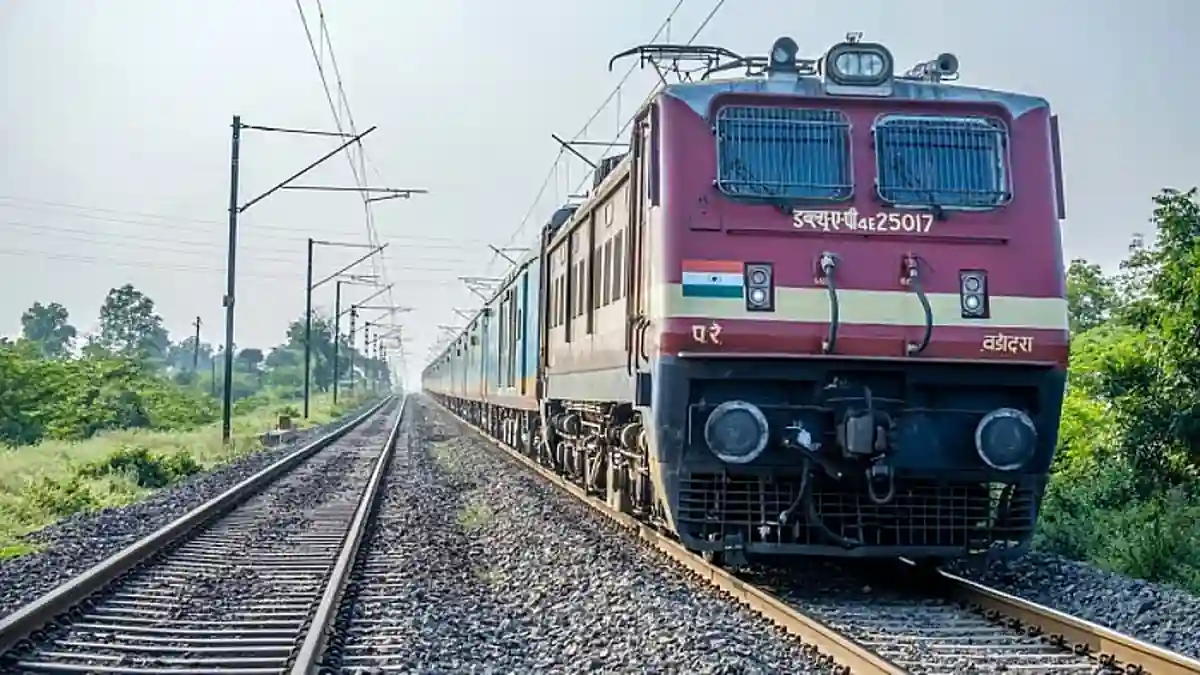
A long-time desire to have Mangaluru under South Western Railway (SWR) has come close to realization with the Railway Board approving the shift of Mangaluru Division up to Ullal from Palakkad Division of Southern Railway to Mysuru Division of South Western Railway with effect from October 1, 2026.
And all of this had created ripples right down south of India!
This transition in itself is a simple yet noteworthy bureaucratic process in railways.
As per the notification of the Railway Board to the General Managers of Southern Railway & South Western Railway and the Chairman of Konkan Railway Corporation, this transition comes into effect from October 1, 2026.
Brijesh Chowta, MP Mangaluru, appreciated this decision which was high on his agenda right from the day he took the oath as an MP in June 2024, stating that it is "Mangaluru's railways finally under one roof."
This initiative is not novel either; it is a consequence of years of dissatisfaction with disjointed, zone-to-zone rail management.
An inhabitant of the area described the situation in clear terms: "Until now, even for minor problems, we have had to rely on the Palakkad Division of Southern Railway. Although Mangaluru has brought in plenty of money for the division, development here has been restricted, and it has been tough for us to raise our demands."
In fact, the demand for a division in Mangaluru has been raised by the Kanara Chamber of Commerce and Industry (KCCI) for several years now – way back in 2020, KCCI President Issac Vas had written to then-Railway Minister Piyush Goyal saying that operating in three different zones – Southern Railway, SWR, and Konkan Railway – had become a hurdle to adding new trains and services.
As per the agreement, Mangaluru’s business community has swiftly responded in positioning the development as a pivotal economic landmark.
According to KCCI president P.B. Ahmed Mudassar, the move would bring about a whole lot of economic opportunities for the area and help in integrating the area with the rest of Karnataka, allowing local businessmen access to fresh markets and thereby multiplying economic growth in the region.
He cited the issue with the railway network, “Our railway network is fragmented into three different zones for far too long, which caused problems in rolling out new trains and upgrading infrastructure.”
And here comes the point when the story takes on an inter-state angle. The separation of Mangaluru’s railway network from Palakkad division has led to yet another social media movement in the neighboring state of Tamil Nadu, with citizens from Pollachi, Kanyakumari, and Nagercoil making the same plea for separating their railway network from Palakkad division.
The most important of the demands coming from the above-mentioned social movement includes the separation of Pollachi from Palakkad division of Southern Railway and its relocation either to Madurai division or Salem division as it is closer to Tamil Nadu and has much stronger links with the rest of the state.
But the demand for reorganization raised by Kanyakumari is different in the sense that it is not simply a mimicry but rather an issue linked to an ongoing concrete issue involving a train route.
According to P Edward Jeni, general secretary of the Kanyakumari District Railway Users' Association (KKDRUA): "It has been planned to introduce a new Vande Bharat express from Nagercoil to Bengaluru through Kerala. The government has been very clear to the authorities and peoples' representatives that we do not want the train through Kerala which will be longer and hence more expensive. We need the service through Madurai."
Jeni did not only make a demand but also issued a clear threat based on the Mangaluru experience: "If this demand is not met, we will start our agitation for the transfer of Kanyakumari and Nagercoil regions from the Thiruvananthapuram division."
Prior to Mangaluru becoming official, this kind of threat from a regional railway users’ association would have been meaningless in terms of any real power. Now it comes loaded with precedent.
With Mangaluru's example, it is shown that a long-standing, well-coordinated regional campaign, backed by chambers of commerce, elected MPs, and passengers associations, can indeed make the Railway Board change their mind about drawing new zonal boundaries despite a decade or decades-long refusal.
This is precisely the reason why railway officials are now talking about this issue as a more structural problem in Kerala.
The implications of the domino effect reach far past just the Vande Bharat dispute on the route passing through Kanyakumari.
Railway authorities have cautioned that if the MPs from Kerala continue to remain blinkered to their basic demands for halts without offering a united stand, the next in line would be the section between Parasala and Kanyakumari which is also being demanded by the Madurai division as well.
This is in addition to a fresh challenge posed to Kerala in the wake of the administrative reorganization. Kerala trains will henceforth need permission from the South Western Railway zone for each journey with no assurance of approval — even as local pressure groups from Karnataka demand that the Kerala trains be moved from Mangaluru Central to Mangaluru Junction in order to reserve the central railway station for Karnataka only.
However, behind such disputes is a more brutal political reality which has been openly accepted by railway watchers from Kerala itself.
The division of the Palakkad division took place as part of a systematic campaign by Members of Parliament from southern Karnataka. The fact that this was a political decision has meant that Kerala, lacking comparable political clout in New Delhi, has found it difficult to make a case for itself.
This is quite an admission as Mangalore did not win this battle simply by administrative logic, but by sustained political pressure, precisely what the Kanyakumari association seems to be threatening to do.
Nothing happened suddenly like this. The struggle of coastal Karnataka to separate from the Palakkad division has been going on for more than 20 years, and the decision of the Railway Ministry to give Mangalore railway lines to Mysuru division of SWR after the gauge conversion of Mangalore-Hassan has been pending for more than 14 years after it was taken way back in 2004.
The local associations and Members of Parliament continued to exert pressure all these years, calling the management of the Southern Railway in the region "step-motherly." Even one local MP told the Railway Minister, "the attitude of Southern Railway has cost the people of coastal Karnataka dearly," even though coastal Karnataka generates good revenue through freight and passengers.
After the Mangaluru boundary dispute is officially concluded on October 1, the question will be how the Railway Board will react to Kanyakumari's warning campaign and Pollachi's parallel demand and see the need for any border change or not and how Kerala's MPs succeed in forming the "united front" which is said to be necessary now more than ever to avoid losing their territory.
In case of KKDRUA, the point of conflict at hand will continue being the decision regarding Nagercoil-Bengaluru Vande Bharat route: a decision in favor of them would stop any chances of secession, while an opposite decision would turn Kanyakumari's warning into another regional railway movement.